Many of the most amazing sights in Raja Ampat are underwater: manta rays glide over coral gardens, turtles move through clear water, and fish gather around vibrant reefs.
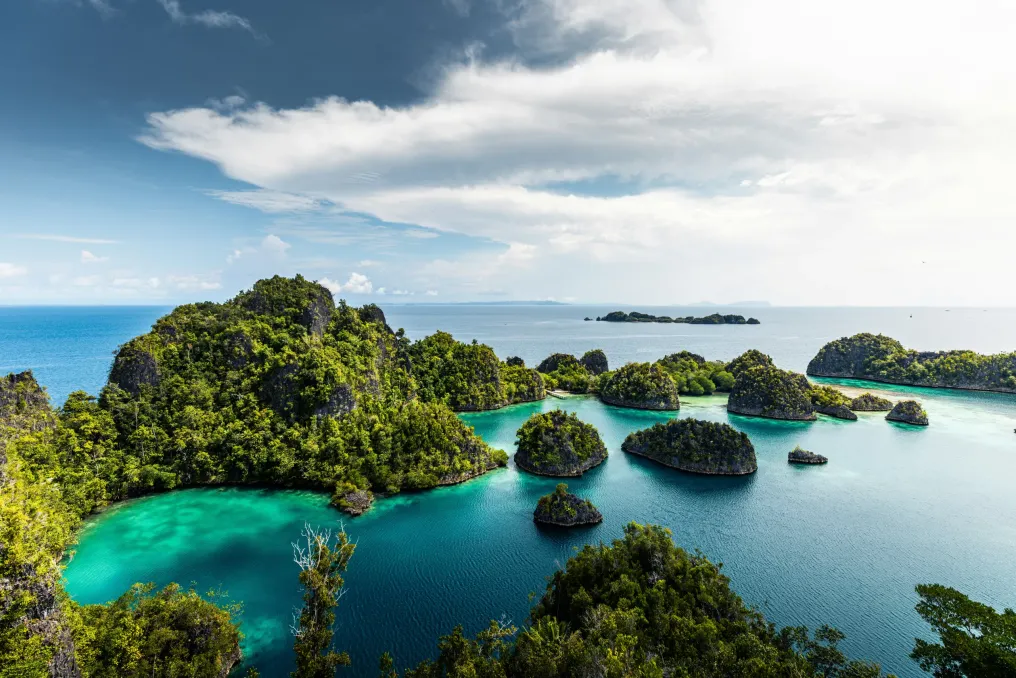
Above the sea, the landscape formed by lush limestone islands is unique to all of Indonesia. Located off the coast of Southwest Papua, Raja Ampat means 'Four Kings' and refers to four main islands: Waigeo, Batanta, Salawati, and Misool. Around them are more than 1500 small islands, shoals, and reefs.
As part of the Coral Triangle, this archipelago is famous for its marine biodiversity, attracting divers, snorkelers, and travelers seeking secluded island getaways.
Since Raja Ampat is vast, it is recommended to carefully choose an accommodation base rather than trying to see everything in one trip.
Main Points of Interest
Piaynemo is one of the most recognizable viewpoints in the archipelago, offering views of limestone islands scattered across bright blue water. A staircase leads to a panoramic spot, making this location a popular stop during cruises between islands.
Further north is Waigeo, known for its dramatic karst formations and protected lagoons. Reaching this area requires more time and resources than visiting sites closer to Waisai, so transfers must be planned in advance.
Dampier Strait
This area is a highlight for diving and snorkeling, including the reefs around Kri, Mansuar, and Arborek. Visitors can expect to see colorful corals, as well as turtles, reef sharks, and large schools of fish. Since currents can be strong, it is advisable to choose a reliable operator.
Misool, located in the south of Raja Ampat, offers travelers seclusion, hidden bays, and rich marine habitats if they are willing to spend more time there. Accommodation includes specialized resorts and liveaboards, which are particularly popular among divers.
Raja Ampat is warm year-round, but visibility and conditions for sea travel depend on the sea state. Generally, the period from October to April is considered favorable for diving and inter-island cruises, while stronger winds from June to September may complicate some trips.
Encounters with wildlife are not guaranteed, and conditions vary throughout the archipelago. Flexibility in the itinerary must be maintained in case of weather-related delays.
The main entry point is Sorong, located in Southwest Papua, from where domestic flights connect it to Indonesian hubs such as Jakarta and Makassar. Travelers from South Africa will need to plan international and domestic flights.
From Sorong, ferries arrive in Waisai on Waigeo Island in about two to three hours. Many visitors then require an additional boat transfer to their accommodation. It is recommended to arrange transfers in advance with the host and confirm departure times and costs. Depending on flight arrival time, an overnight stay in Sorong may be necessary.
Accommodation options range from community-run guesthouses with basic amenities and access to nearby reefs, to eco-resorts offering greater comfort and organized activities. Liveaboards are another option for divers wishing to explore multiple locations over several days.
It is necessary to check what is included in your package. Meals, sea transfers, fuel, and excursions can significantly increase the final cost, while electricity and mobile coverage may be limited on remote islands.
If possible, allocate at least seven days to account for transfer time, snorkeling, and excursions. Visiting both Waigeo in the north and Misool in the south will require a longer stay.
A budget must be set aside for airfare, accommodation, food, ferries, boat trips, diving, and applicable tourism and marine conservation fees. Before departing, check current fees through official Raja Ampat tourism channels, as they may change.
It is recommended to pack light clothing, swimsuits, reef-safe sunscreen, insect repellent, and a waterproof bag. Carry cash for small purchases and ensure your travel insurance covers planned activities and emergency evacuation.
The biodiversity of Raja Ampat is its main attraction, and its protection is vital. Where possible, choose locally owned accommodation and guides, respect village customs, and ask permission before photographing people. Never touch corals, disturb wildlife, or remove marine life from its natural habitat. Reduce single-use plastic and take trash to places where it can be responsibly disposed of.
Getting to Raja Ampat takes time and effort, but the reward is exceptional. From vibrant reefs to limestone islands rising from clear water, this is a place where nature plays a central role. Plan your route carefully, anticipate potential delays, and resist the temptation to see everything at once. Sometimes the best way to experience Raja Ampat is to spend less time traveling between islands and more time enjoying what makes each one special.