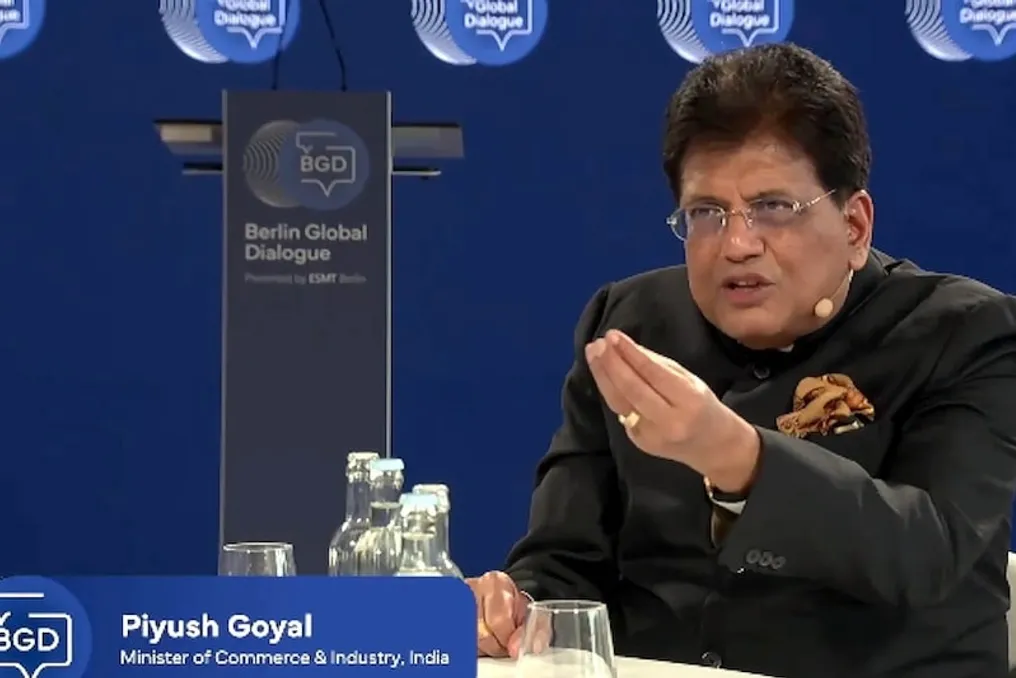
Union Minister Piyush Goyal delivered direct criticism of the European narrative in Berlin, which assigns equal responsibility to developed and developing countries regarding climate change. He emphasized the need to determine the root causes of the problem, questioning who damaged the ozone layer and who polluted the atmosphere with carbon historically.
Goyal reminded that despite India housing 17 percent of the world's population, its contribution to global carbon emissions is less than three percent. In contrast, Europe, with only three to four percent of the world's population, bears a very significant share of environmental pollution and carbon emissions.
He stressed that this imbalance was initially created by developed nations. Currently, per capita carbon emissions in India remain only 10–15 percent lower than in Europe, whereas the per capita environmental impact in Europe is 7–8 times higher than in India. This data demonstrates that neither historical responsibility nor current inequality can be ignored.
Per Capita Carbon Emissions and Development Needs
Goyal elaborated on India's situation, noting that the country is responsible for meeting the energy needs of 1.4 billion people, as well as ensuring food and national security. Furthermore, India is implementing one of the fastest clean energy transition programs globally and shows high awareness in waste management and circular economy.
This argument is important because in climate discussions, developing countries are often pressured to reduce emissions while their basic needs remain unmet. Developed regions, such as Europe, have already benefited from industrial growth, and now they are being asked to apply strict standards to developing nations.
Goyal's stance indicates that India is not lagging in climate action, but it is unwilling to sacrifice its right to development for the concept of equal responsibility.
The $100 Billion Promise under the Paris Agreement and Unfulfilled Commitments
Referring to the 2015 Paris Climate Agreement, Goyal mentioned that Prime Minister Narendra Modi united the Global South. An agreement was reached then that developed countries, which have benefited for decades from damaging the climate, must pay a greater price. It was promised to provide assistance to developing, least developed countries, and island nations in the Pacific and Caribbean amounting to $100 billion annually.
However, after 11 years, not a single penny of these funds has been received; everything remains at the level of promises. Goyal also questioned the European Union and the Carbon Border Adjustment Mechanism (CBAM), stating that these mechanisms do not adequately meet the needs of the least developed countries and do not support their decarbonization efforts. This criticism is significant because developed countries simultaneously promise climate finance and create trade barriers affecting the exports of developing nations.
Piyush Goyal's speeches once again brought to the forefront the core issue of the climate agenda: historical responsibility versus current actions. Developed countries achieved prosperity through massive emissions during the Industrial Revolution, and now they try to restrict the path of developing countries striving to follow this course. Economies like India are actively advancing in clean energy, yet they must also satisfy the fundamental needs of their large populations. The failure to deliver the $100 billion promise breeds distrust. When funding is absent, developing countries fall behind in adopting new technologies.
The attempt to frame history through the lens of 'Europe's equal blame' appears to be an effort to conceal this inequality. Goyal's position is clear: those who created the problem must bear greater responsibility. Climate justice is only possible with honest recognition of historical impact, per capita influence, and financial cooperation. This clear stance of India reflects the sentiments of many Global South nations.