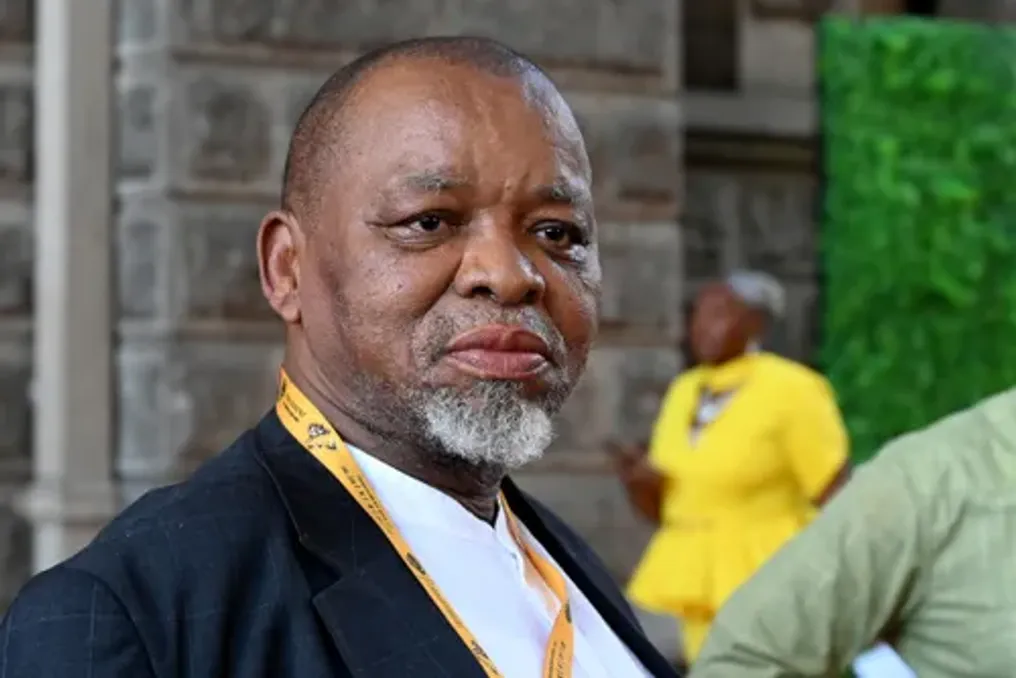
Experts, along with gender activists and linguists, have accused the ANC national chairperson Gqedi Mantashe of reducing the serious issue of women's sexual exploitation to a private sexual matter between two individuals, as well as using inappropriate language when discussing this topic.
Last weekend, speaking in isiXhosa, Mantashe responded to a journalist from Newzroom Afrika who asked him about allegations that ANC members demanded sex from women in exchange for jobs. Mantashe stated that the journalist should not involve him and the ANC in matters concerning people who 'ask for a vagina.' Furthermore, Mantashe used the term 'isibumbu,' which some consider an offensive word for the vagina.
In an interview with SABC on Wednesday, he claimed ignorance regarding the Women's League of the ANC's (ANCWL) demand that he apologize unconditionally. However, the ANCWL reiterated its call for Mantashe to apologize.
The Secretary-General of the ANCWL, Comrade Nokutula Nkaba, stated: 'Comrade Mantashe must not allow the vulgarization of our language. Instead of acknowledging the need to apologize, he responded with theatricality, pretending not to know the reasons for it. This further reinforces his primitive and unrefined insinuations about women.'
In a statement released by the ANC yesterday, spokesperson Malengi Bengu reported that the party and the ANC National Working Committee had held extensive discussions on the matter and instructed Mantashe to offer a sincere apology, after which the issue would be considered closed.
Bengu emphasized: 'The ANC affirms its firm political position that women deserve respect, dignity, empowerment, and the opportunity to realize their full potential. We recognize that unequal gender and power relations continue to subject women to sexual exploitation, including demands for sexual services in exchange for employment and other opportunities. Such behavior represents a serious abuse of power and must be eradicated in our society.'
She added that ANC leaders bear increased responsibility for upholding these principles through their words and actions, opposing discrimination, and promoting gender equality. This responsibility includes communicating with dignity and sensitivity, protecting women from exploitation, and ensuring that access to work and opportunities never depends on sexual services. The ANC remains unwavering in its commitment to building a society where every woman can live and work free from coercion, violence, and discrimination.'
Dr. Zoliswa Maid, senior lecturer in the Department of Languages and Literature at Nelson Mandela University, noted that the debate surrounding Mantashe's use of the term 'isibumbu' during a television interview about alleged sex-for-work practices raises important questions about language, gender, power, and public accountability.
She stated: 'The issue should not be reduced to whether the word is vulgar; we must also consider the context in which it was used and its implications for the discussion of sexual exploitation.'
Maid suggested that the offensiveness of a word depends partly on its meaning, context, and social usage. She noted that available linguistic sources do not provide sufficient evidence to classify 'isibumbu' as universally offensive among isiXhosa-speaking communities.
Nevertheless, she concluded: 'However, Mantashe's use of this term in a national interview about alleged sexual exploitation can be legitimately criticized as crude and inappropriate for the seriousness of the issue. It is important to distinguish criticism of a specific statement from the stigmatization of a native language.'
Maid stressed that public figures are obliged to communicate in a way that upholds dignity and demonstrates accountability, noting that informal or colloquial language is not inherently inappropriate, but the discussion of alleged sexual exploitation requires sensitivity and seriousness.
She also observed: 'Mr. Mantashe's phrasing risked diverting attention from alleged abuse of power to a crude reference to sexual anatomy.'
Maid analyzed the situation where a senior male political leader answered a question from a younger female journalist about alleged sexual exploitation. She pointed out that feminist sociolinguistics encourages studying how gender, age, and institutional power influence communication. The main concern is that explicit language about the female body can shift focus away from their rights, dignity, and experiences of exploitation.'
Culture, gender, and politics expert Nomboniso Gasa also accused Mantashe of reducing a serious issue of exploitation to a private sexual matter between two individuals. Gasa argued that Mantashe, as a national leader, should understand that he is communicating not only with those who understand his dialect or code, but that some terms he uses among friends or comrades cannot be broadcast on television.
Gasa warned: 'Children will hear what he says. Many parents will not want their children to use isibumbu as a casual word any day.'
He also noted that Mantashe failed to answer the question about abusing power for personal gain and missed the opportunity to state the ANC's position on individuals who abuse power for sexual services. Gasa concluded: 'He was negligent and reduced it to a matter between two people. In the context raised by the journalist, these are not two equal people. It is about work, sex for work, or services, and he distances himself from the ANC.'
_