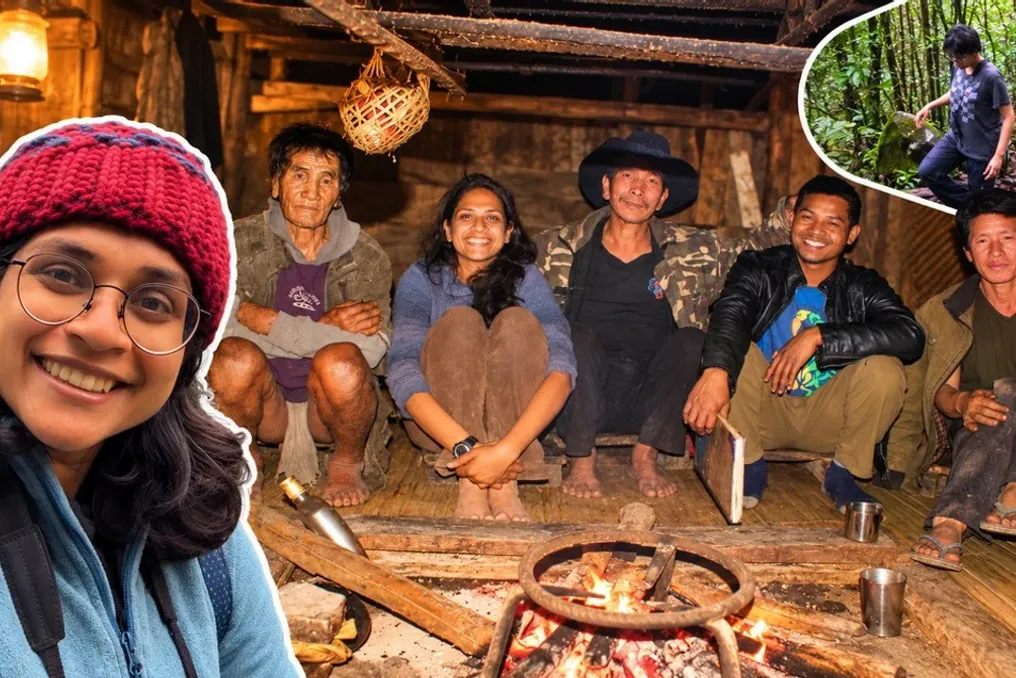
For researcher Keerthi Kruthy, who was born in Chennai, the forests of the Western Ghats became an integral part of her daily life. Although her mother, T. V. Champakalata, invited her home for holidays, Keerthi always replied that the forest was her home.
At the age of 36, she regularly went hiking after sunset, armed with a flashlight, sampling kits, and notebooks. Her task was to find frogs, take samples from their skin, record observations, and then release the animals unharmed.
Some night excursions required crossing slippery stones and flooded streams, while others involved the appearance of leeches, unpredictable rain, and long walks. Nevertheless, it was these places that attracted Keerthi.
Over several years, working mostly independently, she studied 49 protected areas and 19 other landscapes, documenting more than 3000 amphibians. Her goal was to determine whether a fungus that has wiped out frogs in other parts of the world was spreading through the forests of India.
Beginning Interest in Wildlife
Growing up in Chennai, Keerthi showed a great interest in nature documentaries and filled her shelves with books on wildlife. Family trips often headed to forests rather than popular tourist destinations. The more she learned, the more time she wanted to spend outdoors.
Her mother recalls that the interest in nature did not arise suddenly, but was always a place where Keerthi felt happy. In 2004, as a schoolgirl, Keerthi was selected as a Tiger Ambassador for Sanctuary Asia through the Kids for Tigers program. Visiting the reserved forests introduced her to people dedicated to wildlife conservation, which made her believe in the possibility of a career in this field.
Furthermore, she participated in volunteer work at the Madras Crocodile Bank, helping clean crocodile enclosures after the 2004 tsunami. While studying for a BTech degree in Biotechnology at Tamil Nadu Agricultural University in Coimbatore, she joined local snake rescue services, participated in wildlife population assessment exercises, and collaborated with conservation organizations. Her mother notes that wildlife became the path she wanted to choose for her life. By the time she graduated in 2012, Keerthi decided to work in nature conservation, and soon had the opportunity to return to the forests, this time to study frogs.
Searching for Fungus in Frogs
After graduating, she joined a project overseen by the Wildlife Information Liaison Development (WILD) Society and Zoo Outreach Organisation, affiliated with the Indian Institute of Science Education and Research (IISER), Pune. The team was researching a fungus affecting frogs and other amphibians in the Western Ghats. This disease is called chytridiomycosis, and scientists refer to the fungus itself as Batrachochytrium dendrobatidis or simply chytrid fungus.
The fungus attacks the frogs' skin, which is essential for their respiration and water absorption. A severe infection can lead to the death of some frogs. Keerthi told The Better India that this fungus has caused the disappearance of nearly 200 frog species worldwide and threatens about 40 percent of amphibian species.
The Western Ghats, one of the world's biodiversity hotspots, are home to over 200 frog species, many of which are found nowhere else. Although mass frog deaths, as reported elsewhere, have not been observed in India, scientists have already detected this fungus in several species. Keerthi explained that the first incidence of this ailment was recorded here in 2011, making long-term monitoring particularly important.
Researchers needed to determine which forests harbored the fungus and whether it was appearing in new locations over time. This required finding wild frogs without harming them. Keerthi was ready to do this work.
To examine thousands of frogs in the dark, Keerthi searched in tropical forests, evergreen forests, shola grasslands, and streams, often working late into the night. Even finding these tiny animals could take hours. She carefully took a swab from each frog's skin, recorded its data, and released the animal. The swabs could then be tested for the fungus without harming the animals. Between surveys, she stayed in forest camps, where she had to get used to leeches, slippery trails, rising streams, and unpredictable weather. One day her mother joined her and saw the demands of those nights. She understood how complex and demanding the work was, but also knew that Keerthi was exactly where she wanted to be.
For Keerthi, every collected sample brought scientists closer to understanding the potential danger faced by the animals she had studied for so long.
Collecting frog skin samples was only half the task. Scientists also needed a reliable method to replicate these checks in different forests and compare the data obtained. Keerthi helped develop clear procedures for finding frogs, taking samples, and recording results so that other researchers could follow the process in the future. Analyses conducted at IISER Pune showed that the fungus belongs to a type already widely known in Asia. These results were published in the scientific journal PLOS ONE, adding to researchers' knowledge of its presence in the Western Ghats. As the work expanded, Keerthi independently received two grants from the Mohamed bin Zayed Species Conservation Fund, which allowed her to expand the survey areas and continue documenting frogs. The collected samples and methods provided future researchers with a starting point to check the spread or changes of the disease over time.
Unexpected Discovery in the Forest
The forests offered another surprise. While working on a known scientific disease, Keerthi and her colleagues helped identify a frog species that had not been officially described before. In 2017, they described Nyctibatrachus mewasinghi, or Mewasingh's night frog, which can only be found in the Malabar Reserve in Kerala. Such discoveries help scientists understand the habitat range of a species and what environments need protection. However, discovering a species is only the first step; understanding the threats it faces is equally important, and the frogs themselves can provide valuable clues.
Tigers and elephants often attract attention in conservation efforts. Frogs are easier to overlook, but they can tell a lot about the health of our forests. Their skin absorbs water and helps them breathe, making them especially sensitive to pollution, habitat destruction, and diseases. When frog populations begin to decline, it can serve as an early warning of problems in their environment, which could potentially affect other wildlife. Keerthi emphasizes: 'If frogs are dying, it means there is a problem.'
This is what makes her research so significant. By identifying where the fungus is found, Keerthi helps scientists monitor a threat that could affect frogs across the entire Western Ghats region, including species unique to Earth.
For Keerthi, the Forest Was Always Home
A child who explored tiger reserves, cleaned crocodile enclosures after the tsunami, and rescued snakes grew into a researcher documenting frogs and helping scientists understand a disease threatening them globally. Her surveys, scientific work, and participation in the discovery of a new species enriched the knowledge of the Western Ghats and the wildlife dependent on them. Her mother watched this dedication sustain Keerthi during long field trips and away from home during holidays. As she says, she always chose the forest.