The OpenHarmony Hardware Developer Day (OHDD), dedicated to NearLink technology, was held in Shenzhen on October 22. This meeting gathered technical specialists and industry partners to demonstrate the capabilities of integrating NearLink, developed in China, with the open-source operating system OpenHarmony for creating intelligent hardware, from microcontroller selection to device connectivity.
During the sessions, speakers provided a detailed explanation of the basic service layer of the OpenHarmony NearLink protocol stack. Aspects discussed included data transmission, priority scheduling, scanning, and broadcast in low-power dual-stack coordination. A later session focused on the stack architecture, its application areas, and the adaptation process, as well as what the NearLink Kit already supports to facilitate component integration for developers.
When selecting chips, the emphasis was placed on HiSilicon's SLE technology for short-range operation. Speakers highlighted the advantages of low latency, high-precision ranging, and high throughput, presenting chip options including WS63 and BS21. Use cases covered peripheral devices, car keys, and wearable gadgets. Another presentation demonstrated how the OpenHarmony distributed software bus interacts with NearLink to ensure automatic discovery, connectionless networking, and fast data transfer at low power consumption and low latency.
Two implementation case studies added practical value to the event. Chinasoft International presented a smart intersection project in Xi'an, where OpenHarmony serves as the common foundation for signal controllers, cameras, radar units, video, and navigation displays, which typically operate as separate systems. This configuration allows for traffic management, providing priority passage for special vehicles, and extending green lights upon request from disabled pedestrians. Furthermore, maintenance staff can use a tablet to view and configure the screenless device, reducing the commissioning time of one unit from 40 minutes to less than 40 seconds.
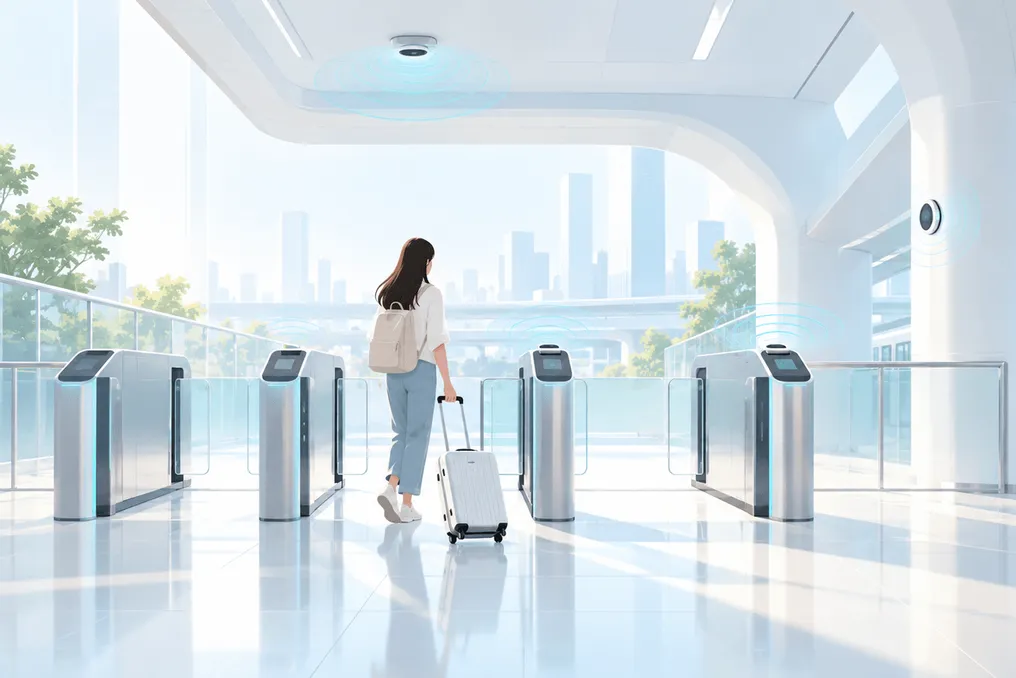
The second example was a contactless turnstile at the Shenzhen metro station, based on NearLink, serving Shenzhen Institute of Advanced Technology University. After service activation and condition fulfillment, passengers can pass through the gates without taking out their phone or card, which is convenient for people with luggage, infants, or those using wheelchairs. The system integrates automatic connection, pre-authorized passage, positioning, and gate control, with an on-site backup option and manual control in case of issues.
The day concluded with working sessions dedicated to specific projects, where partners discussed adaptation challenges and engineers provided direct answers. The main focus of the event was directed towards the developer ecosystem around OpenHarmony and NearLink, rather than the release of any new operating system.