Home Minister Amit Shah demonstrated his working approach by setting deadlines for resolving several complex internal security issues. Regarding Naxalism, he set clear timelines, stating that the problem would be largely eliminated by March 31, 2026. Concerning drug trafficking in Punjab and across the country, he set a deadline of December 31, 2029, promising to apply the same resolve.
It is worth noting that after the abrogation of Article 370 in Kashmir, the region has been successfully integrated into mainstream life, and the level of terrorist activity has decreased. These successes are the result of political will, coordination between the center and states, and an accountability system.
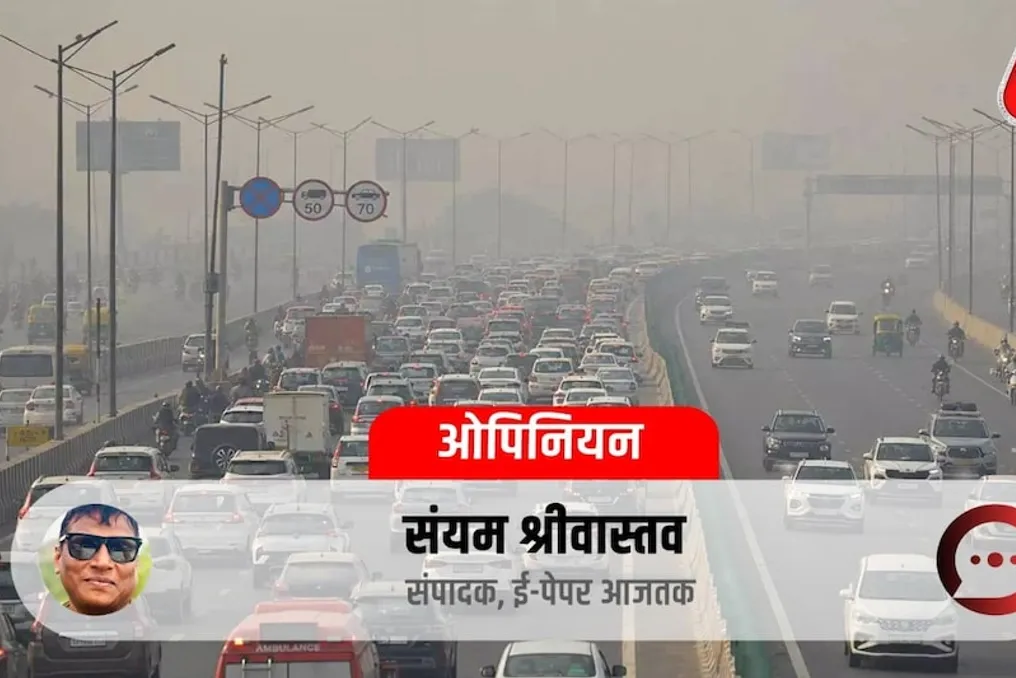
This is why residents of Delhi and North India now expect a similar approach to combating air pollution. However, the air in Delhi once again reached poor quality status at the end of October 2026. After Diwali, the Air Quality Index (AQI) exceeded 200, reaching nearly 300 in some areas, which led to the implementation of Phase-1 GRAP by the CAQM. It is predicted that the contribution from stubble burning will increase in the near future.
Weather conditions will not allow pollutants to disperse, leading the capital to become a 'gas chamber,' as happens every year. This annual cycle makes the public feel that the problem remains unchanged. The combination of emissions from transport, construction dust, industry, open waste burning, and smoke from neighboring states makes the air toxic. Children, the elderly, and people with respiratory diseases are the most vulnerable.
Under these circumstances, the public rightly demands that some leader publicly take responsibility and set deadlines. Although air pollution differs from Naxalism or drug trafficking because it is a multi-factorial, seasonal, and inter-state issue, unlike those two phenomena where there are clear enemies and organized groups.
Stubble burning is linked to farmers' economic needs, the number of vehicles is constantly growing, construction is part of urban expansion, and weather (wind speed, temperature, humidity) is beyond the control of any single government. Coordination is required between the central government, the governments of Delhi, Punjab, Haryana, and Uttar Pradesh. No single minister or department can handle this alone.
Nevertheless, the public opinion is correct: when political will and accountability are established, the administrative machinery starts working. Shah's style means not just making declarations, but having measurable goals, responsible officials, regular monitoring, and accountability for results. This is also possible in the case of pollution. Deadlines can be set for stubble management, including equipment availability, timely payment to farmers, alternative use (biomass, compost), and strict supervision.
For transport, standards higher than BS-6 can be introduced, old vehicles phased out, public transport expanded, and parking policies tightened. Responsibility can also be assigned for controlling dust at construction sites, regular road cleaning, and strict measures against open waste burning. Plans like GRAP already exist, but they require political support and continuous monitoring.
The central role is crucial because the Delhi-NCR problem is not limited to Delhi; a complete solution is impossible without controlling agricultural residue burning in neighboring states. This requires both coordination and funding from the center. At the same time, the Delhi government must strengthen control over local sources. The public wants a leader to publicly declare that within the next three years, the AQI will not exceed the poor category, the contribution from stubble will be reduced to a certain percentage, and transport pollution reduced by a specified amount. The public will monitor any leader who makes such a promise, regardless of their party.
This demand arises because many plans have been developed, meetings held, and expert committees formed in previous years, yet the situation shows no decisive change year after year. People recall the decisiveness shown in complex issues like Naxalism and Kashmir and ask why the same resolve is not shown in the everyday problem of air pollution. The health issue is no less important than national security. The burden of diseases caused by pollution falls on the economy and the public healthcare system.
To eliminate pollution, an approach similar to Shah's style is needed: deadlines, accountability, and continuous monitoring must be fully defined. However, this is only possible if all parties view the problem above political competition. The center, state governments, local authorities, and the public must fulfill their roles. Declarations are simple, but results are complex. Any leader who promises to clean the air of Delhi and takes responsibility for it will gain public trust. The problem is technical and administrative, but its solution requires political will. Until this will is demonstrated, every October-November autumn will repeat the same story.