Origin and history of the Parintins Festival, a cultural event in the Brazilian Amazon
Read more
Super Abril
super.abril.com.br

Origin and history of the Parintins Festival, a cultural event in the Brazilian Amazon

The Parintins Festival, recognized as one of Brazil's largest regional festivities, officially began in 1965. This annual event takes place during June on the island of Parintins, located on the banks of the Amazon River, and constitutes a symbol of Amazonian culture.

The driving force behind the festival lies in an ancient rivalry between two groups known as the 'bois,' who stage the folklore of the boi-bumbá. This version of the northeastern bumba-meu-boi tells the story of Catirina and Negro Francisco, a plot that addresses themes of desire and resurrection, defining the essence of the spectacle.

The central dispute of the Parintins Festival was formalized with the creation of the bois. Garantido, which adopts the color red and is popularly called the 'people's bull,' emerged in 1913. Later, in 1925, the bull Galante was renamed Caprichoso, beginning to use blue and gaining the reputation of the 'elite bull.'

The confrontation, which started as an informal street dispute, evolved into a large production. In 1988, the inauguration of the Bumbódromo, a monumental arena, elevated the level of the spectacle to a standard comparable to the parades of the Rio de Janeiro samba schools. During the three nights of presentation, the event manages to attract more than 100 thousand spectators.

The Bumbódromo, which has a capacity for over 25 thousand people, serves as the main stage where the magic of the Parintins Festival unfolds. The cheering crowds of each boi, divided equally within the arena, play a fundamental role through choreographies and animations that contribute to the scoring of their respective teams. Silence is required when the opposing boi is performing, under penalty of sanctions.

Each boi mobilizes approximately 3,500 participants per night, organized into 'tribes,' similar to the sections of samba schools. Notable elements include the porta-estandarte and the cunhã-poranga, which symbolizes the most beautiful indigenous woman of the tribe.

Giant allegories, moved by hundreds of people, can reach up to 30 meters in length and exceed 15 meters in height, representing figures from Amazonian folklore. The competition is judged by nine folklore specialists, covering 21 criteria, ranging from the rhythm of the drums, involving 400 to 600 musicians, to the quality of the allegories. Each boi displays between 15 and 22 'toadas,' traditional songs that narrate the legend of the boi-bumbá.

The performances last two and a half hours on each of the three nights of the festival, resulting from six months of intensive rehearsals held in the so-called 'currais.' The devotion to the colors—red for Garantido and blue for Caprichoso—is so intense that even the judges use green pens to ensure impartiality.
Similar stories

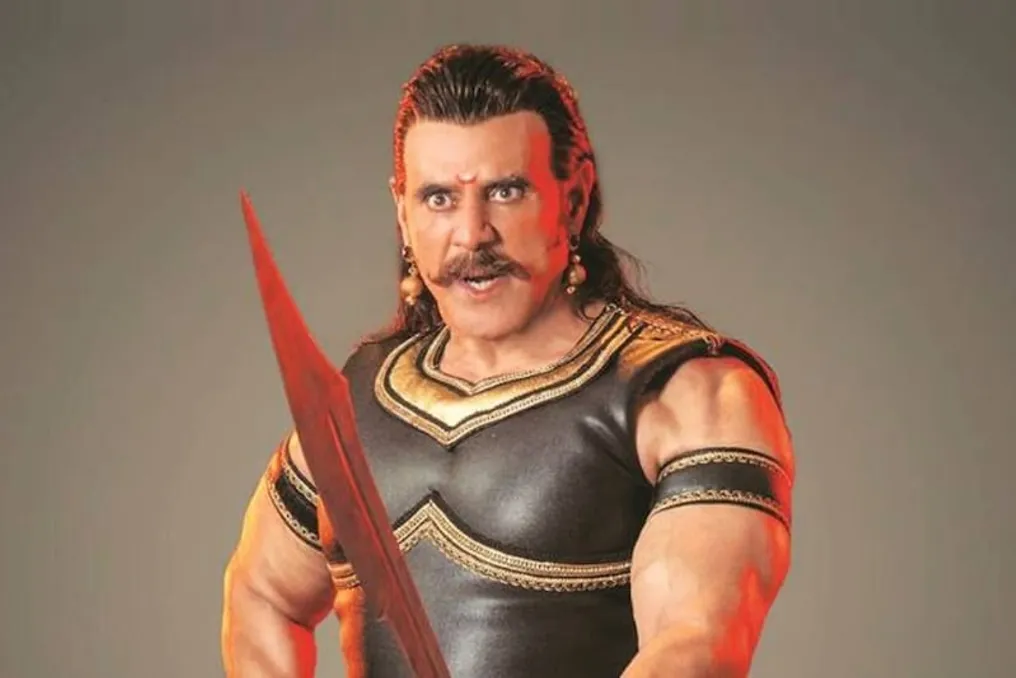
Actor Puneet Issuer expresses concern over the trend of portraying Ravana as a hero in Ramayana films
Read more
www.aajtak.in

Actor Puneet Issuer expresses concern over the trend of portraying Ravana as a hero in Ramayana films

As the premiere of the film 'Ramayana' featuring Ranbir Kapoor approaches, questions are arising regarding the plot, presentation, graphics, and acting. Amid these discussions, Puneet Issuer, known from the series 'Mahabharata' as Duryodhana, supported the filmmakers' vision.

Puneet Issuer expressed concern about how 'Ramayana' and 'Mahabharata' are depicted in cinema, television, and theater productions. He noted that in some theatrical performances, Ravana is portrayed as a hero, while Lord Rama is reduced to a secondary character. However, Puneet Issuer stated that he eagerly awaits Ranbir Kapoor's 'Ramayana' and is fully confident in its brilliant execution.

Puneet Issuer raised the issue of the trend of elevating negative characters to heroic status on Amit Bhatia's YouTube channel. He mentioned that after observing this phenomenon, he wrote several plays about 'Ramayana' and 'Mahabharata.' In his opinion, the situation has reached a point where viewers begin to perceive villains, such as Ravana, as heroes.

He emphasized that if Rama is made the hero, then who is Lord Rama? Despite Ravana's numerous flaws, in some productions, the greatness of Lord Rama was not adequately demonstrated. Therefore, he aimed to show who Rama truly is, as in most plays, he was depicted as a minor character with few actions.

Puneet Issuer also reacted to the criticism receiving Ranbir's film. He believes that if the content is not high quality, the film will not succeed. However, if a good picture is created, it will surely become popular, citing the success of 'Kantara' and 'Hanuman Ansha,' while 'Adipurush' failed due to low quality.

The actor highly praised Ranbir's performance, expressing complete confidence that he handled the role of Lord Rama brilliantly. Furthermore, Puneet Issuer expressed trust in director Nitesh Tiwari, believing him to be a thoughtful director and hoping he will create a good film. He urged people to watch the film first before forming an opinion.

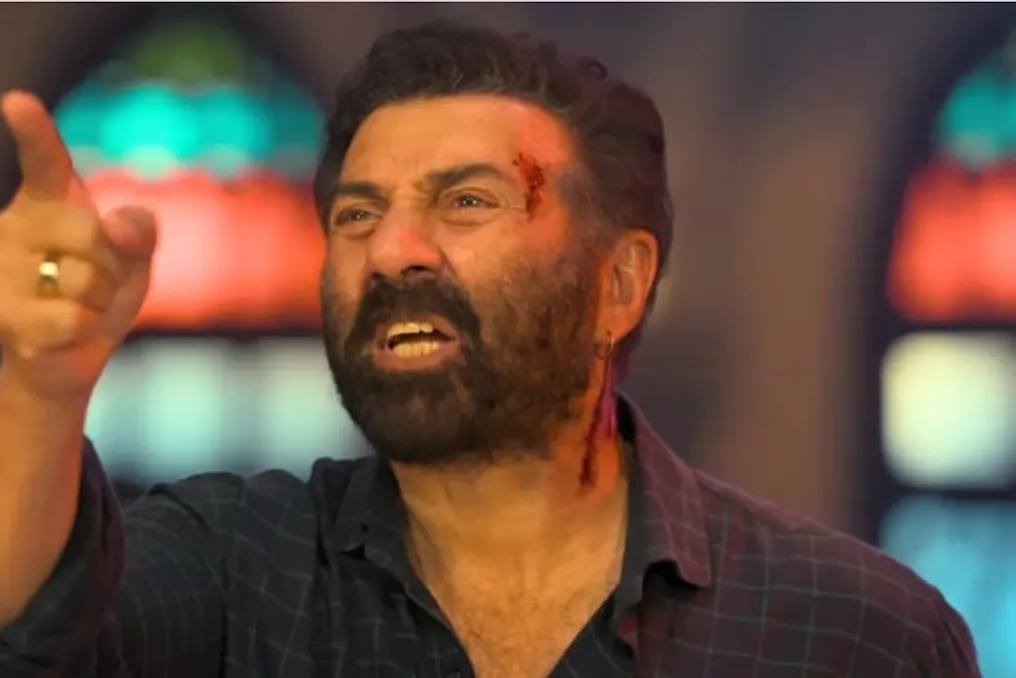
Medical Association Protests Sunny Deol's Film 'Surya' Over Portrayal of Corruption and Violence
Read more
www.aajtak.in

Medical Association Protests Sunny Deol's Film 'Surya' Over Portrayal of Corruption and Violence

The Indian Medical Association (IMA) has voiced objections regarding the upcoming film 'Surya - From End to Beginning' starring Sunny Deol. The organization sent a letter to the Minister of Information and Broadcasting, Ashwini Vaishnaw, demanding an inspection of the depictions of doctors and medical staff in the movie.

IMA asserts that the portrayal of corruption within the medical field in the film could negatively affect the reputation of the entire profession. Furthermore, the association expressed dissatisfaction with scenes depicting violence against healthcare workers, thus requesting a preliminary review of the film before its release.

The film 'Surya' received a teaser on October 19th, released on Sunny Deol's 69th birthday. In the movie, Sunny plays a police officer whose life changes after his daughter's death. While investigating this case, he uncovers irregularities in the medical system.

In the letter addressed to the central minister, IMA outlined its concerns. The organization believes that the film's promotional content might form a negative perception among viewers about the entire medical profession. In an official statement, IMA emphasized its serious concern over how medical personnel are presented in 'Surya - From End to Beginning'. There is a threat that the depiction of healthcare corruption, violence against medics, and impact on public trust and worker safety could have adverse consequences.

IMA highlighted four main issues in the letter to the minister: first, the unjustified defamation and damage to the reputation of the medical profession; second, the depiction of violence against medical workers; third, issues related to the safety of medical personnel; and fourth, the potential impact on the trust between doctor and patient.

The medical organization demanded an impartial assessment of how the film and medical professionals are portrayed. They also stated that if these concerns are confirmed during the review, the filmmakers must make the necessary changes.

As for the film itself, Sunny Deol stars in 'Surya - From End to Beginning'. M. Padmakumar directed it, with Dipak Mukut, Hemant Mukut, and Lokesh Mukut as producers. This film is a Hindi remake of the 2018 Malayalam crime thriller 'Joseph', whose screenplay was written by Shahik Kabir. It is reported that the film is based on real events. 'Surya - From End to Beginning' is scheduled for theatrical release on November 20, 2026.

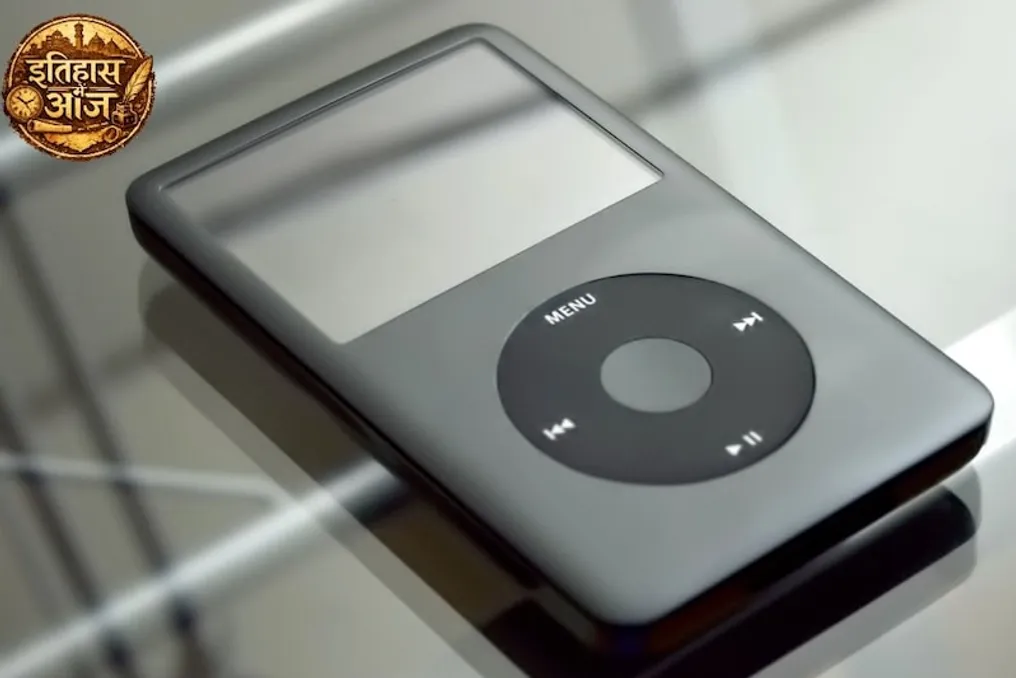
Apple's first iPod revolutionized the music industry
Read more
www.aajtak.in

Apple's first iPod revolutionized the music industry

When Apple released its first iPod, it marked the beginning of a radical change in how music was listened to. This compact player was a step toward realizing the dream of carrying thousands of songs in your pocket, transforming not only listeners' habits but also the music industry itself.

Today, listening to music on mobile phones and creating personal playlists has become extremely simple. However, previously, listening to songs while traveling required having a cassette or CD player with you. The arrival of the iPod helped popularize digital content and played a key role in transforming Apple from a computer manufacturer into a recognizable technology brand among consumers. Moreover, this shift paved the way for devices like the iPhone.

By 2001, there was growing interest in digital music, and users began moving from cassettes and CDs to MP3 players. Nevertheless, many players available at that time had limitations in usability and capacity. Steve Jobs, Apple's CEO at the time, saw an opportunity in this. In early 2001, he recruited Tony Fadell to the team to develop the iPod. The company's goal was to create a small and simple device capable of holding a huge number of favorite tracks.

The team demonstrated high efficiency and completed development ahead of schedule. The iPod was announced on October 23, 2001, and sales began on November 10, 2001.

The first iPod model was the size of a standard deck of cards. It featured a central selection button and four control buttons around it. A special feature was the mechanical scroll wheel, which allowed the user to move through the song list forward and backward. The design was also distinctive: a white front casing, a stainless steel back panel, and white headphones gave it a unique look among other music players. The interface was so intuitive that it did not require a separate power switch.

The initial price of the iPod was $399. It had a 5GB hard drive, allowing it to store about 1000 songs. The battery provided up to 10 hours of operation, and the device also had a backlit screen. Presenting the iPod, Steve Jobs claimed that listening to music would never be the same. Although this might have seemed like an exaggeration at the time, the digital music market began to grow rapidly in the following years.

The initial launch of the iPod was moderately successful, but sales did not skyrocket immediately. About 350,000 units were sold in the first year. A significant reason for this was that early versions of the iPod worked exclusively with Apple computers. This situation changed in 2002 when the company introduced an iPod version compatible with Windows computers, expanding the pool of potential buyers.

Subsequently, in 2003, Apple launched the iTunes Music Store. Through this platform, users gained the ability to legally purchase and download a large number of tracks. The collaboration between the iPod and iTunes played a crucial role in changing music purchasing and listening methods. Whereas people used to buy entire albums, the digital store made it easy to purchase just one song, stimulating the shift from physical CDs to digital downloads and altering the old business models of the music industry.

Over time, Apple began incorporating new features into the iPod. In 2005, the company added podcast downloading capability, and the iPod played a role in the popularity of podcasts. In the same year, the fifth version of the iPod Classic received a screen for viewing videos, allowing users to watch movies and TV shows. Thus, the device was no longer limited to just listening to music.

Apple released numerous iPod series, including iPod Classic, Mini, Shuffle, Nano, and Touch. In total, estimates suggest the company sold about 450 million units across all these lines.

The success of the iPod helped Apple realize that consumers preferred using digital content on small, simple, and attractive devices. In 2007, the company introduced the iPhone, which combined phone functions with the ability to play music and video. Gradually, smartphones reduced the need for specialized music players, as all functions—music, video, and much more—became available on the phone. Ultimately, Apple announced the discontinuation of iPod Touch sales in May 2022, marking the end of the iPod's story.

However, the iPod's story goes beyond the simple disappearance of a music player; it marks the beginning of an era where digital music became an integral part of daily life. The iPod simplified carrying music with you and helped Apple achieve the position from which it conquered its unique niche in the global technology market.

Popular