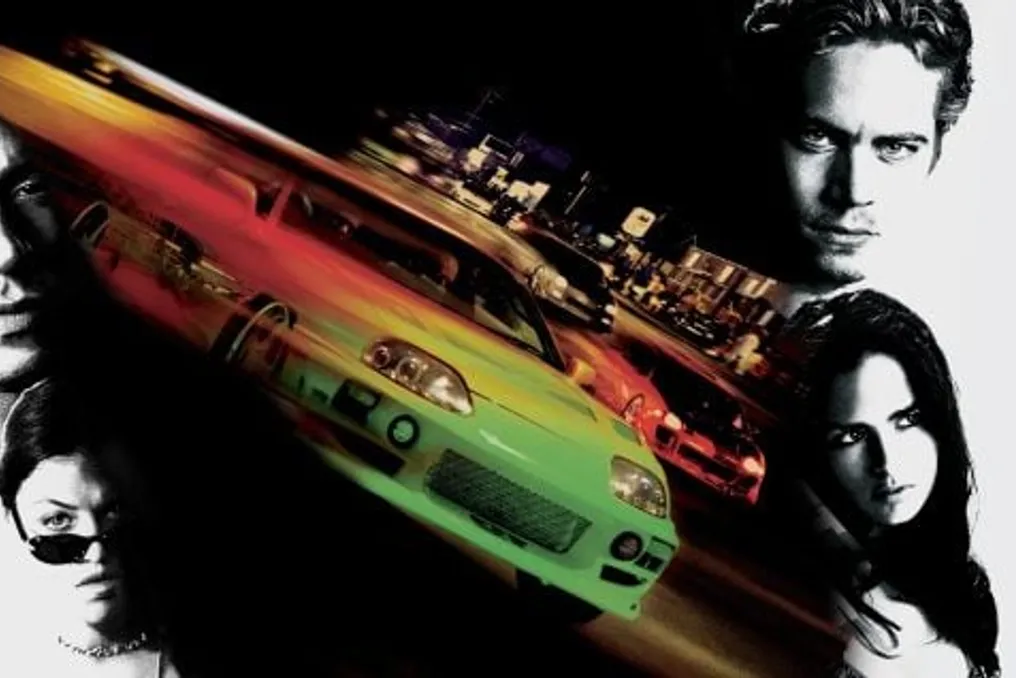
The Fast and Furious movie celebrated 25 years since its release and will be shown again in Brazilian cinemas starting November 12th. Initially conceived as just another action film, it became a cultural phenomenon thanks to the customized cars featured in the scenes.
Although tuning culture existed since the 90s, Fast and Furious significantly contributed to popularizing this type of modification. This cultural impact led many young people to shift their focus from Italian supercars to appreciating Japanese sports vehicles.
Currently, many tuning enthusiasts tend to ignore this phase, considering the colorful and accessory-laden cars as outdated. However, the influence of Fast and Furious during that time was undeniable. Five curiosities about the first film deserve highlighting.
Technical details of the iconic cars
The notorious green Mitsubishi Eclipse driven by character Brian O’Conner attracted great attention due to its paint job and the film's dialogue, suggesting it was a prestigious vehicle. However, the car depicted does not match the description; the version used in Fast and Furious was the entry-level model, the RS.
This specific model did not have a Japanese turbo engine; instead, it was equipped with a 2.0 naturally aspirated Chrysler engine, identical to the one used in the Neon, generating 142 hp. The visible modifications on the hood were mainly aesthetic, including colored hoses and spark plug wires, as well as a chrome valve cover and other ornaments. The nitro system was merely cosmetic.
Even if functional, the Eclipse would not have stood a chance against the Mazda RX-7 driven by Dominic Toretto. Although nitro increases power, it does not extend the vehicle's gears, maintaining the same top speed.
Another car that had no potential to win a race was Jesse's Volkswagen Jetta. The vehicle used in the film had a 2.0 naturally aspirated engine with 116 hp and an automatic transmission.
In the late 90s, tuning was characterized by vibrant paints, neon lighting, modified bodies, and stickers of parts brands. The vinyls with exaggerated designs from Fast and Furious were developed by the film's production team.
Artworks such as the futuristic knight on the Toyota Supra, the mechanical shark on the Nissan Maxima, and the rocket on the Mazda RX-7 were created by artists at Universal Studio, with no connection to the automotive industry. Craig Lieberman, who served as a consultant in the early films, reported that these stickers were the subject of jokes among the car suppliers.
The cars featured in the racing scenes faithfully represent the modifications of that era, but after Fast and Furious, these stickers with exaggerated art became a trend.
The case of the Nissan Skyline GT-R R33
The Nissan Skyline GT-R R33, considered the most impressive Japanese car in the franchise, belonged to Leon. It appeared in certain scenes but never participated in competitions; currently, this model is no longer available.
The Nissan Skyline GT-R was sold exclusively in Japan and could not have been in the United States in 2001, given that local legislation imposes import restrictions on vehicles less than 25 years old. The company MotoRex imported the car for research and development purposes.
MotoRex carried out the necessary procedures to legalize the Skyline GT-R in the US, which included impact and emissions testing. During the film's production, there was only one unit of this car, which is why it only served as a background extra. Although MotoRex managed to legalize some units of the Skyline GT-R, the yellow example from Fast and Furious was not part of that batch. In 2012, it was seized by the state of Wisconsin and destroyed because it lacked a valid chassis number in the US.
Science behind Nitro
Nitrous oxide (N2O), known as nitro, is a gas that can be injected into the engine to increase its power. This process increases the mass of oxygen injected, reducing heat in the combustion chamber and allowing for the burning of a greater proportion of the air-fuel mixture.
In the context of Fast and Furious, the Mitsubishi Eclipse is hit and explodes in green flames due to the use of nitro. Outside the fictional universe of the series, such an event would be impossible, as nitrous oxide is non-flammable.
Cast and Production
Actor Paul Walker participated in less successful films before Fast and Furious. He had previously collaborated with director Rob Cohen and accepted the role of Brian O’Conner when invited, although he almost lost that opportunity.
The studio even invited rapper Eminem to play the protagonist, but he declined the offer to focus on his own film, 8 Mile. Furthermore, actors Mark Wahlberg and Christian Bale were considered for the role, and Timothy Olyphant was considered for Dominic Toretto, refusing because he considered the film stupid.