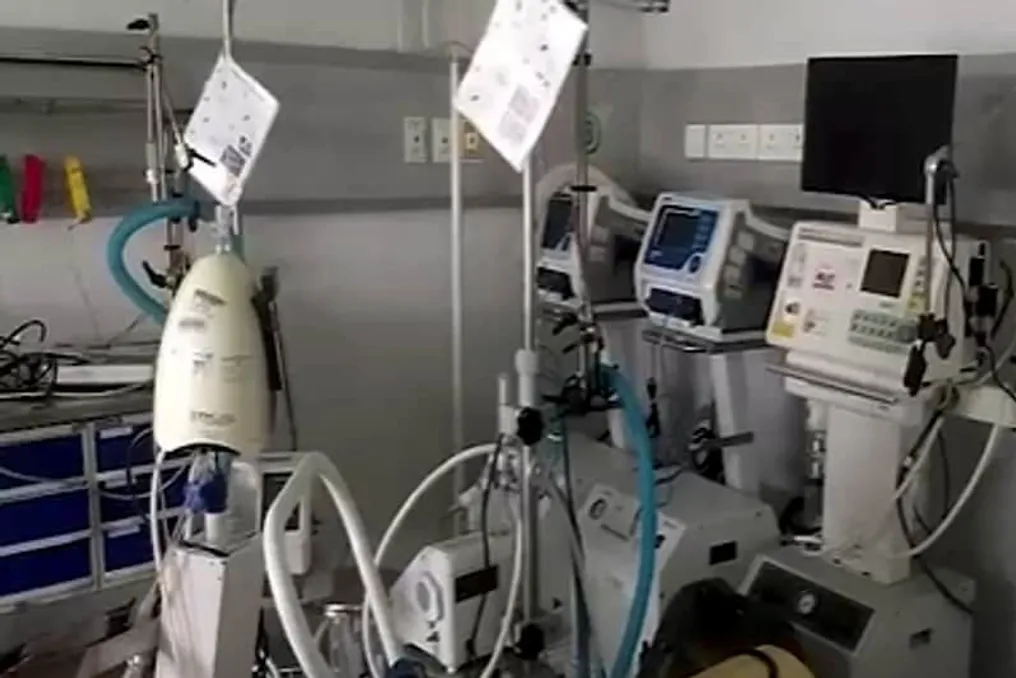
Serious issues have been observed in state medical institutions regarding the use of life-saving ventilators. Some of these devices are gathering dust, while there is a lack of qualified personnel to operate them. An investigation by AajTak revealed alarming situations in government hospitals across Rajasthan, Himachal Pradesh, Madhya Pradesh, Uttar Pradesh, West Bengal, and Punjab.
Many ventilators that were provided during the coronavirus pandemic to assist patients remain unused years later.
In Pali, Rajasthan, at the Bangad hospital, ventilators were discovered covered with sheets and yellow polyethylene film. According to the hospital's chief physician, Dr. Kailash Parihar, the need for these devices has decreased due to a reduction in the number of severe patients. Nevertheless, the hospital administration asserts that all ventilators are functional and regularly cleaned.
This raises the question of why these devices were not redistributed to other hospitals if they are not needed at this facility. The Minister of the Cabinet of Ministers of Rajasthan, Joraram Kumawat, stated that an inquiry into this matter would be conducted.
At the regional hospital in Dindiyapal Upadhyay in Shimla, Himachal Pradesh, 20 ventilators from the PM Cares fund were received, but currently, only eight of them are operational. Approximately a dozen units are stored in a warehouse.
The hospital administration attributes this to technical malfunctions in several machines, including issues with screens and software. Medical Director Dr. Lokendra Sharma provided information on the equipment's condition. In turn, Health Minister Dhaniram Shandil accused the then-BJP party of negligence in maintenance and noted that the center had sent an excessive number of ventilators.
In the district hospital in Shahdol, Madhya Pradesh, ventilators received from the PM Cares fund were found closed up in one room. Hospital management insists that the machines work, but their use is impossible due to a shortage of trained medical staff.
A similar situation was recorded at the Sardar Vallabhbhai Patel District Hospital in Satna, which has 500 beds. Although the trauma department has ventilator-supported beds for cardiac patients, there is a shortage of nursing staff. According to civil surgeon Dr. Amara Singh, out of seven ventilators received by the hospital, six are functional, and one has been sent to Bhopal for repair.
At the Maharajganj Women's Hospital in Uttar Pradesh, faulty ventilators and other medical equipment were found on the fifth floor. The devices delivered during the pandemic have still not been used to treat patients. Chief Medical Officer Dr. Surendra Kumar Choudhary reported that the intensive care unit is ready for operation, but the installation of gas lines for medical gases is not yet complete. There is also a shortage of trained staff, but he stated that the system's operation will begin soon.
Faulty ventilators were also discovered at the Dinahata hospital in Kuchbihar, West Bengal. The hospital administration acknowledged the breakdowns and promised to carry out repairs soon.
In the Civil Hospital in Firdujpur, Punjab, four ventilators delivered during the pandemic remained unused for a long time. The hospital administration cited staff shortages and basic conditions as the reason. However, senior medical officer Dr. Nihil Gupta reported that the intensive care unit started operating last week, and four ventilators have been installed.
The investigation raises serious questions about the readiness of the public healthcare system. In some places, equipment is broken, in others it sits in closed rooms, and in some places, there is no staff to operate it. The issue is not just about purchasing ventilators, but about ensuring that patients can benefit from them when needed. The responsibility of hospital administrations and the health department is to ensure that multi-million dollar medical equipment serves to save patients' lives.