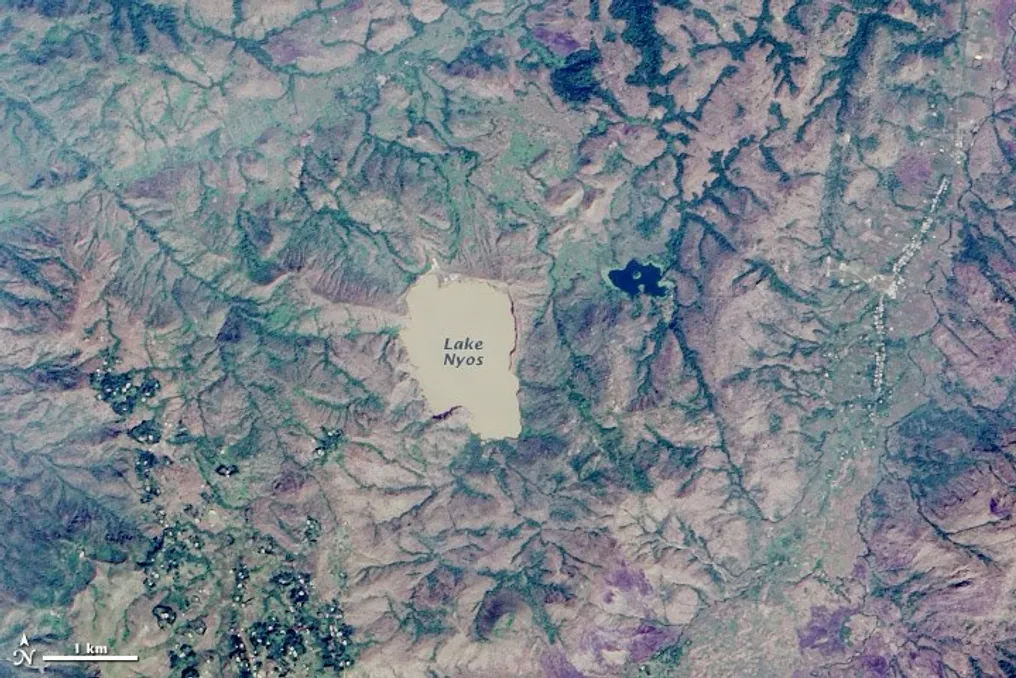
A silent and unexpected calamity struck northwestern Cameroon on the night of August 21, 1986. An invisible mist of carbon dioxide rose from the depths of Lake Nyos, located approximately 315 km northwest of Yaoundé, the capital of the African country. This gas spread through adjacent valleys, causing the suffocation of entire villages, resulting in the death of over 1,700 individuals and 3,500 domestic animals in a matter of a few hours.
The lake, situated in the volcanic crater of Oku, was a gathering point for communities of farmers and livestock breeders. However, that night, a dense toxic mass replaced the oxygen while everyone slept. The incident quickly became one of the deadliest natural disasters in the country's history and sparked great global scientific interest.
According to reports by the local state newspaper Cameroon Tribute, research conducted in subsequent years elucidated the cause of the disaster. Carbon dioxide, originating from the Earth's mantle, had accumulated at the bottom of the lake over decades, held under high pressure by more than 200 meters of water. While the surface layers contained oxygenated water, the lower parts continuously and dangerously accumulated the gas.
The structure of Nyos functioned like a pressurized container. A destabilizing event, such as a landslide on the slopes, was enough to alter the delicate hydrological balance. This disturbance triggered a sudden chain reaction, forcing the trapped gas to rise to the surface and rapidly release into the air.
Thiago Maia, a physicist, astrophysicist, and specialist in natural phenomena, who is also an ambassador for the World Climate Declaration in Brazil, detailed the exact mechanism of this silent threat in an interview with Olhar Digital. He explained that geological carbon dioxide reaches the bottom of the lake through fissures in the rocks and remains dissolved due to the high pressure of the water. Since the deep layers rarely mix with the surface layers, the accumulation can last for decades.
The expert stressed that the precise trigger of Nyos is still unknown. He added that when the deep water begins to rise, the pressure drops and the gas forms bubbles, which causes a rapid and intense release. An article from the European Geological Society (EGU) points out that, in normal atmospheric concentrations, carbon dioxide does not pose a direct risk; however, in massive proportions, it acts as an asphyxiant agent, displacing oxygen. Because it is denser than air, the cloud slid down the mountains toward residences, killing inhabitants before they realized the danger.
Two years before the Nyos tragedy, Cameroon faced a similar event in Lake Monoun, 100 kilometers away, which resulted in 37 deaths. Researchers classified this unusual event as a limnic eruption—an explosion where gases accumulated at the bottom of a lake abruptly emerge to the surface, releasing lethal clouds over the surrounding area.
According to Maia, besides Nyos and Monoun, Lake Kivu, located between Rwanda and the Democratic Republic of Congo, presents a similar risk. In Brazil, there are no records of formations with analogous conditions or the risk of a catastrophic limnic eruption. To assess this risk, scientists monitor temperature, pressure, concentration of dissolved gases, and the stability of the distinct water layers.
To prevent future disasters, engineers implemented degassing pipes in Nyos, which gradually release the accumulated carbon dioxide. Currently, scientists confirm that the volume of gas at the site has drastically decreased and no longer constitutes an immediate danger, considering the environment safe for the return of local populations.
However, Maia warns that engineering intervention does not eliminate the risk permanently. The degassing pipes reduce the danger by removing carbon dioxide from the deep waters in a controlled manner, but they do not eliminate it entirely, as the gas can continue to reach the lake through natural geological processes.
He suggests that the ideal approach to ensure long-term safety must combine periodic mechanical purging with continuous data monitoring and constant maintenance of alarm and communication systems intended for the region's residents.
Despite technological advances and declared safety, the psychological impact remains profound among survivors. Reports indicate vivid memories of that night, marked by structural tremors and the complete absence of warnings about the threat that was rapidly approaching before the desperate escape.
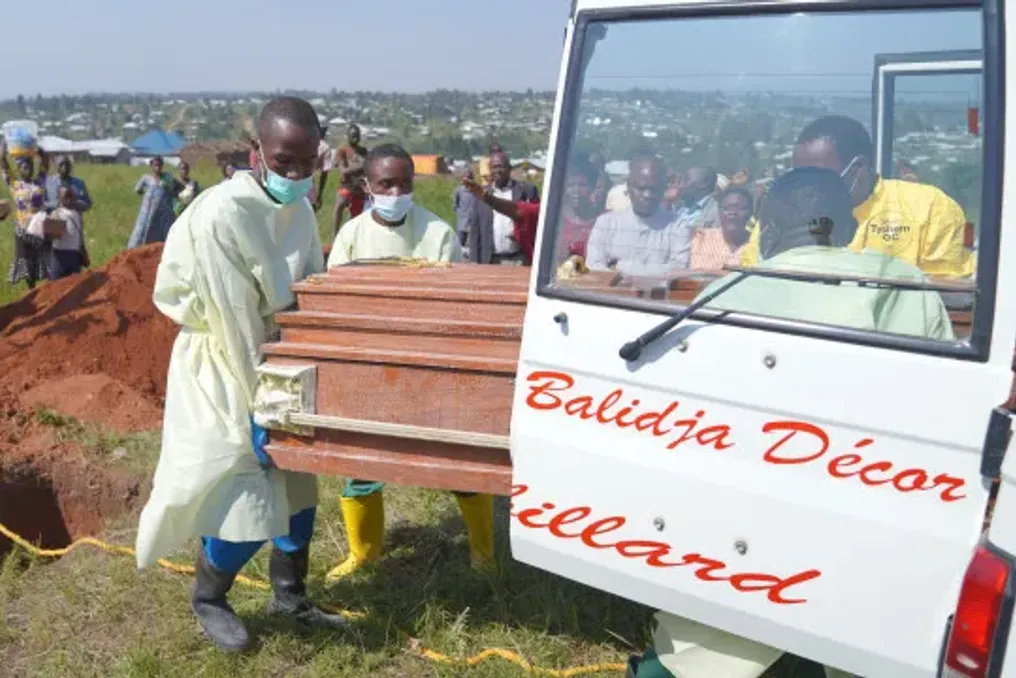
Many residents who returned to their lands the next day found scenes of total destruction, with streets and houses filled with the bodies of relatives, neighbors, and pets. Entire families were wiped out, leaving isolated survivors who needed to be rescued and relocated to new government settlements.
Four decades later, the marks of the disaster persist in the collective memory. As reported by Deutsche Welle (DW), despite being aware of the drastic reduction in the risks of a new gas release, many survivors still show hesitation in approaching the shores, maintaining a constant fear and the pain of loss.
In addition to the fear of the lake itself, armed conflicts in the country impose another obstacle to the definitive return of families. Since 2016, violent confrontations between government forces and separatist groups have affected the Anglophone region where Nyos is located, complicating rehabilitation plans and access for support and research teams.
Even in the face of insecurity and the risks posed by fighting, many survivors harbor the desire to reclaim their ancestral territory, as returning means honoring the memory of relatives buried there, despite the political instability and historical trauma that delay the restart and complete reconstruction of the affected area.