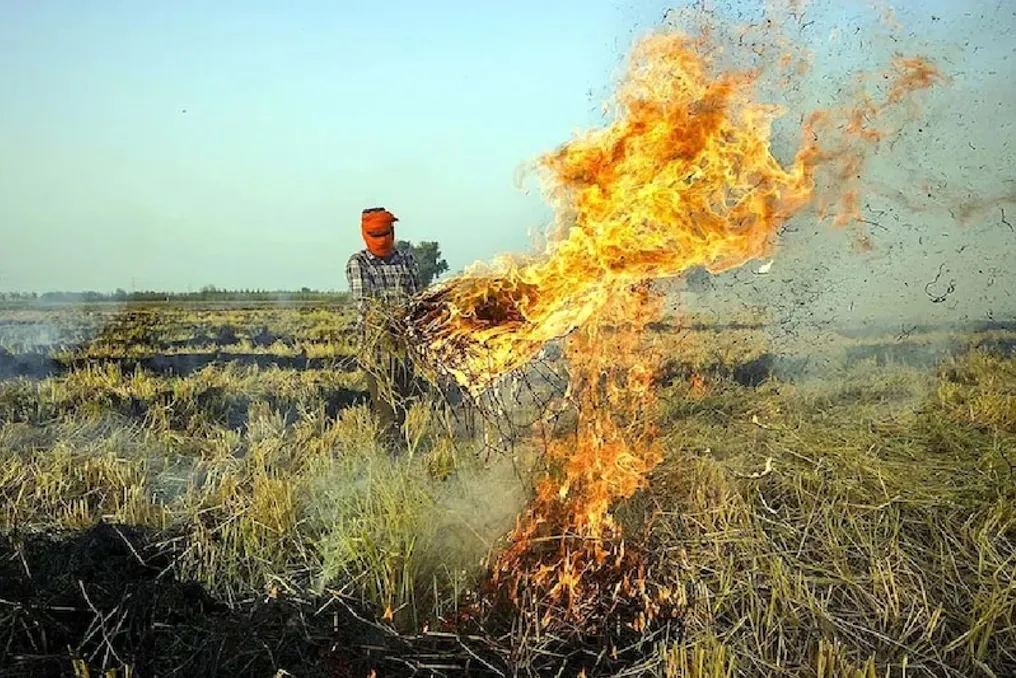
To control rising air pollution in the National Capital Territory and surrounding areas, the Commission for Air Quality Management (CAQM) issued directives to the governments of Punjab and Haryana regarding the prevention of stubble burning.
The Commission emphasized the need for effective implementation of stubble management plans on the ground, rather than merely having them on paper. Furthermore, it was instructed to intensify monitoring of pollution originating from vehicles, construction activities, and industrial units.
During the winter period, a consultative meeting was held with officials from both states to manage the air pollution situation. CAQM also stressed the importance of providing farmers with machinery for stubble management and incentivizing its use.
Separate meetings were held with officials from Punjab and Haryana in Chandigarh, chaired by Rajesh Verma. During these meetings, the states' work on stubble management, the use of Crop Residue Management (CRM) machinery, and implemented pollution control plans were analyzed.
The Commission examined methods used for monitoring and preventing stubble burning. Officials were mandated to implement pollution control measures within specified timelines and continuously track their effectiveness.
During the meeting in Punjab, the number, placement, and usage of available wheat stubble management machinery by farmers were inspected. The Commission provided instructions to rectify identified shortcomings in equipment utilization. Emphasis was also placed on strengthening the system for collecting, transporting, and properly disposing of stubble.
In the Commission's view, providing farmers with necessary resources and ensuring the efficient use of existing systems is critical to preventing stubble burning. The possibility of using satellite alerts, drones, and low-cost sensors to detect stubble burning incidents and relay information to relevant authorities was also discussed.
Progress in utilizing biomass derived from stubble in brick kilns and the goals for co-combusting biomass with coal in thermal power plants to promote alternative uses for stubble were discussed.
The meeting with Haryana officials covered not only stubble burning but also other sources of pollution. These included vehicle emissions, dust from roads and open areas, pollution from construction and demolition activities, and industrial emissions.
The Commission checked compliance with rules related to checking vehicle Pollution Under Control Certificates (PUCC) through the Automatic Number Plate Recognition (ANPR) system at fuel and CNG stations. Progress in taking action against vehicles reaching the prescribed age and the phased withdrawal of diesel auto-rickshaws was also assessed.
CAQM insisted on mechanized cleaning to control road dust. Instructions were given for the effective implementation of measures to prevent dust raising at construction and demolition sites. Additionally, industrial units were directed to ensure compliance with established environmental standards. The Commission noted the need for simultaneous action across all major pollution sources to enhance the effectiveness of air quality improvement efforts.
CAQM tasked Punjab and Haryana with timely implementation of their action plans. The Commission also highlighted the importance of improving coordination between district administration and relevant departments, as well as informing farmers about the significance of stubble management. The Commission warned that an increase in stubble burning due to negligence would be taken seriously.
Furthermore, the states were advised to strengthen monitoring systems and actively work on the ground to prevent stubble burning. The Commission stated that stubble should be viewed not just as a source of pollution, but as a valuable resource. This can be achieved by developing biofuel production based on stubble and promoting its industrial use.
Steps in this direction include promoting the use of biomass in brick kilns and thermal power plants. According to the Commission, this can stimulate alternative use of stubble and support a circular economy. Coordinated efforts from Punjab, Haryana, and relevant agencies are necessary for effective control of winter air pollution.