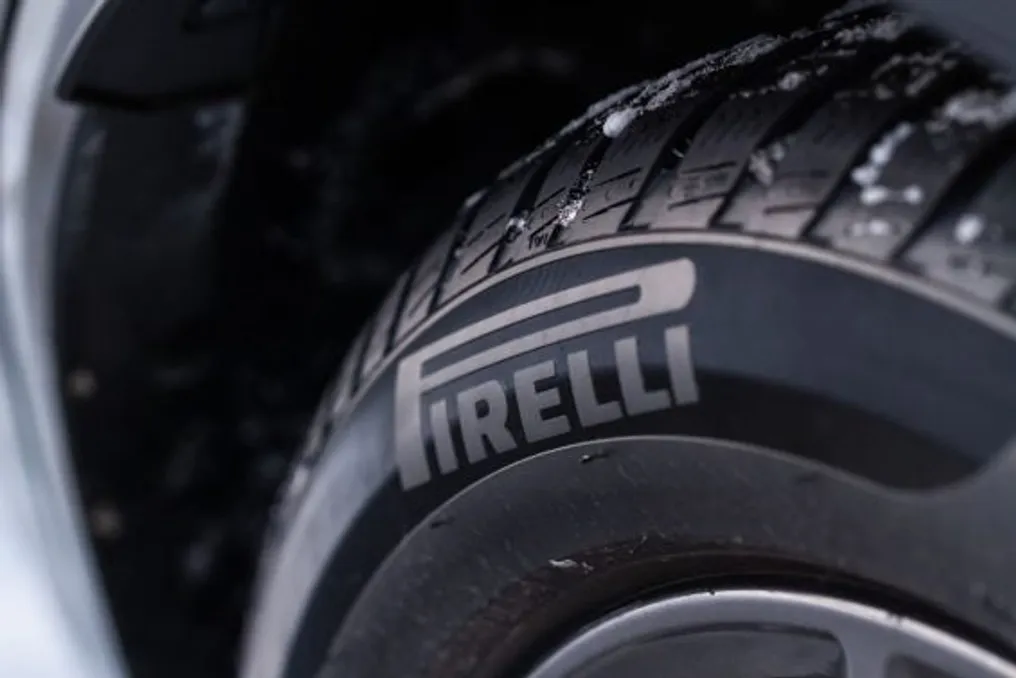
Pirelli has implemented a sensor within its tires, allowing a vehicle to stop 5.7 meters sooner during braking on wet surfaces, surpassing the length of a Toyota Hilux.
This result was evaluated by the British magazine evo, which conducted tests with the Cyber Tyre at the Vizzola racetrack, owned by Pirelli, near Milan, Italy. This technology, which has been under development for twenty years, functions to monitor tires in real time and adjust the vehicle's electronic safety systems.
Each tire is equipped with a Bluetooth sensor, the size equivalent to three stacked 25-cent coins, fixed on a starfish-shaped base. This component weighs approximately 12 grams, supports up to 3,000 times the force of gravity, and has an estimated lifespan of about five years.
The device provides information on pressure, temperature, wear, and tire type. A receiver installed on each axle transmits this data to the onboard computer, where an algorithm developed in collaboration with Bosch makes the necessary adjustments to the ABS, ESP (stability control), and traction systems.
Without the Cyber Tyre, these systems operate using calibrations based on a general average of tires. The technology was initially introduced in the Pagani Utopia, a hypercar with 864 hp, and was later adopted by manufacturers such as Aston Martin and McLaren. According to The Drive, BMW models are also being equipped with this system.
To make the system accessible to lower-cost vehicles, Bosch will take responsibility for making the technology available for tires from various brands.
During a braking test from 110 km/h to a complete stop, evo compared the same car using winter tires with the Cyber Tyre activated and deactivated. With the system active, the vehicle already had exact knowledge of the available grip level and was directed directly to that limit, instead of performing a gradual 'test' process.
This type of braking in humid conditions forms the basis for the grip rating present on the Inmetro seal, which is mandatory for tires sold locally. In a hydroplaning test, with approximately 0.7 cm of water, the car maintained a straight trajectory when the driver turned the steering wheel with the system off. When the Cyber Tyre was on, it used the rear brakes to guide the car in the intended direction.