
Jindal Stainless profit grew by 11% to 898 crore rupees, revenue increased by 18% in the second quarter of fiscal year 27
Read more
Business Standard
business-standard.com

Jindal Stainless profit grew by 11% to 898 crore rupees, revenue increased by 18% in the second quarter of fiscal year 27

Jindal Stainless Ltd (JSL), India's largest stainless steel producer, reported an 11% rise in profit after tax (PAT) to 898 crore rupees for the quarter ending September 2026. This figure surpasses the 808 crore rupees recorded in the same quarter of the previous fiscal year (2025-26). The company's revenue for this period also increased by 18%, reaching 12,874 crore rupees compared to 10,893 crore rupees last year.

The company noted that this quarter marked a steady recovery following operational disruptions in the first quarter, which were caused by the geopolitical situation and restrictions on industrial gas supply. Quarterly, the company demonstrated a growth in total sales volume of 14.4% and an increase in net revenue of 14.1%.

JSL explained that demand was sustained by the increase in the share of value-added products, as well as growth in the automotive industry and decorative pipes and fittings segments. The company also highlighted that globally, plates and ferritic grades have gained wide adoption, especially in home appliances, elevators, and escalators.

Meanwhile, the domestic market has seen increased import pressure since April 2026. JSL indicated that in July 2026, imports of flat stainless steel products from China reached 2.9 times the average monthly figure for the 2026 fiscal year, and the first four months of the 2027 fiscal year accounted for about 63% of all imports from China in the previous year.

JSL's exports significantly increased during the quarter, rising by 20% quarterly and 36% year-on-year. The company continues to expand its global presence, focusing particularly on developing markets such as South Korea, Colombia, South Africa, Brazil, and Japan.

Furthermore, the company's board of directors approved the merger of Chromeni Steels Limited, Rabirun Vinimay Private Limited, JSL Super Steel, and Jindal United Steel into Jindal Stainless Limited to simplify the group structure. JSL stated that the consolidation of wholly-owned subsidiaries will optimize the use of financial and other resources, enhance operational efficiency, reduce administrative and compliance costs, eliminate intra-group transactions and balances, strengthen corporate governance, and promote better management oversight and decision-making, thereby creating long-term value for all stakeholders.

Commenting on the results, JSL Managing Director Abhiuday Jindal noted that the company achieved growth in the second quarter based on the recovery from the geopolitical crisis that affected operations in the first quarter. This success was driven by stable domestic demand, supported by strong economic growth and increased sensitivity to the life-cycle cost approach. He added that after suspending quality control orders and the subsequent influx of substandard stainless steel imports into India, particularly from China and of Chinese origin, the company focused on maintaining sales volumes by serving growing domestic markets and seeking new export destinations.
Similar stories

Eternal's net profit grew by 92% in the second quarter of fiscal year 2027, revenue increased by 78%
Read more
yourstory.com

Eternal's net profit grew by 92% in the second quarter of fiscal year 2027, revenue increased by 78%

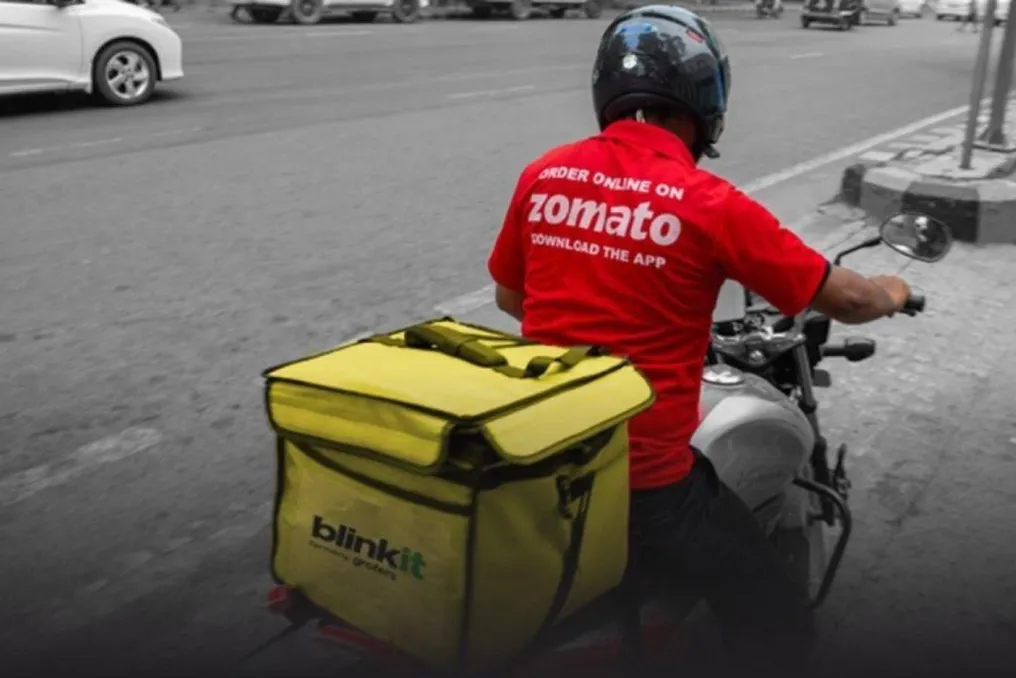
Eternal, the parent company of Zomato and Blinkit, reported significant growth in net profit during the second quarter of fiscal year 2027. The company's profit increased by 92.3% compared to the same period last year, while revenue grew by 78% year-over-year. Nevertheless, the results were below analysts' forecasts, who expected a net profit of 250 crore rupees.

Eternal's net profit for the second quarter of fiscal year 2027 amounted to 125 crore rupees, which is higher than the 65 crore rupees recorded in the same period a year earlier. Revenue reached 24,138 crore rupees compared to 13,590 crore rupees in the corresponding quarter of the previous fiscal year.

The quick commerce segment, Blinkit, remained a key source of income, generating revenue of 19,152 crore rupees in the second quarter of fiscal year 2027. According to Eternal's data, Blinkit's average order value (NOV) grew by 79.3% year-over-year. The platform added 308 new stores, bringing the total number of stores to 2,751.

Blinkit's adjusted EBITDA improved for the sixth consecutive quarter, reaching 0.9% of NOV, equivalent to a profit of 184 crore rupees, whereas the loss a year earlier was 156 crore rupees. Eternal forecasts that Blinkit's store count will exceed 3,500 by March 2027 and potentially reach 5,000 by March 2028.

Albinder Singh Dhindsa, CEO of Eternal Group, noted that in the quick commerce business, not only the growth rate but also the quality of that growth is important. He emphasized that each store has limited capacity, and customers coming only for deep discounts use the same capacity as those ordering weekly from different categories. He added that attracting customers through price reductions might be faster, but such buyers often leave after the discounts end.

Regarding the food delivery business, Zomato demonstrated a 21.5% year-over-year increase in NOV, and the company stated that the acceleration of growth has continued for the fifth consecutive quarter. Eternal's founder, Dipinder Goyal, commented on the situation in the food delivery segment, expressing satisfaction with the current state of the business. However, he clarified that they try not to draw hasty conclusions based on a single quarter. His long-term expectation for food delivery has always been over 20% annual growth, and the last two quarters have brought the company back into this range. He also noted that this view has not changed either last year when growth slowed down or now when growth has resumed.

Bajaj Finance profit grew by 28.7% in the second quarter to ₹6,367 crore due to lending growth
Read more
business-standard.com

Bajaj Finance profit grew by 28.7% in the second quarter to ₹6,367 crore due to lending growth

Bajaj Finance reported a 28.7% year-on-year rise in quarterly profit on Monday, driven by a steady increase in its loan portfolio volume.

The consolidated profit after tax for the non-banking financial company reached ₹6,367 crore (US$670.74 million) for the second quarter ending September 30, compared to ₹4,948 crore the previous year.

Overall lending growth among non-banking lenders was supported by high demand for consumer financing, consistent borrowing by small businesses, and growing demand for housing and gold loans.

Asset Dynamics and Growth Segments

Bajaj Finance's assets under management increased by 26% year-on-year for the September quarter, marking the fastest pace since March 2025. Meanwhile, gold loans doubled year-on-year, and rural consumer financing grew by 63%.

Loans to small and medium enterprises, for which the company has tightened underwriting after a period of higher default rates, increased by 3%.

Financial Metrics

The company's net interest income—the difference between interest earned on loans and interest paid on borrowings—rose by 24% to ₹13,335 crore. The gross non-performing asset ratio of the non-banking lender improved to 1.06% from 1.24% the previous year, but sequentially worsened compared to 0.96%.

The cost of credit, which reflects provisions set aside for potential loan losses, improved to 1.56% compared to 1.88% the previous year, but remained virtually unchanged sequentially.

Axis Bank's profit grew by 38% to 7,003 crore rupees, but failed to meet analysts' expectations
Read more
business-standard.com

Axis Bank's profit grew by 38% to 7,003 crore rupees, but failed to meet analysts' expectations

Indian private lender Axis Bank reported its quarterly profit on Saturday, which slightly missed analysts' forecasts. Higher operating expenses and a decrease in income from other sources offset strong lending growth and reduced provisions.

Axis Bank, the third-largest private bank in the country by assets, recorded a net profit of 7,003 crore rupees (US$737.5 million) for the quarter ending September 30. This figure significantly exceeds the 5,090 crore rupees recorded a year earlier.

According to data collected by LSEG, the average analyst forecast was 7,124 crore rupees. Income from other operations, which includes profits from bonds and other investments, decreased by 1.4 percent to 6,531 crore rupees.

The rise in bond yields and rupee volatility during the quarter put pressure on the treasury of the Mumbai-based bank, restraining earnings despite the expansion of lending across various segments.

Banks across India demonstrated confident lending growth during the quarter in both corporate and retail portfolios. Net interest income increased by 11.8 percent, reaching 15,371 crore rupees, supported by a 23 percent rise in total loans. Meanwhile, deposits grew by 20.7 percent compared to the previous year.

Provisions for potential bad loans and other unforeseen expenses decreased by 52.2 percent, amounting to 1,694 crore rupees. It is worth noting that the gross non-performing asset ratio at the end of September stood at 1.16 percent, lower than the 1.28 percent recorded three months prior.

Popular