Bali is famous for its beaches, rice terraces, and tropical landscapes, but among the island's most amazing places are man-made structures. Ancient Hindu temples rise above the ocean, intricate stone gates frame volcanic mountains, and royal water palaces combine rich architecture with ponds, fountains, and meticulously planned gardens.
For travelers interested in architecture, Bali offers a unique blend of religious sites, traditional villages, historical royal residences, and modern cultural monuments. Many reflect the island's Hindu traditions and its close connection to nature, while others demonstrate the craftsmanship and design influence that has shaped Balinese life over centuries.
Some of these attractions, such as Uluwatu Temple and the famous Lempuyang Gates, are already well-known to tourists. However, there are other places, including an unusual temple in northern Bali and one of the island's largest Buddhist monasteries, that offer a different perspective on this destination.
If you are planning a trip to the Island of Gods in Indonesia, these architectural masterpieces of Bali must be included in your itinerary.
Uluwatu Temple
Located on a limestone cliff approximately 70 meters above the Indian Ocean, Uluwatu Temple is one of Bali's most recognizable architectural symbols. Its impressive location attracts visitors not only for the panoramic views, but the temple itself plays an important role in the island's Hindu heritage.
The local name for the temple is Pura Luhur Uluwatu. It features traditional Balinese stonework, richly decorated gates, and sacred courtyards situated on the edge of the cliff. The temple's design is closely linked to its spiritual purpose, as it is considered one of the island's important sea temples.
It is recommended to visit the complex closer to evening to see it in the changing light, and then stay to watch the traditional Kecak fire dance, which is often performed against the backdrop of the sunset. Be mindful of your belongings, as local monkeys are known to snatch unsecured items.
Tanah Lot Temple
Few things convey Bali's connection to the ocean as much as Tanah Lot Temple. This temple, built on a rocky promontory near the shore, appears almost separated from the mainland during high tide, creating one of the island's most photographed architectural scenes.
Tanah Lot is a Hindu place of worship with strong ties to Bali's coastal spiritual traditions. Its appeal is partly due to the contrast between the dark volcanic rock, the crashing waves, and the traditional rooflines of the temple.
The adjacent complex includes landscaped paths, small shrines, and viewpoints, allowing visitors to spend more time here than just taking a quick sunset photo.
Traveler's Tip:
Arrive well before sunset if you want time to walk around the grounds. Access to the rock depends on tidal conditions, and visitors should follow local instructions in sacred areas.
Pura Ulun Danu Beratan
One of Bali's most characteristic landmarks looks as if it is floating on the surface of a lake. Pura Ulun Danu Beratan is located near Lake Beratan in the cooler central highlands of the island, where its multi-tiered Meru shrines rise above the water against a backdrop of green mountains.
This temple is associated with the goddess Dewi Danu, a Hindu goddess connected to lakes and water. Its surroundings reflect the importance of water in Balinese spiritual life and agriculture, where religious rituals and irrigation management have long been closely intertwined.
The multi-tiered roofs, traditional pavilions, and meticulously maintained grounds make this stop valuable for anyone interested in sacred architecture. Early morning is particularly atmospheric, especially when mist hangs over the lake. Bedugul is also worth visiting for those heading inland, offering a cooler change of scenery compared to the busier coastal resorts of Bali.
Lempuyang Gates
The stunning split gates at Lempuyang Temple have become one of Bali's most recognizable tourist images. Framing Mount Agung in the distance, the tall stone portal creates a dramatic composition that draws visitors to the eastern parts of the island.
The complex is part of the sacred temple complex Pura Lempuyang Luhur, associated with Bali's important mountain sanctuaries. The split gates, known as Candi Bentar, are a signature element of Balinese architecture. Their two halves form a symbolic threshold between spaces, rather than a typical closed entrance.
Although tourists often call these gates the 'Gates of Heaven,' there is much more at this site than just a photo opportunity. The wider temple complex stretches up the mountain and includes additional shrines and gates.
Traveler's Tip:
Arrive early to increase the chances of a clear view of the mountains and to avoid the busiest periods. Remember that this is a sacred place of worship, not just a photo spot.
To grasp the scale of Bali's religious architecture, few things compare to Besakih Temple. Often called the Mother Temple, this vast complex is located on the slopes of Mount Agung, Bali's highest volcano, and consists of numerous temples and sacred structures.
Besakih is not a single building but a collection of interconnected shrines, staircases, courtyards, and temples situated along the mountain slope. Its multi-level Meru roofs, stonework, and elevated position create an impressive architectural landscape.
The complex holds immense religious significance for Balinese Hindus and remains an active place of worship. Ceremonies are held throughout the year, so visitors may encounter processions and devotees in traditional attire. It is recommended to allocate several hours for a visit, especially if you want to appreciate the various levels and viewpoints. A local guide can help explain the temple's layout and cultural significance.
Taman Ayun Temple
Not all architectural attractions in Bali require a dramatic cliff or volcanic backdrop. In Mengwi, Taman Ayun Temple offers a more measured view of beauty, featuring traditional temple towers, landscaped gardens, and a wide moat surrounding the complex.
Built as a royal temple of the Mengwi kingdom, Taman Ayun is an important example of Balinese religious and royal architecture. Its name is often translated as 'beautiful garden,' which perfectly matches the description of its greenery and water features.
The complex is also part of the UNESCO World Heritage Cultural Landscape of Bali, which recognizes the interconnection between traditional water temples, agriculture, and the island's spiritual philosophy. The carefully organized inner courtyards and multi-tiered shrines are particularly interesting to visitors who wish to understand how Balinese architecture organizes sacred space. It is a useful stop when traveling between South Bali and the central regions of the island and can be combined with visits to nearby traditional villages.
Tirta Gangga Water Palace
In eastern Bali, the Tirta Gangga Water Palace offers a different perspective on the island's architectural heritage. Built as a royal water garden, this complex combines pools, fountains, statues, paved walkways, and lush vegetation in a series of carefully arranged spaces.
The palace was created by the Karangasem royal family and derives its name from the sacred Ganges River in Hindu tradition. Water is a central element of the design, flowing through the gardens and connecting different levels of the area. The most photographed section includes stone pathways crossing a large pond filled with ornamental fish. However, look beyond the obvious photo spots to discover fountains, sculptural details, and smaller architectural elements that reward a slow stroll.
Tirta Gangga is an excellent choice for those interested in the relationship between landscape design and architecture. Its location in East Bali also makes it a natural addition to a trip that includes Lempuyang Temple or the nearby Taman Ujung Water Palace.
Taman Ujung Water Palace
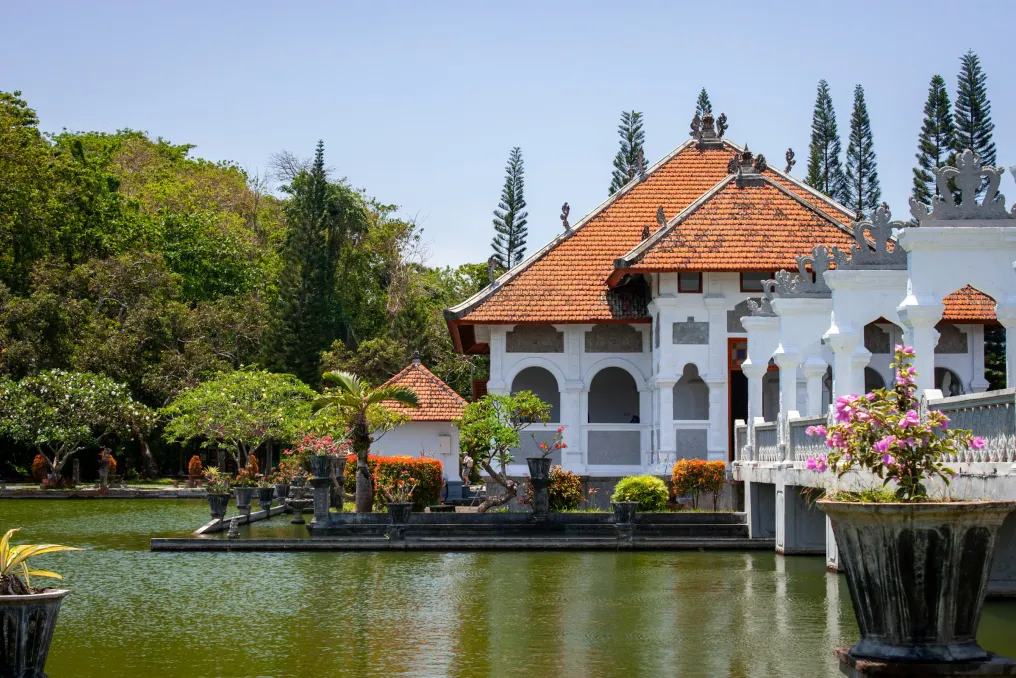
If you enjoy historical buildings but prefer to avoid the crowds around Bali's most famous attractions, set aside time for Taman Ujung Water Palace. Also known as Taman Suakasada Ujung, this former royal secluded complex is one of the island's most fascinating architectural sites.
The complex was designed in the early 20th century by the Karangasem royal family. Its design blends Balinese, European, and Chinese influences, featuring elegant pavilions, bridges, and wide reflective pools set against hills and coastal landscapes. Unlike a traditional temple complex, Taman Ujung was designed as a royal garden and retreat. Its buildings are situated within an expansive landscape where water forms the central part of the overall composition. The result is a fascinating blend of architectural styles reflecting Bali's history and its connections with the outside world. Visit it together with Tirta Gangga to spend a day exploring the royal heritage of East Bali. Both sites offer contrasting interpretations of the water palace, each with its own character.
Bali's architectural heritage is not limited to Hindu temples. In the hills above Badung in northern Bali is the Brahmavihara-Arama, the island's largest Buddhist monastery—a tranquil complex of terraced courtyards, meditation areas, and decorative structures.
The monastery opened in 1971 and combines Buddhist symbolism with elements of traditional Balinese stonework. Its location on the hillside creates a natural progression across the grounds, with gardens and buildings situated on multiple levels. One of its outstanding features is a miniature replica of Borobudur, the famous Buddhist monument in Java. Built in 1999, it is located at the highest point of the complex and serves as a striking architectural focal point. The monastery remains an active place of worship and meditation, so visitors should maintain silence and dress modestly. Its serene atmosphere and views of North Bali make it an attractive stop for travelers seeking something beyond the island's more famous sights.
Penglipuran Traditional Village
Architecture in Bali is not limited to grand monuments. The layout of an entire community in Penglipuran gives insight into traditional Balinese design and daily life. This village is known for its orderly main road, traditional courtyard entrances, stone walls, and meticulously maintained gardens. Houses are arranged in a characteristic pattern, with entrances and buildings reflecting local customs and concepts of organizing domestic and public space. Instead of admiring a single building, visitors can see how architectural elements repeat throughout the settlement. The gates, inner courtyards, and traditional materials give the village a uniform appearance, while the adjacent bamboo forest adds another dimension to the landscape. Penglipuran is popular with visitors but remains a living community. It is essential to respect the privacy of the residents, follow local instructions, and remember that homes are residences, not museum exhibits. For those interested in vernacular architecture, it is a useful reminder that Bali's cultural heritage is as much about people's way of life as it is about monumental temples.
Garuda Wisnu Kencana Cultural Park
For a more modern architectural landmark, visit the Garuda Wisnu Kencana Cultural Park on Bukit Peninsula. The enormous statue of the Hindu god Vishnu seated on the mythical bird Garuda is one of Bali's most recognizable modern monuments. The monumental sculpture dominates the surrounding limestone landscape and serves as the center of the cultural park, dedicated to Indonesian heritage, performances, and events. Its scale sharply contrasts with the more intimate stone temples scattered across the island. The statue is also an example of how traditional religious imagery continues to shape modern Indonesian art and public monuments. Within the park, visitors can explore open spaces, cultural venues, and performance areas. Allocate enough time to view the monument from different angles and explore the rest of the grounds. It is a worthwhile addition for travelers.