The World Bank is developing a $100 million program intended to carry out primary healthcare reform in the Samarkand region. This initiative includes improving the operating conditions of family polyclinics, enhancing the qualifications of medical personnel, and implementing digital technologies in the healthcare sector.
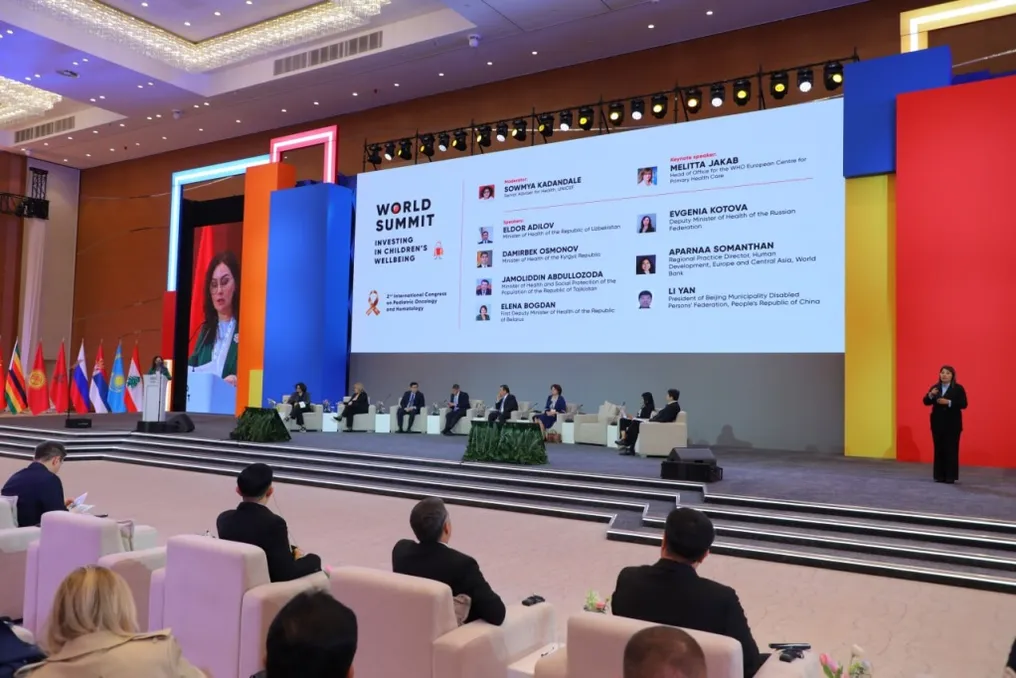
Details of the planned transformations and issues related to the accessibility of medical care were shared by a correspondent from Podrobno.uz during a session on child health held within the framework of the World Summit on Child Well-being in Samarkand.
Challenges in Uzbekistan's Healthcare System
Aparna Somanatan, the regional practice leader of the World Bank in Health, Nutrition, and Population for Europe and Central Asia, noted serious deficiencies in Uzbekistan's medical institutions. She pointed out that over half of medical facilities lack functional toilets, and the share of institutions with an adequate medical waste disposal system does not exceed 10%.
Goals and Directions of the Funding Program
According to Aparna Somanatan, the World Bank is preparing support for a nationwide primary healthcare reform, and the Samarkand region was chosen for its implementation because it has the highest number of low-income citizens in the country. At the time of the speech, the program was in the preparation stage and was due to be presented to the World Bank's board of directors next month, meaning the funding has not yet been approved.
The proposed reform focuses on three key aspects. Firstly, it is improving the working conditions of family polyclinics. The allocation of funds will be contingent upon the institutions meeting requirements for climate resilience, energy efficiency, and emergency preparedness. Aparna Somanatan specified that funds will only be provided after identified shortcomings are rectified.
Secondly, staff training is provided for medical personnel. Nurses, obstetricians, and managers must undergo practical training corresponding to necessary professional skills, and certification will be linked to the payroll system. It is planned to introduce a regular supplement of 100% of the basic salary for certified specialists. Since women constitute about 80% of this category of workers, changes in remuneration may also affect their employment conditions.
Thirdly, digitalization is planned. The program provides for the modernization of the DMED healthcare information system and its integration with the state health insurance fund and the budgetary treasury. This will enable the calculation of per capita payments to medical institutions based on actual population coverage.
According to a World Bank representative, data on the readiness of medical institutions must be collected over eight months for further work on the reform.
Identified Problems in Primary Care
A recent assessment of primary healthcare in the Surkhandarya region revealed several problems, which Aparna Somanatan discussed. Among them are insufficient clinical competencies, unjustified referrals of patients to specialists, and a payment system not supported by data on work effectiveness.
The expert emphasized that developing primary care requires not only building and equipping clinics but also ensuring stable funding for current operational expenses. She added that even with equipment available, procedures such as vaccination, routine check-ups, or treating a sick child depend on having funds for daily needs. Transport accessibility to medical facilities for families is also critically important.
The World Bank representative stressed that allocating resources solely based on the number of beds or hospitals does not always reflect the real needs of the population. In her opinion, primary care funding should be based on the number of residents served and the services actually provided. Furthermore, climatic risks must be taken into account, as heat, droughts, and floods particularly negatively affect children, requiring institutions to be capable of operating in emergency situations, while infrastructure costs must be budgeted for in advance.
Other Countries' Approaches to Child Health Protection
At the same session, representatives from Belarus, Russia, Tajikistan, and China shared their experiences in the field of child health protection. It was noted that each country emphasizes different aspects of the system—from prevention and early diagnosis to high-tech treatment and rehabilitation.
Elena Bogdan, Deputy Minister of Health of Belarus, spoke about supporting pediatric services and developing an early intervention system. 50 early assistance centers operate in Belarus, developed with the participation of health, education, and social protection structures. She also reported on progress in treating childhood oncological diseases through the introduction of CAR-T cell therapy, which has led to increased survival rates in this group of patients.
Evgenia Kotova, a representative of the Russian Ministry of Health, stated that infant and child mortality in the country has halved over the last decade. More than 26 million children aged from birth to 17 annually undergo preventive examinations, covering over 97% of this age group. Kotova also mentioned the expansion of neonatal screening: since the start of the program, over 4.5 million children have been examined, more than 2,500 of whom have been confirmed to have rare hereditary diseases. Among other things, she gave examples of telemedicine consultations, the development of child rehabilitation, and the introduction of new treatment methods.
Jamoliddin Abdullozoda, Minister of Health and Social Protection of Tajikistan, raised the issue of child disability and the need for joint research in Central Asia. He reported that monthly expenditures on payments to people with disabilities in Tajikistan exceed 95 million somoni, with over 52% of recipients being children with disabilities.
Wei Gan from Beijing presented information on the system for preventing congenital defects and early disease detection. He noted that prenatal screening coverage in Beijing reached 98.24%, and 99.39% of children under seven years old utilized medical services.
Participants emphasized that the presented indicators relate to different systems, age groups, and types of care, and direct comparison without considering methodology is impossible.
Significance of Results, Not Just Expenditures
The speeches demonstrated diverse models of providing medical care to children: from preventive check-ups and early diagnosis to specialized treatment and rehabilitation. Nevertheless, each country's experience is determined by the structure of its healthcare system, available resources, and service organization.
In the context of the World Bank's upcoming program, the key element will be linking funding to specific working conditions of medical institutions, staff training, and data on actual population coverage. This will allow the effectiveness of the reform to be assessed not only by the volume of allocated funds but also by real improvements in the organization and accessibility of medical care. However, the final details of the program, its approval timeline, and the start of implementation are yet to be clarified.