Kraut sheep fat balm finds application in South African cosmetic brand
Read more
Food For Mzansi
foodformzansi.co.za

Kraut sheep fat balm finds application in South African cosmetic brand

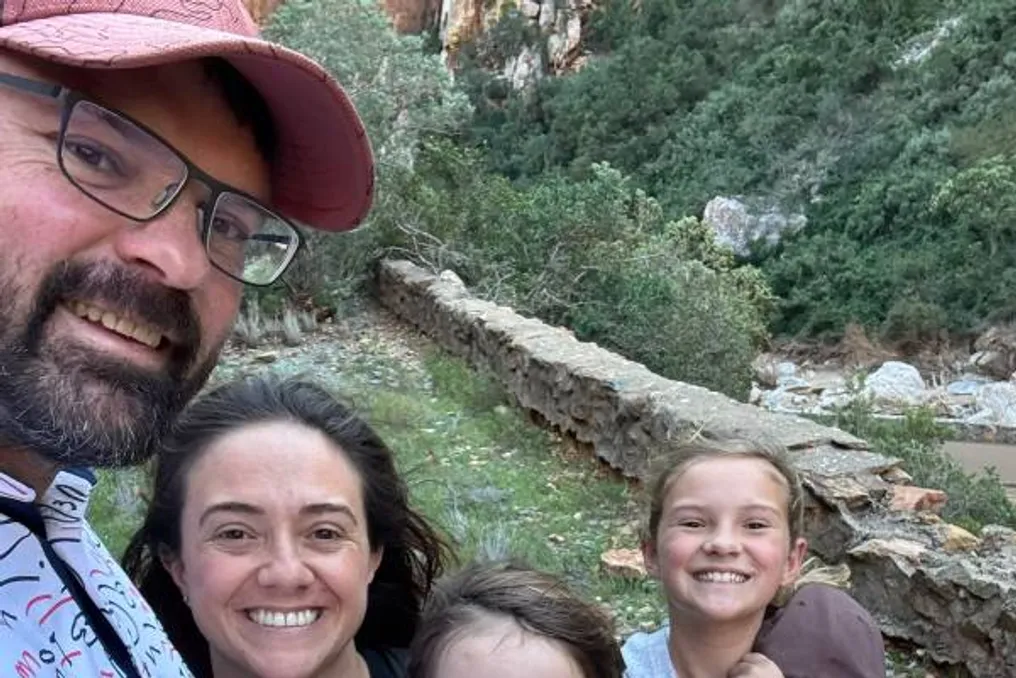
Karla Kotze, who grew up in Krugersdorp, Gauteng, learned about natural skincare from her grandparents. Later, while working as a journalist, she began experimenting with sheep fat at home.

Now, based in De Rust, Klein Karoo, Western Cape, she has turned these experiments into the O,Vet! Skincare brand, which supplies products to 15 retail stores across South Africa.

Kotze's knowledge of cosmetics has family roots. One of her grandmothers lived on a farm, and other grandparents used speensalf to protect skin from sunburn while fishing on Vaal Dam in childhood.

As Kotze grew older, she became interested in herbs, essential oils, and skincare ingredients. She noted that she always took meticulous care of her skin, attending regular treatments and studying product compositions.

At one point, she felt that using too many active ingredients was harming her skin's protective barrier. She recalled stories from both sides of the family about how her grandparents used fat for sun protection or to nourish the skin in winter.

In 2024, she started experimenting with sheep fat in her kitchen after noticing how much fat remained after buying lamb. She began creating products and testing them on herself, as well as with friends and family who also tried them. Her children approved highly, as did her friends and family.

Kotze holds a Bachelor of Journalism degree from the University of Pretoria and continued working in the media industry. She continued to develop O,Vet!, working full-time while raising three daughters: Lia, Katrin, and Ami. She created her website, approached retailers, and convinced her husband, Philip, to support her business. She explained that working on O,Vet! part-time meant she had to work very late after the children were asleep and everyone had eaten.

The O,Vet! product range includes body balms, facial cleanser, hair oil, muscle balm, night balm, lip balms, healing balm for minor cuts and wounds, and body polish.

Her hair oil was inspired by both research and personal experience. After the birth of her third daughter, she experienced postpartum hair loss, which prompted her to develop a product containing rosemary extract, confrey, and other essential oils. She uses these components to stimulate the scalp and support hair growth; it also nourishes the hair and gives it a beautiful shine.

Kotze explains that the fat contains fatty acids similar to those found in natural skin oils, which, in her opinion, helps the skin absorb it. She believes that fat can improve skin texture, but acknowledges that fat cannot solve all skin problems.

For example, the O,Vet! night balm contains bakuchiol oil, a plant ingredient often used as an alternative to retinol. Kotze claims it is linked to supporting cell renewal and improving the appearance of fine lines.

About six months ago, Kotze moved from Pretoria to De Rust, where she later quit journalism to focus on O,Vet!. She says she now lives in what can be called the South African sheep valley.

When they still lived in Pretoria, sourcing fresh kraut sheep fat was a constant problem. Transportation was a nightmare because she required a refrigerated truck to deliver it to Pretoria.

Now Kotze can connect with Warkensbos, a local abattoir and butcher in De Rust, to help organize the supply she needs. Ensuring quality ingredients at reasonable prices remains a delicate balance, as she must consider production costs and profit margins. Supporting local suppliers is also important to her. She buys honey used in the lip balm and beeswax from a local beekeeper.

Working on O,Vet!, Kotze discovered a gap in the Mzansi market for agricultural producers who can supply small and medium-sized cosmetic brands. She notes that there are many ingredients she would like to use but for which she struggles to find a supplier. Finding a reliable local distributor for bakuchiol oil proved difficult, so she has to import it.

Kotze believes that farmers and other agricultural producers could benefit from direct engagement with beauty industry representatives to learn what ingredients cosmetic brands need and where local sourcing opportunities exist.

As O,Vet! grows, Kotze aims to improve its marketing. She shared that about four to five months ago, she put significant effort into her Meta advertisements. Once she figured out what worked, her online sales increased by approximately 200%.

Kotze tests her products on herself, and friends and family also try them. She notes that cosmetics do not require prior approval from SAHPRA, but sellers remain responsible for product safety.

Kotze shares five tips for other brand owners: clearly define product uniqueness; focus on your business, not competitors; know your profit margin from the start; keep customers in mind; start small, then grow and adapt.

Similar stories

Young Scientist Works on Crop Protection and Food Security in Mzansi
Read more
foodformzansi.co.za

Young Scientist Works on Crop Protection and Food Security in Mzansi

Asande Humalo, who grew up in the rural area of Nkomazi, Mpumalanga province, faced limited access to career counseling. Nevertheless, his parents valued education and encouraged him to look beyond his immediate surroundings. It was this curiosity that ultimately led him to study plant pathology.

Humalo explains to Food For Mzansi that plant pathology is akin to medical practice, but applied to plants. Like humans, plants can become diseased due to fungi, bacteria, viruses, and other microorganisms. He clarifies: 'My job as a phytopathologist is to study the causes of plant diseases, how the disease spreads, and how we can prevent or cure it.'

According to Humalo, plant diseases affect farmers of all production scales—from small-scale maize growers to commercial sugarcane operations. He emphasizes that an outbreak of disease can destroy an entire harvest, negatively impacting food production and agricultural supply.

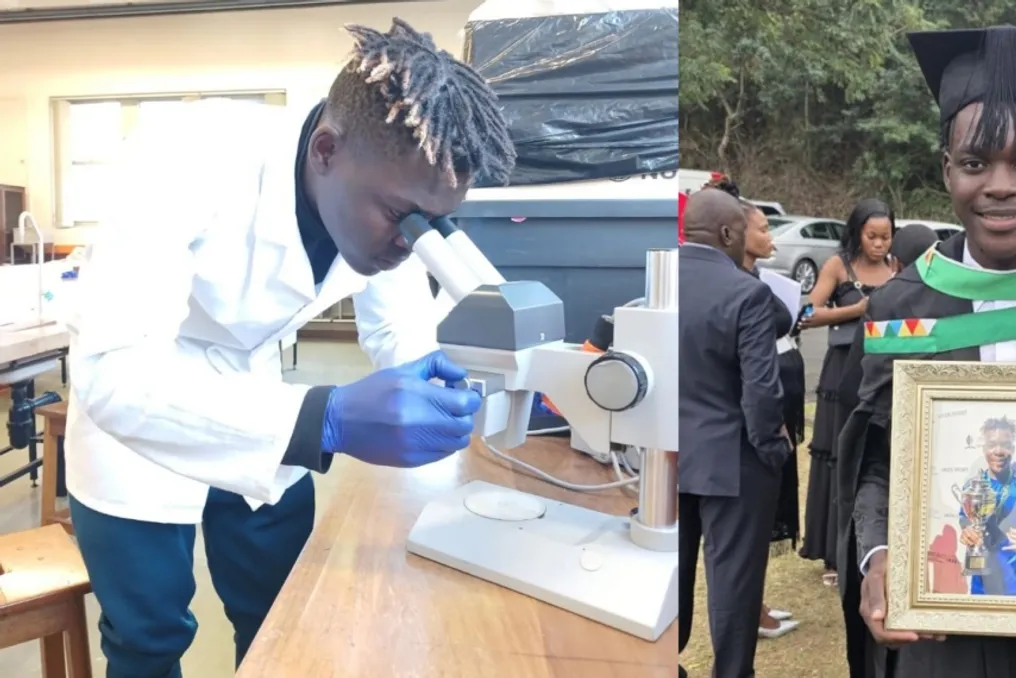
After finishing school in 2021, he enrolled in an undergraduate agriculture program at the University of KwaZulu-Natal, specializing in plant pathology. In 2024, he completed his master's level studies in the same field and is currently pursuing his master's degree.

The research Humalo is conducting as part of his master's program focuses on utilizing spent mycelial substrate—material left over from mushroom production. He is investigating the possibility of reusing this substrate as a growing medium and its ability to suppress soil-borne diseases using beneficial biological agents such as species of Trichoderma and Bacillus. 'Mushroom farms usually throw away these waste products, and they can become a pollution problem,' he notes. Humalo explains that the discarded material can still contain nutrients and beneficial microorganisms. His research tests whether these properties can support plant growth and help manage soil diseases, including competition between beneficial and pathogenic microorganisms.

Currently, Humalo works at the university as a laboratory demonstrator, assisting junior students during practical sessions. He says this experience has helped him develop as both a scientist and a mentor.

In childhood, Humalo often heard people discuss the potential profitability of agriculture. Amidst a growing population and demand for food, he began seriously considering a career that could provide him long-term security. He recalls: 'I told myself that if you couldn't find a job, you could create one yourself by becoming a farmer.' However, at the time, he was unsure which path to choose within agriculture. Options included botany, soil science, agronomy, and plant pathology, but he knew little about the content of each field.

A high school graduate, Given Khoza, helped him discover plant science. Humalo remembers how the teacher used scientific terminology that captured his attention and introduced him to professions he had never heard of. He quotes: 'He didn't just teach us from the textbook; he told me about the world of science, about professions I had never heard of, such as botany and zoology, and gave me websites so I could learn new things about plants and how they survive among diseases.'

Thus, Humalo became interested in plant pathology. His university experience also broadened his understanding of agriculture. He learned that this field extends beyond simple farming and encompasses science, technology, and innovation. Humalo also realized how microscopic organisms can inflict serious damage on crops, while others can help protect plants from diseases.

Although Humalo has not yet worked officially in the agricultural sector, his studies have provided him with practical research experience. He states: 'Along the way, I realized that agriculture is a science. I learned to isolate pathogens, identify beneficial microorganisms, work in a laboratory and greenhouse, and understand how tiny organisms can either destroy or save a harvest.' He believes this knowledge can help researchers in understanding and managing plant disease outbreaks. 'We are currently experiencing extremely high temperatures due to global warming and climate change. Plant pathology provides the knowledge that will help us protect plant health.'

Despite still working towards his goals, the young researcher plans to officially establish Kun’s Enterprise. This company will focus on developing affordable, eco-friendly growing media and biological control agents for smallholder farmers, with plans to expand to commercial farmers in the future.

After a cow bitten by a dog used for making chanmari, 450 residents of two villages in UP received rabies vaccination
Read more
www.aajtak.in

After a cow bitten by a dog used for making chanmari, 450 residents of two villages in UP received rabies vaccination

In the village of Dari Haas, which belongs to the Gola block in the Gorkhapur district, 450 people who consumed chanmari made from cow's milk received a rabies vaccination during the Durga Puja celebration. This cow had been bitten by a stray dog. Following the animal's death, anxiety among residents increased regarding the risk of rabies infection.

In response, the health department organized a vaccination campaign in the village on Wednesday. Previously, 50 people had already sought vaccination at the public medical center on Tuesday, and another 400 people were vaccinated on Wednesday.

The milk from this cow was also supplied to some homes and shops in the village, which heightened public concern. The health department strongly recommended that residents undergo vaccination according to medical advice. A veterinarian suggested the possibility of rabies in the cow, although no official confirmation had been obtained.

A shepherd from Dari Haas village, Navmi Yadav, did not know exactly when the stray dog bit the cow. He regularly delivered milk to several shops and homes. One or two days before the incident, the cow's condition began to deteriorate, but on Tuesday, her health sharply declined. The shepherd showed the animal to a private veterinarian as well as doctors from the Dari Haas Veterinary Hospital. According to the shepherd, the doctors suspected the animal had been bitten by a dog. Shortly after this, the cow started barking, and she died on Tuesday evening.

When the deterioration of the cow's health and its unusual behavior became known, residents of Dari and Govindpur villages, who consumed chanmari made from its milk during Durga Puja, became worried. As a precaution, they began receiving anti-rabies vaccines. On Wednesday, October 21, a team from the health department arrived in Dari village from the public medical center. Under the guidance of pharmacist Siddharth Singh, the team conducted a vaccination drive. The team included medical personnel such as Arshad, Sonu Srivastava, Priyanka, and Ankita. Due to the large number of rural residents who came, the vaccination process proceeded continuously. By the evening of Wednesday, October 21, 400 people had been vaccinated, and previously, about 50 people had already received the vaccine at the CHC on Tuesday.

Affected individuals must receive the anti-rabies vaccine according to prescribed medical recommendations. According to the standard intramuscular schedule, subsequent doses are given on the third, seventh, fourteenth, and twenty-eighth day after the first dose. The need for a booster dose after 90 days was also mentioned.

Dr. Rajesh Kumar, Deputy Chief Medical Officer of Gorkhapur, stated that the cow in the Gola block village was bitten by a dog. Its milk was used to prepare chanmari during Durga Puja, and many people drank it. The cow died, causing fear among the people. Therefore, as a precautionary measure, 450 people received the anti-rabies vaccine. He emphasized that there is no cause for fear because the milk could have been boiled before preparing the yogurt and then added to the chanmari. Boiling destroys the virus. Vaccination is being carried out due to public apprehension.

Popular