Simple farm records are more effective than complex systems for increasing profitability
Read more
Food For Mzansi
foodformzansi.co.za

Simple farm records are more effective than complex systems for increasing profitability

To increase the profitability of a farm, it is not necessary to use expensive digital platforms or complex systems. Data analyst Stefan Corbett explains how simple and consistent record-keeping transforms daily farm data into useful information for profit growth without the need for costly technologies.

Many producers may view collecting farm data and digital agriculture as a complicated and expensive task. However, Corbett argues that using farm data does not require expensive equipment or an overly complex accounting system; consistent and reliable tracking of basic agricultural operations is sufficient.

According to Corbett, most farmers are already collecting more data than they realize through daily activity logs, weather data, bank notifications, and regular correspondence.

Corbett emphasizes that raw data, such as bank transactions, purchase invoices, or daily precipitation figures, only become valuable management information when they are directly linked to production outcomes.

He notes: 'Information is what I can influence. Data is just a record of what happened.' He further explains that 'when I start linking different data points throughout an animal's life to see where that animal was, what I changed, and then see the reaction a month later, it becomes information about whether my management decision or my investment had a positive impact.'

Instead of trying to track every parameter, producers should focus on simple, high-value metrics that provide a clear picture of operational activities.

A critical error in record-keeping is the collection of inconsistent data. When measurements are taken under different conditions, such as weighing livestock before feeding one week and after feeding the next, the data becomes distorted and unreliable.

To prevent unreliable data, Corbett advises implementing clear Standard Operating Procedures (SOPs) for data collection across the entire farm. He warns: 'All data works on the basic principle of 'garbage in, garbage out'. If I don't record my data correctly, or if several people record the same parameter but differently, my data becomes unreliable.'

Small and medium-sized enterprises do not always need to immediately switch to complex digital platforms. Simple tools, such as notebooks, WhatsApp messages, or basic Excel spreadsheets, provide accessible and persistent records that build trust and allow for long-term trend analysis.

Corbett quotes: 'We have a saying: a dull pencil is still better than a sharp mind.' He adds that 'everything that is recorded is worth much more than what we try to remember.'

Producers who wish to start structured record-keeping should begin with one easily trackable metric, such as the weight of individual animals tied to specific dates, or daily rainfall, and gradually expand their data systems over time.
Similar stories

How to increase corn yield through precision agriculture and nutrition
Read more
foodformzansi.co.za

How to increase corn yield through precision agriculture and nutrition

Although leading producers in South Africa achieve record yields exceeding local averages by approximately 10 tons per hectare, many farmers do not utilize the full potential of their seeds. Agronomist Nico Barnard from Pannar Seed explains how this significant yield gap can be overcome by protecting crop potential through timely and targeted operations.

The yield gap is defined as the difference between the full genetic potential of the crop and what is actually harvested. Every season, farmers start with maximum potential, but unaddressed limitations constantly reduce this prospect.

Achieving higher productivity depends on optimizing existing management practices, including soil condition and field operations, rather than simply trying to solve agronomic problems by increasing costs.

Higher resource expenditure does not automatically guarantee a greater harvest. Adding more fertilizer or increasing planting density often does not address underlying limitations such as soil compaction or low root volume.

Barnard notes: 'Farmers must optimize what they already have before adding extra resources. For example, if poor establishment is caused by soil compaction, applying more fertilizer to the field may not solve the core problem, as plant roots may still struggle to access water and nutrients.'

Instead of relying on more intensive application, he advises that the true value lies in precise placement of resources, timely weed control, and eliminating physical barriers in the soil so that root systems can effectively absorb applied nutrients.

Barnard asserts that corn yield develops in stages based on four key factors: plant density, ear count, kernel count per ear, and final grain mass. The main characteristics of the ear are established early—the number of rows is determined around the V5 growth stage, and the number of kernels per row at the V12 stage, long before the ears become visible in the field.

When environmental stresses or nutrient deficiencies occur during grain development, the plant limits its energy load through kernel abortion. Since approximately one-third of the total dry matter of the crop accumulates in the last 30 days before physiological maturity, late-season management remains equally important.

Maintaining healthy leaf surface against diseases and ensuring active photosynthesis during grain filling protects the final grain mass, guaranteeing a strong completion of the crop cycle.

Achieving an even, uniform planting from the start is mandatory, as losses incurred in the early stages can never be compensated for later in the life cycle. Barnard warns: 'Every missing, weak, or late germinating plant can reduce the crop's ability to reach its potential.' He adds that good establishment starts with quality seed but also depends on creating favorable and uniform conditions for germination and emergence.

Narrowing the yield gap begins with identifying the specific factors limiting production on individual fields. Producers can consistently protect yield potential and ensure higher profits by making targeted, phased operational adjustments instead of trying to change everything at once.

Digitization of Farming: The Process of Transitioning from Paper Records to Digital
Read more
foodformzansi.co.za

Digitization of Farming: The Process of Transitioning from Paper Records to Digital

The transition to digital farm management is a long process, not an instantaneous transformation. With the support of Agritistics, scattered notes, WhatsApp messages, and spreadsheets can be organized into unified digital formats for tracking costs and yields.

For many farmers, the idea of 'going digital' seems like a large and expensive step, often associated with complex software, applications, sensors, dashboards, and systems. However, digitalization does not necessarily have to start with the use of advanced technologies.

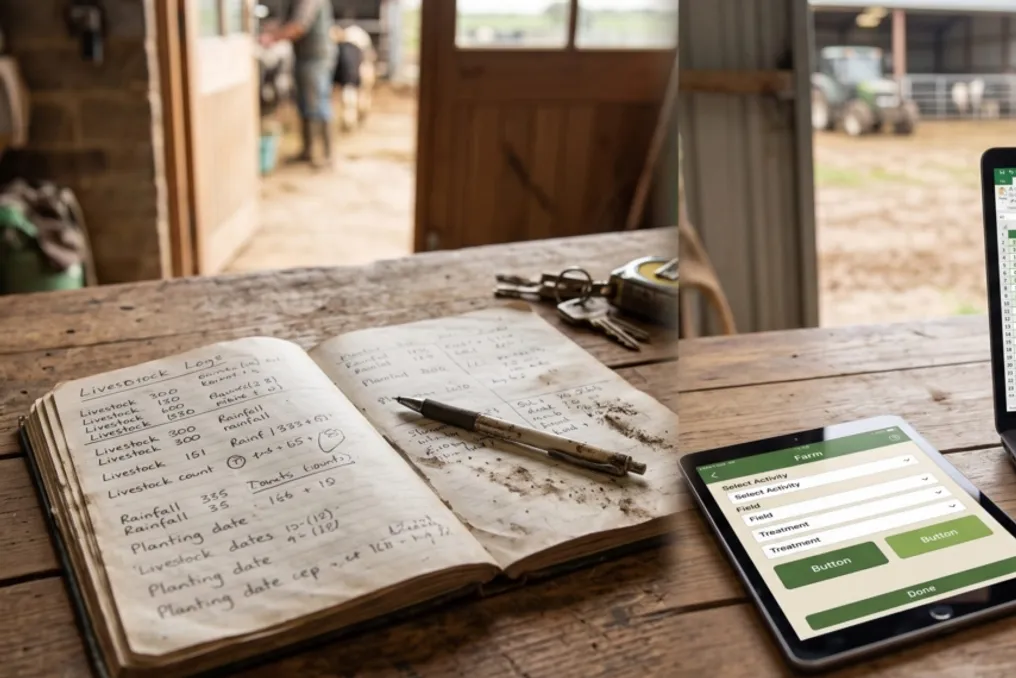
It can start with something simple, such as improving note-taking methods in a notebook, creating a more structured Excel spreadsheet, or consolidating already collected information in one organized place.

The essence of digitalization is not about increasing the number of technologies used, but about making farm information easier to record, search, compare, and utilize, thereby supporting more informed management decisions.

Before investing in software or changing data collection methods, it is necessary to determine what information is needed to understand one's business. For example, a livestock farmer might want to know the number of animals on the farm, locations of mortality, volume of feed consumed, which animals perform best, and production costs per animal.

A crop grower, on the other hand, may need to compare resource costs, rainfall data, sowing dates, yield per hectare, and profitability across different fields. These questions should determine exactly what data should be collected. Collecting a large volume of data without a clear understanding of the recording purpose can only increase the workload without improving decision-making quality.

A notebook itself is not a bad tool for management. The problem usually arises when the information is incomplete, inconsistent, or recorded long after the action took place. A useful farm record must clearly state what happened, when, where, who or what was involved, and, if necessary, the quantity or cost.

Recording information as close to the moment of the event as possible reduces the risk that records will be forgotten or become inaccurate.

For many farms, a very practical next step is using a structured Excel spreadsheet. If data is recorded sequentially, Excel helps in searching for information, calculating sums, comparing periods, and identifying trends. The most important thing here is the structure of the information itself, not the software.

For example, a record of animal treatment will be much more useful if the animal ID, date, condition, type of treatment, product, and quantity are entered into separate columns, instead of writing all this in one long sentence. A sequential recording format significantly simplifies subsequent analysis.

As the farm grows, information often becomes scattered across multiple spreadsheets, notebooks, WhatsApp messages, photos, and individual computers. At this stage, the problem is no longer a lack of data, but the difficulty of accessing and comparing it.

A centralized platform allows various types of farm information to be gathered in one environment, providing users with access from a single source.

After basic records are structured, one can consider using custom-configured digital forms or applications to simplify repetitive data entry. Employees can select predefined options, such as animal, field, date, treatment, or activity, instead of constantly entering the same information manually.

The best digital system is not necessarily the most advanced; it is one that is practical enough for correct and consistent use. The technology should reduce administrative burden, not create it.

Once farm data is accurate, consistent, and well-organized, it can be visualized for easier trend detection. Instead of reviewing hundreds of lines of information, it can be presented as a graph or chart to monitor indicators such as mortality, feed expenses, yield per hectare, diesel consumption, bee productivity, or sales by category. This is where farm records turn into management information, as one can move beyond simply knowing what happened to understanding where productivity is improving, where losses are occurring, and where attention should be directed.

Digitalization should happen in stages. For one farmer, the next step might just be a better spreadsheet, while another might benefit from data centralization. A more developed farm might be ready for custom applications, automated data collection, or interactive dashboards.

Agritistics helps farmers determine what information is worth collecting, improve and structure existing records, develop custom Excel solutions, centralize farm data, create custom applications, and visualize information through reports and dashboards. You do not need to digitize the entire farm in one day. Start with the right information, create a system that matches your farm's way of working, and develop further. Contact Agritistics to discuss your farm's current status and the next practical step on your digital journey.

Experts at Agda Congress: Simply increasing production is not enough for agricultural success in South Africa
Read more
foodformzansi.co.za

Experts at Agda Congress: Simply increasing production is not enough for agricultural success in South Africa

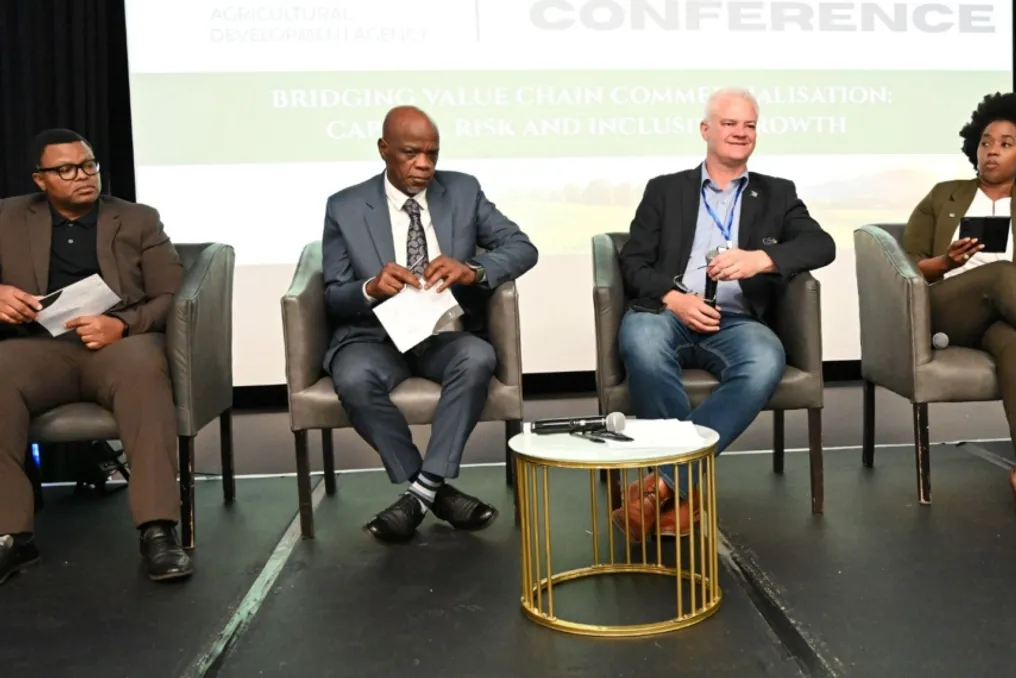
At the annual Agricultural Development Agency (Agda) congress in Boksbuur, Gauteng, experts emphasized that opening commercial opportunities for emerging farmers in South Africa's agricultural sector requires more than just increasing production volumes. It was noted that access to markets, long-term capital, agro-processing, and strengthening partnerships are vital.

Speakers highlighted the need to support smallholder farmers in transitioning to commercial agriculture, enhancing their competitiveness in global markets, and building stronger links between producers, processors, financiers, and buyers.

Vuyiswa Ramokgopa, a member of the Gauteng Provincial Executive Committee for Agriculture and Rural Development, stated that the African Continental Free Trade Area (AfCFTA) opens up prospects for agricultural exports, value addition, and agro-processing. She stressed that South Africa is already a significant player on the continent with a good foundation for further development.

Ramokgopa cited an example from the Southern African Development Community (SADC), where bananas produced in Mozambique are transported to Johannesburg for ripening before being returned to Mozambique and other markets. This case demonstrates the potential for expanding agro-processing and strengthening regional agricultural trade.

Furthermore, Ramokgopa called for greater recognition of the informal market, which accounts for about 60% of fresh produce trade in the country. She insisted that discussions on market access must include not only large retail chains but also informal traders who require support and skills development to participate more effectively in the agricultural value chain.

Regarding agricultural financing, Ramokgopa noted that the issue is not so much a lack of funds as it is limited access by farmers to information about available opportunities and the requirements of various institutions. She emphasized that farmers need to understand the requirements of financiers and establish commercially viable enterprises supported by reliable income, collateral, and strong business relationships. She also advocated for an increase in long-term capital, warning that agriculture cannot always meet the demands of investors expecting returns within five years.

Meanwhile, Dr. Tobias Doer, CEO of Grain SA, stated that South African farmers need to compete internationally by improving productivity and more effectively utilizing value-added market opportunities. He compared this to participating in international competitions, arguing that farmers need support to win.

Doer stressed that economic growth is critical for job creation and strengthening domestic demand, while international markets offer additional chances for agricultural producers. He advised grain producers to consider options beyond exporting raw commodities, including transforming grain into high-value animal protein products such as poultry, pork, and beef. According to him, if you compete with grain, you always remain in the commodity market, but if you compete in the animal protein market, you compete and earn in the premium market.

The President of the African Farmers Association of South Africa (Afasa), A. J. Mthembu, noted the strategic importance of agriculture despite rapid technological changes, as food production remains essential. He also pointed to opportunities to expand South Africa's product basket by cultivating a wider range of goods for domestic and international consumption, calling for sustainability amid changing markets.

Sizwe Dludla, an investment partner at the National Empowerment Fund (NEF), suggested that deeper integration of existing agricultural enterprises could help farmers utilize available resources more effectively. He pointed to the possibility of connecting disparate farming operations with established markets and ancillary businesses, such as linking processing plants with poultry producers and connecting farmers with school feeding programs. Dludla noted: 'The market exists, but it needs a certain specific quality, quality consistency, and financiers are ready to fund farmers to produce the required quality.'

He urged farmers, buyers, and financiers to work together to form an agricultural ecosystem that supports stable production and meets market demands.

Joanne Kotze, CEO of AgriSA, cautioned that financial and production resources alone will not be enough to ensure the success of emerging farmers. She stated that South Africa needs better mechanisms to help people transition from small-scale farming to sustainable commercial operations. Kotze also emphasized the importance of social structures, skills, partnerships, and collective responsibility in building a successful farming business. She reminded: 'The fact that you are a farmer does not give you the right to come to me and say: 'I need to borrow money from you',' stressing the need for farmers and financial institutions to understand their mutual obligations. She warned that focusing only on land, water, and finance while ignoring the relationships and support systems underpinning agricultural business can make farmers vulnerable to failure.

Popular