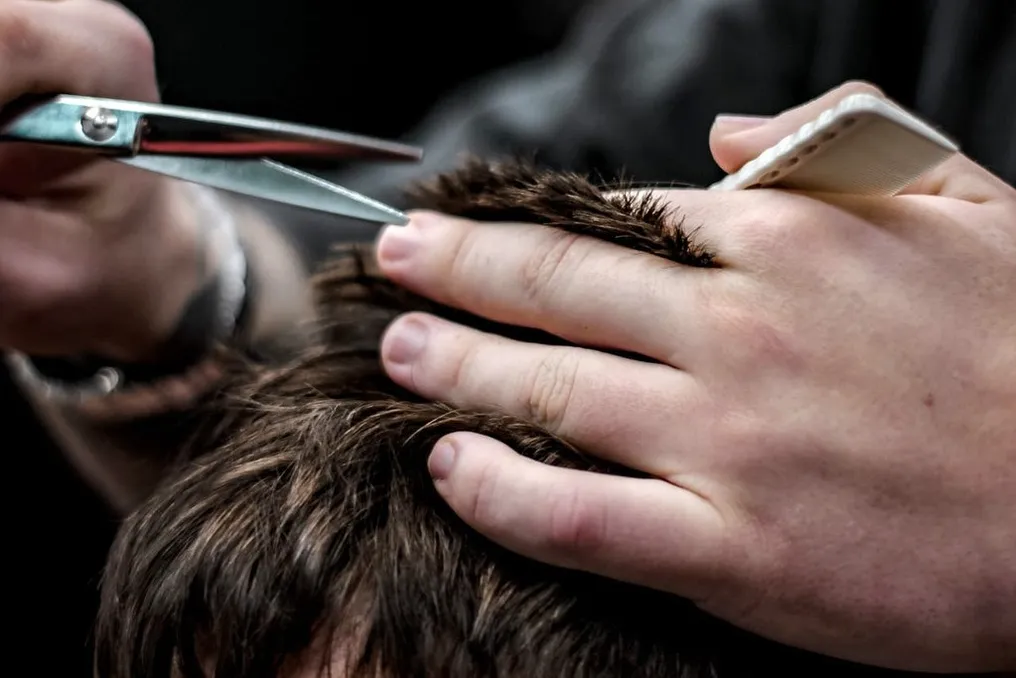
A proposal has emerged in St. Petersburg to review the current ban on foreign citizens working in hairdressing services and beauty salons. Business Ombudsman Valery Kalugin intends to appeal to Governor Alexander Beglov to exclude these sectors from the list of restrictions.
It should be noted that approximately 70 percent of masters in the city's barbershops are citizens of Uzbekistan. Previously, on October 15, the authorities of St. Petersburg expanded the list of sectors where foreigners with patents are prohibited from working. In addition to taxis and courier delivery, restrictions were extended to grocery stores, fitness clubs, forensic medical examinations, as well as hairdressers and beauty salons. These new rules will come into force on December 1, 2026.
Arguments in favor of reviewing the restrictions
The authorized representative for the protection of entrepreneurs' rights, Valery Kalugin, believes that the authorities may have underestimated the impact of this ban on the beauty industry. He plans to present his arguments to Governor Alexander Beglov, seeking the exclusion of hairdressing and beauty salons from the list of prohibited sectors. Kalugin emphasized that the situation differs across various industries: 'A taxi driver, courier, or scooter rider is one story. But in hairdressing and manicure salons, I believe the decision was not fully calculated.'
According to Kalugin, before making final decisions, a thorough market study is necessary to determine the exact number of migrants employed in this sector and the specific positions they hold.
Scale of migrant employment in the beauty sector
Lyalya Sadykova, President of the Association of Beauty Industry Entrepreneurs, reported that approximately 10,000 migrants work in the beauty sector in St. Petersburg. Most of them are employed in economy-segment hairdressers, where the cost of a haircut ranges from 300 to 500 rubles. Sadykova specified that about 90 percent of the staff in such establishments are from Central Asia, and in barbershops, the share of Uzbek citizens reaches approximately 70 percent.
Moreover, the economy segment accounts for about 70 percent of the city's entire beauty service market, which is actively visited by a significant portion of residents. The association expresses concern that replacing foreign workers after the introduction of the ban will be extremely difficult, as training new masters, even in basic courses, takes about six months, making recruitment virtually impossible before December.
Lyalya Sadykova also noted that local St. Petersburg masters are reluctant to work in the economy segment because such work is hard labor requiring long hours standing for little pay. Furthermore, the beauty industry is already facing financial difficulties due to changes in the tax and patent system.
In Russia, citizens of Uzbekistan, Tajikistan, Azerbaijan, Moldova, Abkhazia, and Georgia must obtain a patent. The cost of such a patent in St. Petersburg is set at 8,000 rubles in 2026, and it is planned to increase to 11,600 rubles in 2027. More than half of Uzbek citizens abroad reside in Russia, which the Russian Foreign Ministry has named the largest labor market for migrants from Central Asia.