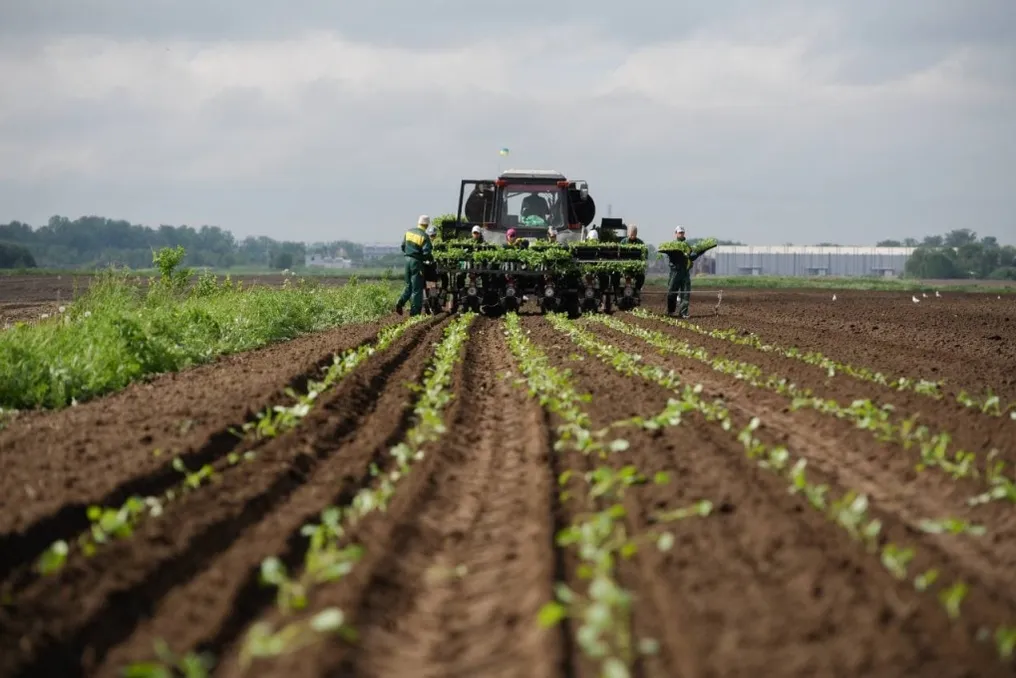
Residents of the Kashkadarya region of Uzbekistan will be able to receive additional income due to the development of the agricultural sector. It is planned that drought- and salt-resistant fodder crops will be planted on an area of 100 thousand hectares of pastures using drones.
At a meeting dedicated to regional development, the president announced plans to implement work in eight districts, which will be carried out according to the Egyptian model in cooperation with the World Bank. Furthermore, the goal has been set to form complexes for housing 10 thousand head of large livestock and 50 thousand head of small ruminants. When implementing the project for selling imported livestock to the population, a zero VAT rate will be applied.
In Guzar district, it is planned to bring 10 thousand hectares of land into circulation, half of which will be allocated for cotton, and the remaining part for fodder crops. The land will be transferred to dehqans, and a cluster system will be established. To enable the land to be put into circulation, it has been instructed to prepare the relevant package of benefits within a week. According to space monitoring data, another 30 thousand hectares have been discovered in the region that can potentially be used.
The president emphasized the problems associated with the high cost and difficulty of delivering water to agricultural lands. In this regard, in the next year, the concreting of 265 kilometers of canals and the modernization of 20 pumping stations will be carried out, for which 550 billion soms will be allocated. In 2027, water-saving technologies will be introduced on 75 thousand hectares together with farmers.
This year, four small reservoirs, each with a volume of 50 thousand cubic meters, were built in the settlements of Kosone, Nishan, Kamashi, and Mirishkor. By June 1, two more similar facilities are planned to be built in five districts.
Vision for Regional Development
At the meeting, Shavkat Mirziyoyev stated the prospect that Kashkadarya could become one of the country's leading regions within one or two years. In the opinion of the head of state, for this goal to be achieved, district hokims and banks must create a favorable atmosphere that stimulates knowledge, provides job opportunities, and supports any initiatives.