Sonic Technology to Be Used in India-New Zealand Series to Determine Ball-Bat Contact within DRS
Read more
Aaj Tak
www.aajtak.in

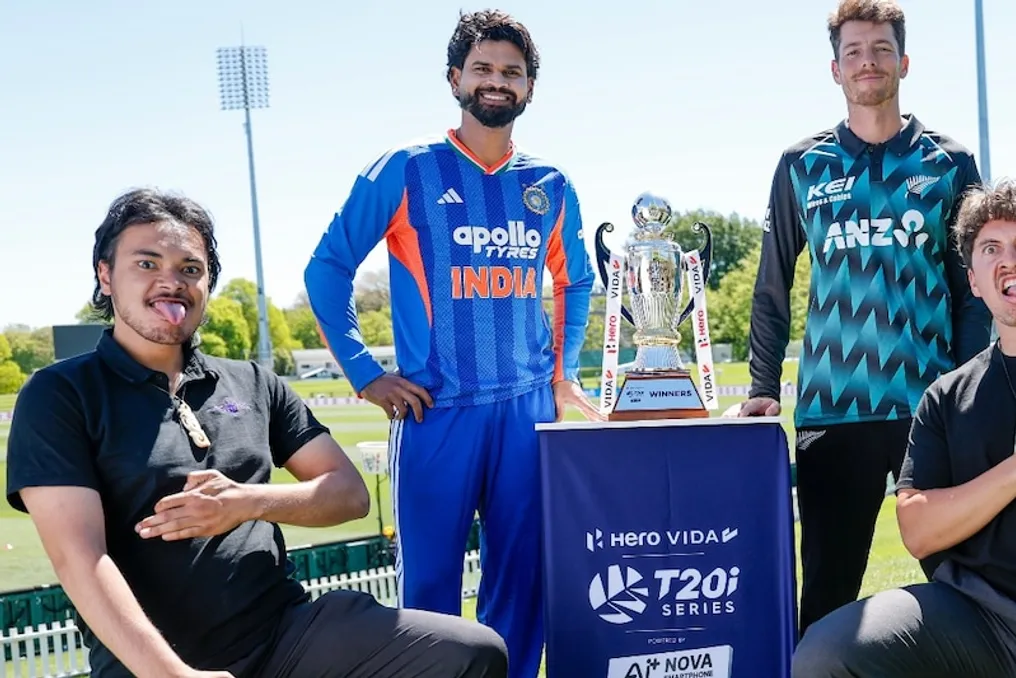
Sonic Technology to Be Used in India-New Zealand Series to Determine Ball-Bat Contact within DRS

A new detection technology named 'Sonic' will be implemented in the upcoming cricket series between India and New Zealand. This system is designed to assist the third umpire in determining potential contact between the ball and the bat by analyzing sound.

This audio technology will be used during India's tour of New Zealand. The series will commence with five T20 International matches, followed by five ODI matches and two Test matches between the two teams.

Sonic is an audio technology developed to detect contact between the ball and the bat through sound analysis. It helps identify a probable collision between the ball and the bat. This technology is particularly useful when making controversial decisions, where it is necessary to establish whether the edge of the bat touched the ball before it reached the batsman or a fielder.

This development was created in New Zealand and will be integrated into the Decision Review System (DRS). The India-New Zealand series will be the first instance of Sonic's use.

Sonic will become part of the DRS system provided by Virtual Eye. The International Cricket Council (ICC) has recognized Virtual Eye's ball tracking technology since 2008. During a review, Sonic analyzes sound to help determine if contact occurred between the ball and the bat. This will provide the third umpire with additional information for decision-making, although it is emphasized that the technology will not replace the referee's decision but only support the existing decision-making process; the final decision remains at the umpire's discretion.

Before granting permission for the use of Sonic, the technology underwent testing and verification. The consultation process with the ICC and independent assessment were completed with the participation of the Board of Control for Cricket in India (BCCI). Ben Taylor, CEO of Virtual Eye, stated that his team made continuous efforts to develop and improve this technology. Special attention was paid to accuracy, stability, and compliance with top international standards.

He noted that obtaining permission to use technology developed in New Zealand in a major international tournament is a significant achievement for Virtual Eye. Currently, permission to apply Sonic has been granted only for the upcoming series in New Zealand; further use in other series will depend on ICC approval.
Similar stories

Tense moment in T20I in Hyderabad: Naman Dira's controversial out after stumping
Read more
www.aajtak.in

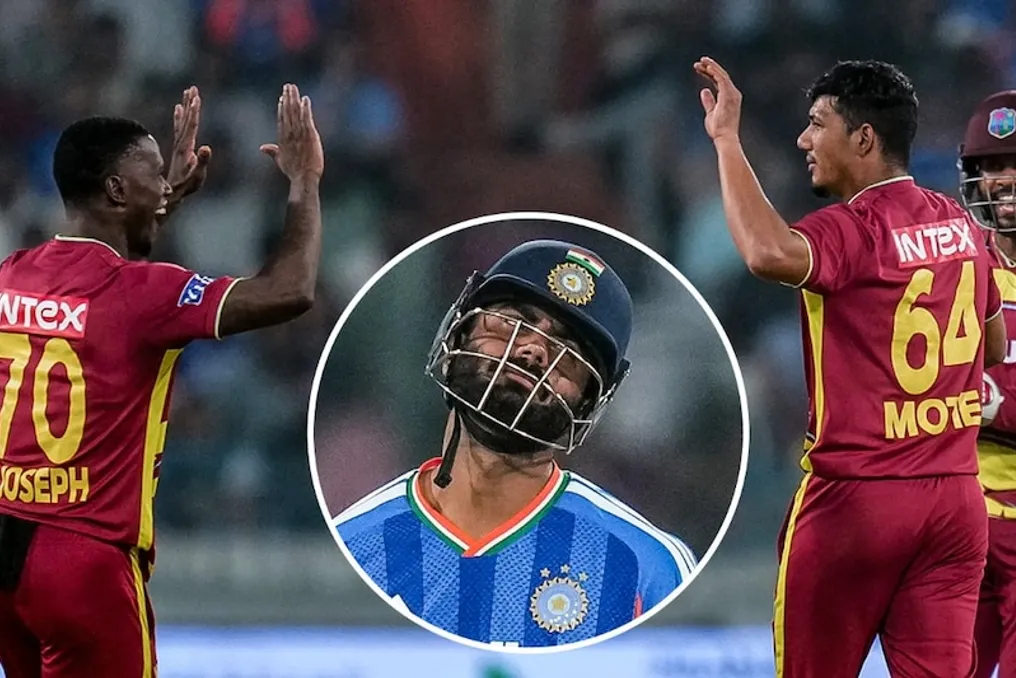
Tense moment in T20I in Hyderabad: Naman Dira's controversial out after stumping

The fourth T20 International match between India and West Indies took place in Hyderabad, which ended with a victory for the West Indies by 24 runs. During the match, a dispute arose regarding Naman Dira's stumping.

The third umpire spent about five minutes reviewing replays from different angles before declaring the Indian player out. Questions were raised as to whether Dira's foot was inside the crease line, judging by the video from the side angle.

The Indian team was chasing a target of 248 runs. On the fourth ball of the twelfth over, Gudakesh Motie's attack led him to lure Naman Dira into his rotation. The ball slowly came through the air, swerved off the pitch, and bypassed Dira. When the Indian batsman stepped forward, wicketkeeper Shy Hap quickly gathered the bails.

At first glance, it seemed that Dira managed to bring his back foot back onto the crease line, offering hope for his survival. The umpire did not make an immediate decision and requested assistance from the third umpire.

The third umpire examined the replays from multiple angles. Although the side view showed Dira's back foot appearing to be inside the line, the main question was whether the foot touched the ground or was in the air. After a review lasting about five minutes, the umpires concluded that Dira's back foot did not touch the ground and was outside the crease line in the air. Following this, he was declared out.

Naman Dira appeared dissatisfied with the decision, leaving the field with his head held high in disappointment. Nevertheless, according to available information, the decision was made by the umpires after a thorough examination of all angles.

This match proved unsuccessful for Naman Dira both in batting and bowling. As a bowler, he bowled only one over, conceding 19 runs. Captain Shreyas Iyer subsequently did not give him a second over. Interestingly, within the current T20 series, Dira was among India's top bowlers in terms of wickets taken, having claimed five wickets. However, in the fourth match, he could not make an impact as a bowler and was out without scoring a single run as a batsman.

The West Indies batted first and scored 247/3 in 20 overs. Shy Hap played an inconspicuous innings, scoring 102 not out off 50 balls, and was named 'Player of the Match'. Chasing a target of 248 runs, the Indian team was dismissed at 223 runs in 19.3 overs, losing the match by 24 runs. Naman Dira's stumping occurred at a critical moment when the Indian team needed a crucial contribution from the middle order to reach the target.

New Zealand announces ODI squad for matches against India; one key player returns
Read more
www.aajtak.in

New Zealand announces ODI squad for matches against India; one key player returns

New Zealand has announced the squads for its five-match ODI series against India, which begins on November 4th. The New Zealand Cricket (NZC) organization presented the player lists, featuring athletes such as Finn Allen, Loki Ferguson, Rachin Ravindra, and Tim Seifert. However, it should be noted that these four players will not be available for the entire series.

NZC formed two separate squads for the five ODIs, meaning there will be changes in the team composition throughout the series. The reason for this decision is also preparation for the upcoming two-match Test series, which will start shortly after the conclusion of the ODI tournament. The New Zealand team management aims to prepare some players for the Test matches in advance by withdrawing them from the ODI squad.

A squad of 14 players was selected for the first three ODIs. In addition to captain Michael Santner, this squad included Michael Bresshaw, Mark Chapman, Devon Conway, Jacob Df, Matt Henry, Kyle Jamieson, Tom Latham, Daryl Mitchell, Glenn Phillips, Rachin Ravindra, Nathan Smith, Blair Tickner, and Will Young.

Rachin Ravindra, who previously could not participate in the T20 International series against India due to a shoulder injury, will now return to the ODI squad and can play in the first three matches. He is expected to contribute in both batting and bowling. For the fourth and fifth ODIs, NZC chose a different team, which will feature Finn Allen and Tim Seifert, known for their aggressive style in T20. Allen and Loki Ferguson played for New Zealand in the last ODI of 2023, and Seifert last played in 50 overs in the home series against Pakistan about eighteen months ago.

The team selected for the last two matches also includes Santner, Bresshaw, Chapman, Jacob Df, Blair Tickner, and Will Young. Additionally, Christian Clark, Matt Fisher, Mitch Heap, and Nick Kelly were included, giving the team an opportunity to test the depth of its squad in the final two ODIs.

The series between India and New Zealand extends beyond just bilateral encounters, as both teams will also consider preparations for the upcoming Cricket World Cup 2027, which will take place in South Africa, Zimbabwe, and Namibia. Consequently, defining player roles and forming a strong squad is extremely important for the team management.

New Zealand coach Rob Walter noted that playing at home against such a strong team as India presents a great opportunity. He emphasized that with the World Cup being about a year away, this series will be very significant for preparation. According to Walter, including seven additional players in the squad for the last two ODIs is aimed at assessing the depth of the team to understand how these players perform against a world-class team and how many options are available for the major tournament.

Three players recovering from injuries—Jacari Foulkes (iliopsoas muscle), Will O'Rourke (calf), and Ben Sears (ankle)—were not included in the selection list for the ODI series against India.

Proteas vs Australia Renew Tense Rivalry Amidst Past Events
Read more
iol.co.za

Proteas vs Australia Renew Tense Rivalry Amidst Past Events

Ahead of the first Test match in Kingsmead between South Africa and Australia, moments from one of the most dramatic periods in cricket history are inevitably recalled. The reunion of these long-standing rivals on South African soil puts history, pride, and ambition at stake within the Test World Cup.

These themes were discussed in the latest episode of the IOL Sport podcast, moderated by IOL Sport editor Byron Naicker, with participation from cricket correspondent Zahir Adams and special guest Ben Horne, Chief Cricket Writer for News Corp and CODE Sports in Australia. The discussion covered the history, tension, and significance of the confrontation between these two cricketing giants.

The discussion returned to the 2018 tour, which was remembered not only for the quality of play on the field but also for the scandals that accompanied it. Although the traces of that history have faded over time, the rivalry retains its former intensity. It is noteworthy that some players who participated in the 2018 series are still part of international cricket, adding intrigue to the upcoming meeting.

The Test series takes place at a critical moment for both teams. The Proteas are the reigning Test World Champions and are playing at home for the first time since their triumph at Lord's last year, while Australia seeks to regain its footing after recent setbacks. The match promises to feature two experienced teams with world-class talent capable of changing the course of the match in a single session.

It is expected that the conditions in Kingsmead will play a significant role. The surface in Durban traditionally favors fast bowlers before giving opportunities to spinners as the match progresses, creating the prospect of an exciting tactical battle between the sides. The main takeaway from the discussion was that this remains one of the biggest rivalries in cricket. Although the ghosts of 2018 may linger, once the first ball is bowled, the focus will shift to a new chapter in a contest that has always been characterized by drama, tension, and unforgettable Test cricket.

Popular