ShengShu streams Motubrain 2.0 training process before model release
Read more
Pandaily
pandaily.com

ShengShu streams Motubrain 2.0 training process before model release

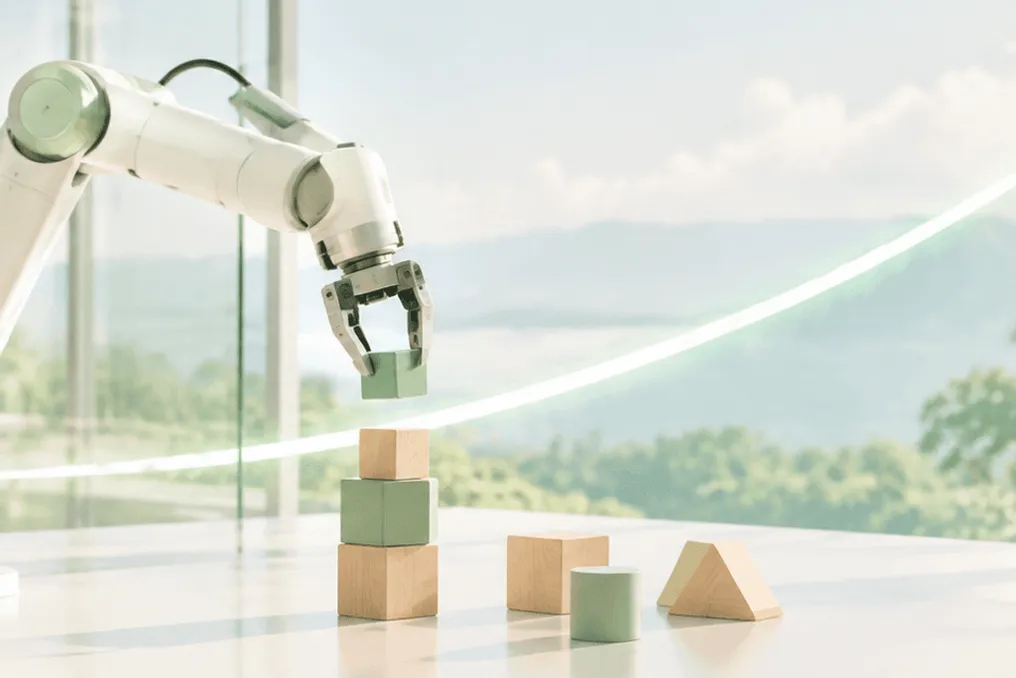
The global models team at ShengShu Technology has started a live stream of the entire training process for Motubrain 2.0, the next version of its embodied artificial intelligence model for robots. The broadcast began on October 21st and is scheduled to last about two weeks.

The company announced that Motubrain 2.0 will soon be released to the public and decided to demonstrate the training process before this release.

The Motubrain models represent a family of fundamental robot models from ShengShu, aimed at providing robots with a universal brain capable of applying skills across various tasks, scenarios, and robot types. The first version of Motubrain was introduced in April as a global model. It is worth noting that ShengShu is more widely known for its Vidu video generation models.

Stream Structure

The live stream is divided into four stages. The pre-training stage explores how training scale affects performance and zero-shot generalization ability. Subsequent training focuses on performing specific tasks to improve execution. This is followed by an agent task stage, which tests whether the model can transfer acquired knowledge to other assignments. The final stage is dedicated to recursive self-improvement to determine if the model can evaluate its actions based on execution feedback and improve them.

The real-time streaming page displays the training steps and success metrics as they are updated.

The main idea behind this demonstration is transparency. Progress in embodied AI is usually assessed by external observers through polished robot demonstrations, benchmark tables, and scientific papers, which rarely reveal exactly how capabilities are formed during training or what problems arise. ShengShu claims that the stream will show not only successes but also errors, the trial-and-error process, and adjustments, and hopes to share open questions regarding scaling, cross-task generalization, and autonomous improvement with other researchers.

This step aligns with a broader trend among Chinese AI teams who publicly share their training progress. Previously, Luo Fuli, head of Xiaomi's MiMo models, published details of the reinforcement learning training phase for MiMo-V2.6.

Nevertheless, there are limitations to what a live stream can prove. The model weights have not yet been released, and the company itself states that the research remains exploratory, and the results will require subsequent experiments and evaluation for confirmation. The announcement was made by ShengShu and covered by Chinese tech media. The true test will be the public release and whether its benchmarks match what was shown in the stream.
Similar stories

Visincept, Zhongguancun Academy, and Xiaomi Win in Three Tracks of WorldArena 2.0 at IROS 2026
Read more
pandaily.com

Visincept, Zhongguancun Academy, and Xiaomi Win in Three Tracks of WorldArena 2.0 at IROS 2026

The final results of the WorldArena 2.0 competition, held as part of IROS 2026, demonstrated that various approaches to world model construction successfully handle different types of tests. WorldArena is a benchmark developed by the Tsinghua University team in collaboration with universities from China and other countries. Version 2.0 expanded functionality from visual input to visuotactile, from offline to online reinforcement learning tasks, and from simulation to working with real robots, according to Leiphone.

The competition included three independent tracks with a total prize pool of $7,000 USD, and the final results were published on September 16.

Results of the First Track

The first track assessed the model's ability to predict videos based on 15 metrics across 70 tasks. These tasks included 50 scenes within the distribution on white tables and 20 scenes outside the distribution with colored or textured surfaces. Among 81 ranked models, Visincept's WorldIncept model took first place with a score of 72.33, surpassing BWM-Turbo from the Spatial Intelligence team at Tongji University with 71.49. The difference was only 0.84 points. WorldIncept showed better results in adherence to physical laws, 3D accuracy, and semantic consistency, while BWM-Turbo led in background coherence and JEPA similarity. Visincept clearly utilizes the JEPA approach.

Zhongguancun Academy's Victory in the Second Track

The second track, presented this year, used a world model as an environment for online reinforcement learning in a bottle regulation task on the RoboTwin 2.0 robot, after which the trained policy was tested in simulation. The MW2 model from Zhongguancun Academy won with a score of 72.93 among 47 models, beating TTWM, which is a competitive version of a causality-oriented world model based on JEPA from another startup. The second-place team noted that training in their model increased the success rate of the pi0.5 policy from 55.46% to 72.40%.

Xiaomi Wins in the Real Robot Track

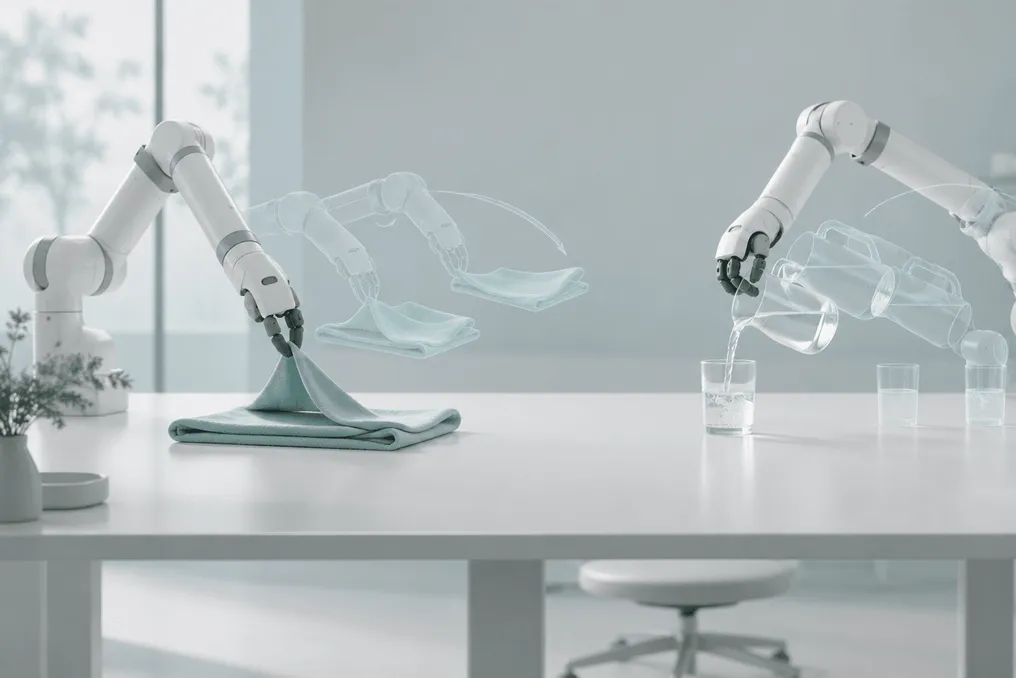
The third track, also new, was conducted on real robots AgileX with two arms and Franka Panda. Its tasks, including visuotactile operations such as chip picking, cucumber cleaning, and fork insertion, as well as vision-only tasks such as wiping tables, pouring water, and folding clothes. The ViTacX model from Xiaomi's MiRobot team achieved overall victory with a score of 76.64. Its advantage was due to the vision-only sub-ranking, where it topped the list with a result of 85.00, including perfect scores in three tasks. In the visuotactile task sub-ranking, it placed third with 66.67, while OmniFlow from Shanghai Technological University took second place in both sub-rankings.

Organizers emphasized that participation in each track was voluntary, so it has not yet been demonstrated that any single model surpasses the others simultaneously in video generation, policy learning, and real robot manipulation.

Popular