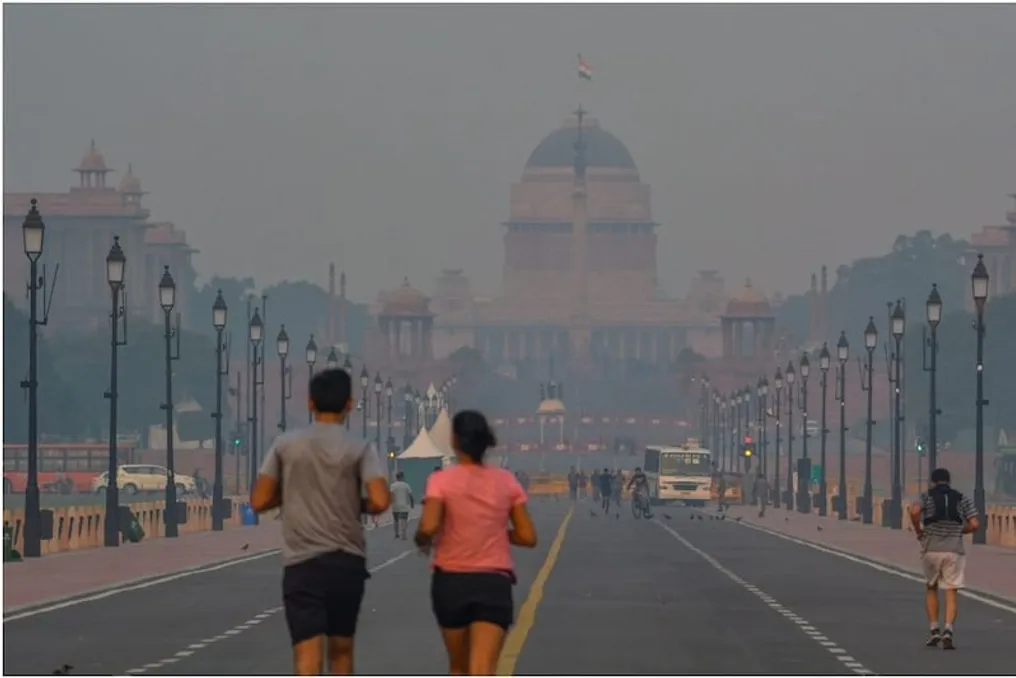
In Delhi, amidst the slight coolness, air quality has begun to deteriorate as the AQI exceeded the 200 mark. Due to rising pollution in the Delhi-NCR region, the first stage of the Graded Response Action Plan (GRAP) has been activated. This plan mandates various restrictions to prevent further pollution growth. The restrictions are set across four stages, and currently, the rules for the first stage are in effect.
The new GRAP provisions were approved at the CAQM meeting on September 28, 2026, and the revised GRAP schedule was published on September 29, 2026. Among the recent changes is the consolidation of measures concerning dust control, solid waste management, and transport.
Measures related to the entry of diesel generator sets (DGUs) and buses of BS-IV standard or older, arriving from NCR and neighboring states, have been moved from Stage-2 to Stage-1. This means that restrictions previously implemented at higher pollution levels are now being applied preemptively.
Furthermore, mitigating changes have been introduced in some Stage-3 rules, such as those concerning road pothole repair. The scope of the ban on BS-III petrol and BS-IV or older passenger vehicles has been extended to Sonipat. Exemptions for BS-IV or older heavy goods vehicles transporting essential goods have also been revoked during Stages-3 and Stage-4.
Stage-1 of GRAP is implemented when the AQI reaches between 201 and 300. At this stage, measures are introduced to control pollution from dust, garbage, transport, and generators. Key prohibitions include:
- Ban on open burning of leaves, garbage, and other waste.
- Strict control over dust at construction sites; rules for storing and covering construction materials must be followed, and dumping construction waste outdoors is prohibited.
- Prohibition on operating vehicles that violate environmental norms; possession of a valid PUC certificate and compliance with all applicable rules is required.
- Ban on entry of inter-state buses of BS-IV standard or older into Delhi-NCR.
- Restrictions on the use of diesel generator sets, which cannot operate arbitrarily.
- Application of established measures for dust control, solid waste management, and transport.
- Increase in parking fees, excluding metro parking.
Generally, no specific restrictions are imposed on private vehicles at Stage-1 of GRAP. Private cars registered outside Delhi of BS-IV standard can be operated provided the stipulated service life and applicable rules are met. However, from November 1, 2026, to January 31, 2027, separate restrictions may be imposed on non-Delhi registered vehicles below BS-VI standard, including vehicles eligible for exemption.
All measures adopted at Stage-1 remain in effect at Stage-2. Additionally, extra steps are taken to reduce pollution related to energy consumption and private transport. In this stage, parking fees may be increased to reduce car usage. Water sprinkling is intensified to reduce road dust. Burning coal or wood for tandoors or other needs is prohibited in hotels, restaurants, and street food stalls. Construction sites must strictly adhere to dust control regulations.
At Stage-3, in addition to Stage-2 and Stage-1 restrictions, all minor construction and demolition work is completely banned. This includes earthwork, piling (for foundations), digging open trenches, welding, painting, plastering, and tiling. Restrictions are placed on the transportation of construction materials such as cement, sand, gravel, and slag on unpaved and open roads. Quarrying, brick kilns, and mineral extraction are completely suspended. A ban is imposed on the movement of BS-III petrol and BS-IV diesel passenger vehicles. A directive may be issued for conducting school classes online.
This stage is implemented when the AQI exceeds 450. During this period, all types of construction work are completely halted, including projects on highways, roads, flyovers, bridges, power lines, and other public facilities. Furthermore, significant restrictions are imposed on vehicles. Online or blended learning is provided for younger grades.