For decades, Indian filmmakers borrowed plots from Hollywood or other foreign film industries to create their own films in local languages. The main idea was to take a successful film, transplant it into the Indian cultural context, and infuse it with emotional melodramas, high-stakes romance, and lavish musical sequences.
Long before formal intellectual property agreements became standard practice in the global entertainment business, Bollywood frequently drew inspiration from Hollywood. This phenomenon, encompassing unregistered plot borrowings, creative localization, and official studio remakes, has defined some of the biggest hits and intriguing failures in the history of Hindi cinema. The dynamic between original Hollywood works and their Bollywood counterparts demonstrates a fascinating intersection of cross-cultural adaptation, artistic translation, and an evolving legal landscape.
In the 1970s, 1980s, and 1990s, international copyright enforcement was virtually non-existent in global film markets. Hindi screenwriters regularly adapted foreign films without official licensing, viewing the process not as infringement but as translating a good story for a completely different audience. It is important to note that during that era, 'copying' a Hollywood film rarely meant creating an exact replica; to succeed at the Indian box office, the narrative had to be carefully 'masalaized.'
A nineteen-minute Western thriller or a Hollywood romantic comedy required expansion into a three-hour epic, which included musical interludes transforming narrative moments or internal monologues into multi-song soundtracks. Additional storylines were also added, featuring comic companions, patriarchal family dynamics, and motifs of dramatic revenge, while moral values were adjusted according to traditional social values and family structures.
Notable examples of adaptations before 2000 include 'Sholay' (1975), which merged the plot of mercenaries from Western films like 'The Magnificent Seven' (1960) and 'Seven Samurai' (1954) with the aesthetic of cult comedy and revenge drama, creating one of Indian cinema's greatest epics. The film 'Chachi 420' (1997) followed the theme of 'Mrs. Doubtfire' (1993), replacing the lead character voiced by Robin Williams with a traditional Indian dancer and father, weaving classic music and domestic family politics into the farce of disguise. 'French Kiss' (1995) was transformed into 'Pyar To Hona Hi Tha' (1998), which became a hit at the Indian box office due to its emphasis on traditional wedding ceremonies and family values.
With the advent of the new millennium, as old large cinemas gave way to multiplexes, the viewer demographic shifted towards urban youth who increasingly watched original American films. Directors such as Sanjay Gupta, Vikram Bhatt, and David Dhawan built entire filmographies based on adapting Western action films and comedies for the local audience.
Sanjay Gupta's film 'Kante' (2002) famously adapted Quentin Tarantino's 'Reservoir Dogs' (1992). The action unfolded in Los Angeles with Indian stars (including Amitabh Bachchan and Sanjay Dutt). 'Kante' translated Tarantino's non-linear heist dynamic into a highly stylized, hyper-masculine thriller. Tarantino himself later noted that he appreciated how 'Kante' expanded the characters' backstories beyond the structure of the original film's 'bottle episode.'
Similarly, Amir Khan's 'Ghajini' (2008) adapted Christopher Nolan's 'Memento' (2000). While Nolan's indie classic relied on a cerebral, reverse narrative structure, 'Ghajini' transformed the premise of short-term memory loss into a high-octane action-romance filled with body transformations, viral dance numbers, and tropes of emotional revenge. 'Ghajini' became the first Hindi film to cross the historical box office threshold of 100 crore.
The era of wild, unregistered Western adaptations suddenly ended in the late 2000s. As major Hollywood studios, including 20th Century Fox, Warner Brothers, and Disney, opened direct distribution and production offices in Mumbai, legal control tightened. A key catalyst was 2009, when Warner Brothers threatened a lawsuit against the producers of 'Banda Yeh Bindaas Hai,' an unregistered remake of 'My Cousin Vinny' (1992). The resulting out-of-court settlement signaled to the Mumbai film community that appropriating intellectual property was no longer a viable business model.
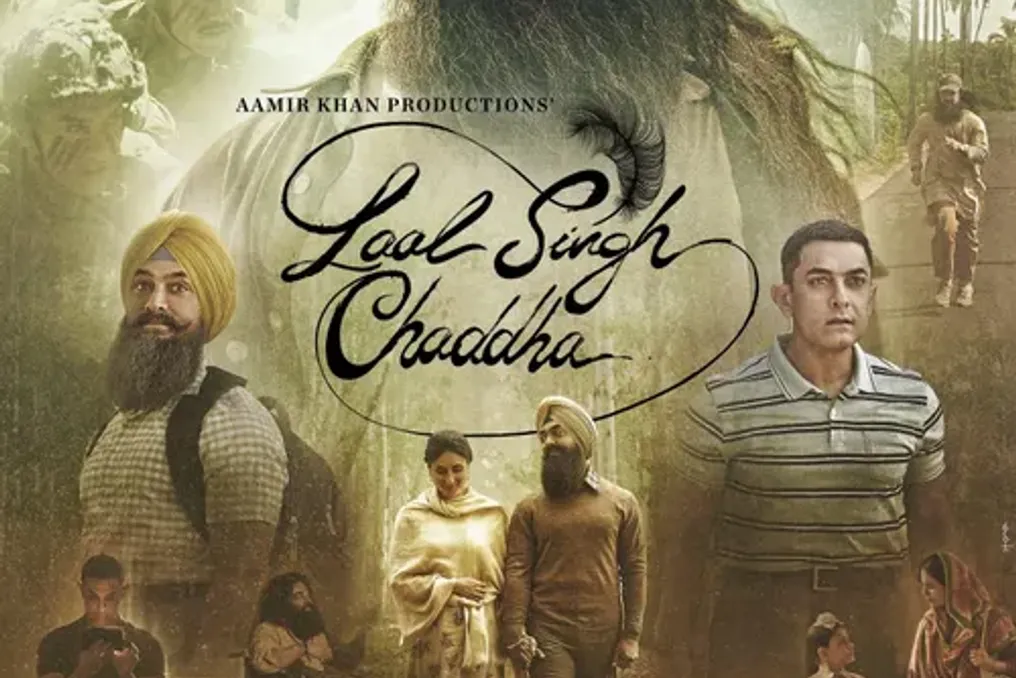
This legal shift marked the beginning of the era of officially licensed Hollywood remakes. 'We Are Family' (2010) was an official remake of 'Stepmom' (1998) and was produced under a joint venture between Karan Johar's Dharma Productions and Sony Pictures. 'Bang Bang!' (2014) represented an official, high-budget license of 'Knight and Day' (2010) from 20th Century Fox, starring Hrithik Roshan and Katrina Kaif. 'Laal Singh Chaddha' (2022) was an official adaptation of Paramount's 'Forrest Gump' (1994), starring Aamir Khan, who spent over ten years securing rights and adapting key moments of American history (such as Vietnam and Watergate) into Indian historical events (like the Emergency and the 1983 Cricket World Cup).
However, remakes are not always successful. The massive success of 'The Italian Job,' remade in Hindi as 'Players' (2012), ended in complete failure because it failed to resonate with the local audience. Conversely, when a foreign concept is meticulously adapted to account for local emotional, familial, and social realities, it ceases to be a mere copy and becomes a unique work of art.
Today, as international streaming services make global content instantly accessible, the era of covert plot borrowing is practically over. Nevertheless, the legacy of these adaptations remains a testament to the fluid, cross-pollinating nature of world cinema, demonstrating how one story can be reinterpreted to touch audiences across different ends of the planet.