Violence against children entails significant economic costs for several countries, which can account for up to 11% of total GDP. These negative consequences are felt over many years and affect the health, education level, and financial status of the victims themselves. At the same time, investments in supporting children and their families can yield long-term economic benefits.
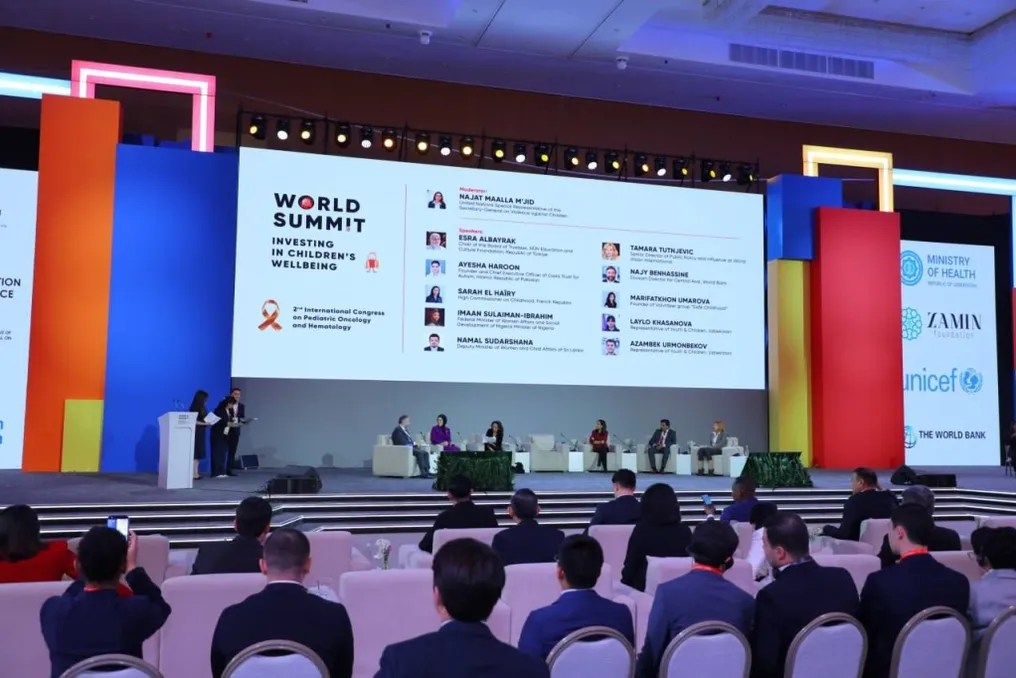
A correspondent from Podrobno.uz studied this topic at the World Summit on Child Well-being held in Samarkand to find out how to assess the scale of these losses and the effectiveness of investments in child well-being.
Sources of Economic Losses from Violence
The scale of the economic consequences of violence against children can be measured by several indicators. According to a report prepared by the UN Secretary-General's special representative on violence against children, titled 'Building the Investment Case for Ending Violence Against Children,' it was established in January 2025 that the total direct and indirect losses in individual states can reach 11% of GDP.
In some countries, annual costs associated with the consequences of violence exceed government healthcare spending, sometimes by six times. At the World Summit on Child Well-being, Tamara Tutnyeevich, Global Director for Public Policy and External Relations at World Vision International, presented a different estimate, according to which economic losses can reach 7% of GDP.
Differences in these figures are due, in part, to calculation methods and which consequences researchers take into account. The economic damage goes beyond just the costs of treating children subjected to physical or psychological violence; it also includes the costs of social services and the judicial system, funds for further assistance to victims, losses due to missed classes and reduced educational attainment, as well as decreased future income. In the long term, the consequences of violence can affect labor productivity even in adulthood.
There is no single universal figure applicable to all countries. The final assessment depends on what types of violence are considered, how fully the scale of the problem is known, and how researchers translate these consequences into monetary equivalents. Some calculations focus mainly on lost income and health problems, while others include government expenditures and a broader range of indirect losses. A lack of data on cases of violence can also lead to an underestimation of the damage.
It is important to understand that the percentage of GDP does not mean that the state actually pays such an amount in a given year, and this indicator does not provide a direct way to calculate the savings from one specific prevention program. It serves as an indicator of the total volume of losses for comparison with other government expenditures.
How to Assess the Effect of Investments in Child Well-being
However, assessing the damage is only half the battle. It is equally critical to understand what positive effect investments in child well-being can bring and how to determine whether the funds allocated for these purposes truly improve children's lives.
In the State of Social Protection Report 2025, Naji Benhassine, Director of the World Bank for Central Asian Countries, provides an estimate: every dollar transferred to low-income families generates a multiplier effect of about $2.50 in the local economy. This amount does not represent direct income for the state but rather demonstrates how payments stimulate economic activity: families spend money on food, medicine, transport, and school supplies, supporting local suppliers and service providers.
The magnitude of this effect depends on the specifics of the particular economy and the structure of the social protection program. Nevertheless, the impact of payments on the local market is just one possible return on investment in children and families. Family support helps ensure that children can continue to study, receive necessary medical care, and maintain a regular diet during periods of financial difficulty. Access to benefits, childcare, and other forms of support can also facilitate parents' participation, especially women, in paid employment. In the long run, the quality of health and education affects a person's future opportunities and income.
Furthermore, an increase in spending itself does not guarantee that children will receive the necessary help. Tamara Tutnyeevich, a representative of World Vision International, highlighted the discrepancy between planned budget allocations and the actual provision of services. She emphasized the need to monitor what proportion of budget funds actually reaches the places of service delivery, stating: 'If the money does not reach the children, then we are not where we should be.'
According to her, in a study involving 23 governments and presented in the report 'Safeguarding Children,' only two governments were able to specify the amount they invest in children. This underscores the importance of considering not only the amount allocated to education, healthcare, or child protection, but also whether these funds reached the final recipients, what services were provided, and whether the children's situation changed as a result.
To get a complete picture, it is necessary to track the entire process of fund expenditure—from budget approval to the work of a specific service. The volume of allocated funds itself does not confirm whether children have accessed the necessary help, whether they were able to continue their education, or whether they received timely support after experiencing violence. Such conclusions require data on the results of the services provided and an assessment of the link between changes and funded measures. Such an assessment is particularly valuable in conditions of limited budgets, as it allows for comparing programs, identifying the most effective ones, and adjusting resource allocation. The World Bank report names more efficient use of existing resources and improvement of social assistance systems among the options.
Thus, the economic consequences of violence against children encompass not only direct costs for assisting victims but also affect people's health, education, and income throughout their lives. Investing in violence prevention and family support can mitigate these losses and create favorable conditions for children's development. To assess the effectiveness of such measures, it is not enough to simply look at the volume of allocated funds; it is necessary to understand what services the children received and how this affected their lives to determine the efficiency of public resource use and identify areas needing additional support.