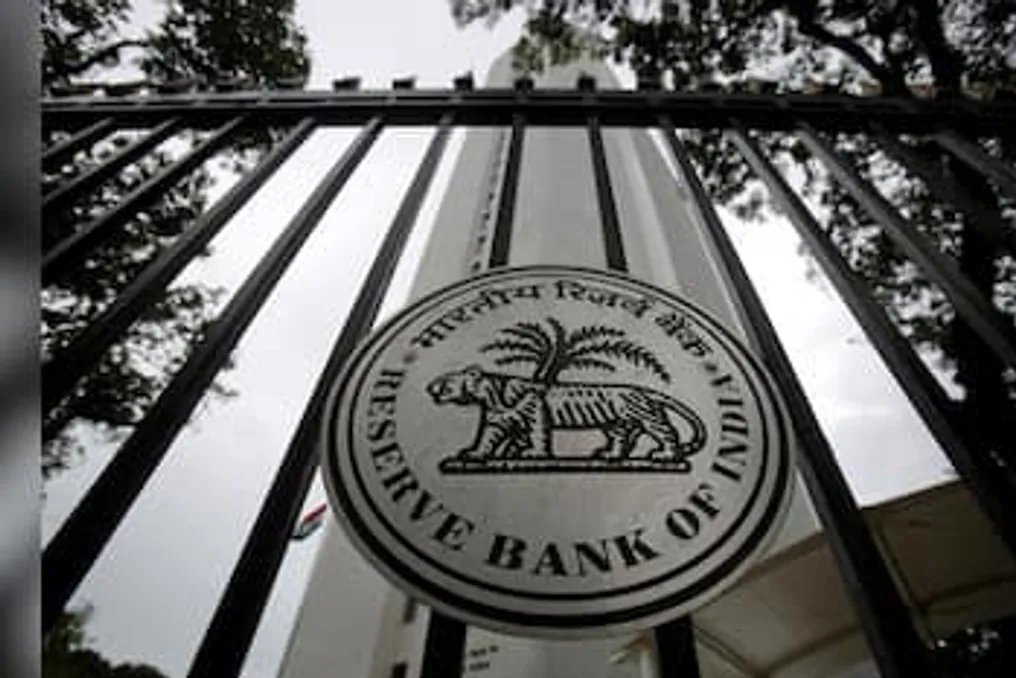
The Reserve Bank of India (RBI) rejected all bids for the government's Treasury Bills (T-bill) auction on Wednesday, which dealers suggest indicates concern over a sharp increase in the cost of short-term borrowing.
The yield on the benchmark 10-year government bond reached 7.44 percent, hitting its highest level since November 4, 2022, up from the previous level of 7.39 percent.
Previously, the central bank had declined bids in June, canceling T-bill auctions with maturities of 182 and 364 days. At the end of March, it rejected bids across all three maturities.
The government planned to raise 23,000 crore rupees through the sale of 91, 182, and 364-day T-bills. Traders speculated that the yields requested by investors might have exceeded RBI's expectations. Following the announcement of the auction results, government bonds, which were already under sales pressure due to rising crude oil prices and US Treasury yields, suffered further.
One primary dealer noted: 'The yield (on the benchmark 10-year government bond) will now rise to 7.50 percent. Crude oil remains a major factor of uncertainty, as Brent trades around $112 per barrel, and US yields have also risen slightly. This is causing market concern. Sentiment turned negative again after the auction results were announced.'
Spot yields on T-bills have sharply increased over the past five weeks. Between September 9 and October 14, yields on 91-day, 182-day, and 364-day bills increased by 64 basis points (bps), 83 bps, and 69 bps, respectively.
In last week's auction, the government raised funds at yields of 5.73 percent for 91-day bills, 6.29 percent for 182-day bills, and 6.49 percent for 364-day bills.
The spread between the 364-day T-bill yield and the RBI's repo policy rate widened to 99 basis points last week, the highest level in four years, reflecting the rise in short-term borrowing costs.
The central bank adopted a decidedly hawkish stance. It raised the repo rate to 5.50 percent this month and changed its stance to calibrated tightening, signaling the possibility of further rate hikes.
Rate hike expectations are growing by 50 basis points in December, while the yield on the benchmark 10-year bond has risen by approximately 20 basis points since the policy announcement.
Liquidity, which supported the market for most of the year, has dried up. Recent RBI data showed that net liquidity in the banking system was a surplus of about 48,303 crore rupees on Tuesday.
As a result, the RBI's variable overnight repo auction demonstrated high demand, with bids totaling 93,241 crore rupees received against the announced amount of 50,000 crore rupees.
The weighted average call rate (WACR), the operational target of monetary policy, stood at 5.64 percent on Wednesday, close to the Marginal Standing Facility (MSF) rate of 5.66 percent compared to the previous session. On Monday, the RBI conducted a VRR auction worth 1 trillion rupees, the first in three months.
A government bank dealer stated: 'Liquidity is almost exhausted, supporting high overnight rates. We also expect tax outflows. RBI wants to keep overnight rates aligned with the repo rate. That is why it conducts these temporary liquidity injections.'
The change in liquidity has been sharp. Since August 6, RBI has been in an absorption mode following the last VRR auction on July 29, as liquidity increased due to non-resident foreign currency deposit swaps (FCNR(B)) with the central bank.
Since October 16, daily reserve requirements for cash have been tightened. The average daily net absorption via the liquidity adjustment mechanism has increased from 1.2 trillion rupees in July to 5.8 trillion rupees in August. As of October 12, RBI absorbed a net amount of 3.36 trillion rupees, and the call rate was 5.41 percent.
The central bank plans to conduct another VRR auction worth 50,000 crore rupees on Thursday.