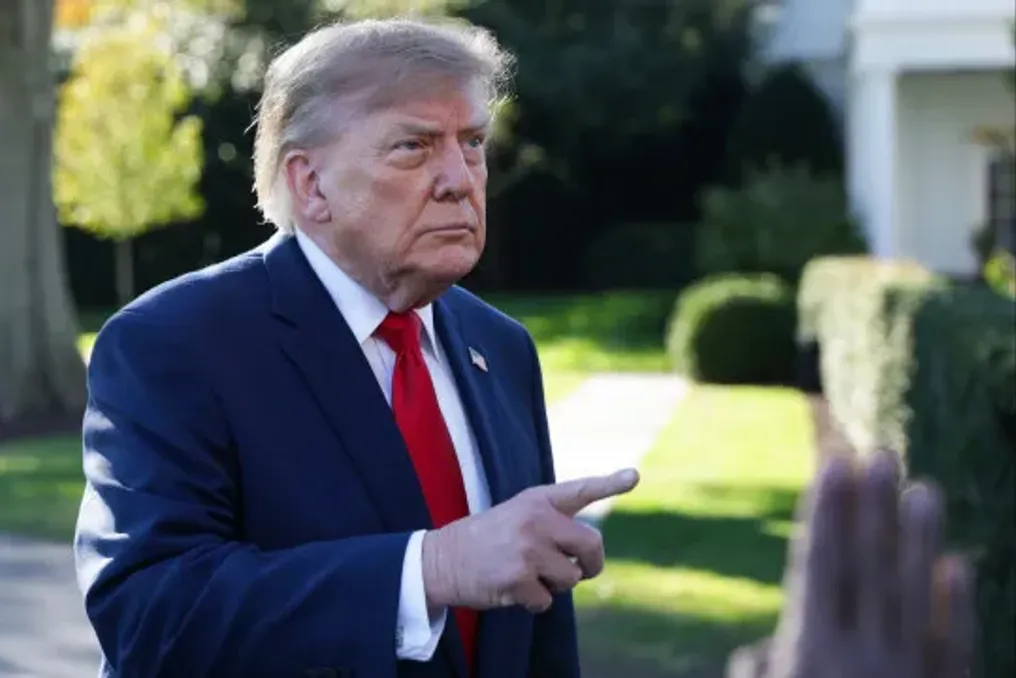
The US President has demanded that new artificial intelligence (AI) data centers generate their own energy and direct surpluses to lower electricity prices. This issue is a key element of his campaign ahead of legislative elections.
The massive consumption of water and electricity by these facilities, which are vital for the development of AI supported by Donald Trump, is causing concern among voters and could influence the results of the upcoming midterms on November 3rd, during which Republicans are fighting for control of both chambers of Congress.
Donald Trump wrote on his Truth Social network: 'I have been closely monitoring data centers and have come to a very firm conclusion. By my order, new large, in some cases gigantic data centers must generate their own electricity and transmit or sell any surplus to the local community or to the power grid.'
According to the US President, this could lead to a 'significant reduction' in energy prices, and he warned that 'if companies want their data centers to be popular, they must pay dividends to communities.'
He also insisted: 'I have been watching the process, and data centers that were very unpopular in a certain area have become extremely popular when an economic agreement is reached. Make agreements and build them!!!.'
An AP-NORC poll showed that about 60% of Americans support restrictions on the construction of such centers, while a recent CBS News study found that 52% believe that AI models will ultimately harm people, and 68% fear their use by hostile actors.
Several territories, including the states of California, Texas, and Virginia, have taken measures to limit the development of this infrastructure. In Palm Beach County, where Trump resides, Florida, an emergency moratorium on these data centers was approved.
Despite growing discontent, the president continues to support the development of AI, which he calls superintelligence or SI. In August, Trump stated that 'the only reason communities across the United States would not want data centers is if they wanted to be regressive and poor,' adding that 'China could not be happier with this anti-data center movement.'