Peak Energy, a semiconductor company, has successfully raised $108 million in a re-signed Series B round. The round was led by General Motors Ventures, with participation from Maverick Silicon, Infinite Capital, Eclipse, Xora Innovation, and LG Technology Ventures.
The Sacramento-based company develops sodium-ion energy storage systems for large-scale energy grid needs. The capital raised will be used to expand internal production and enter the data center market. Furthermore, Peak Energy intends to fulfill over $1 billion in existing customer orders.
The company was founded in 2023 with the goal of creating more affordable and safer solutions for large-scale energy storage. It utilizes sodium-ion battery technology equipped with an innovative passive cooling system, which reduces costs without the need for traditional active cooling systems.
This investment comes amid growing demand for power infrastructure. Data centers, for example, consume significant amounts of energy to run artificial intelligence applications. Storage systems can help relieve pressure on the power grid and increase electricity supply reliability.
The Peak Energy system is designed to reduce the operational and maintenance costs associated with standard energy storage installations. The passive cooling architecture eliminates the need for energy-intensive cooling systems. The company claims that this design can reduce energy costs by up to 20%.
The platform is also intended to minimize maintenance requirements and improve operational reliability. Peak Energy states that its systems require no scheduled maintenance, do not use water, and are virtually silent.
Safety remains a key aspect of the company's approach. Peak Energy asserts that its design eliminates the primary causes of battery fires. These characteristics could make its systems attractive to communities located near large storage facilities.
Sodium-ion technology offers an alternative to lithium-ion batteries. Sodium is an abundant material that can support domestic supply chains. Peak Energy focuses its platform development on utility-scale storage rather than consumer electronics.
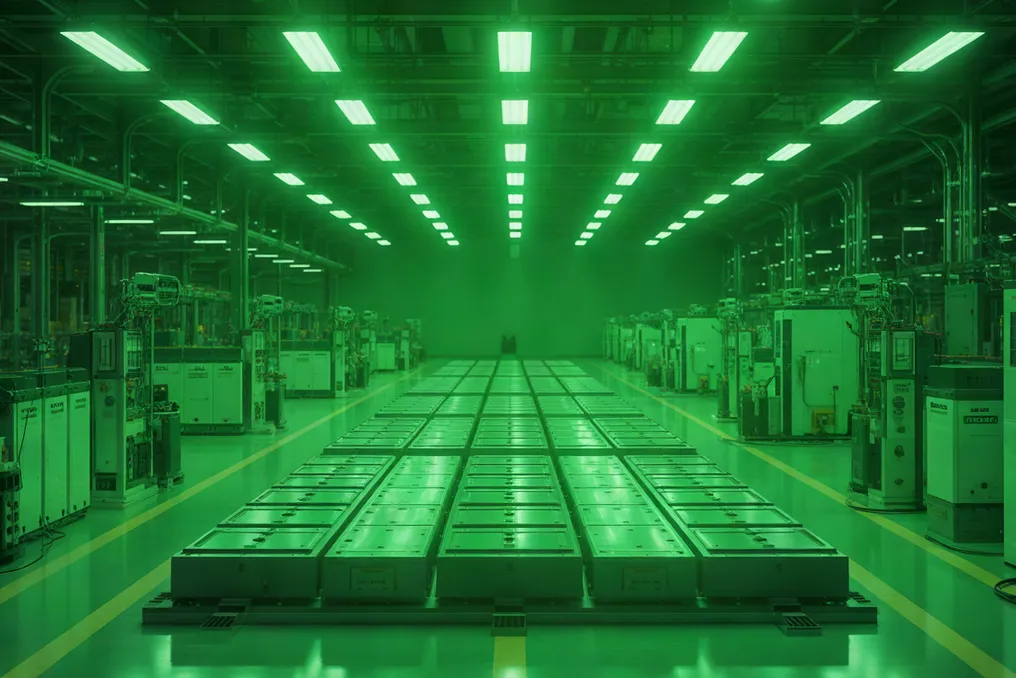
Peak Energy is expanding its manufacturing operations by building a new facility in Sacramento, California. The plant is designed to provide an annual production capacity of four gigawatt-hours. Production is scheduled to begin in the first quarter of 2027.
This facility will help the company increase output as customer demand grows. Peak Energy has entered into commercial agreements with Jupiter Power, RWE, and Energy Vault. According to the company, its current commitments exceed $1 billion.
In June 2026, Peak Energy announced a strategic partnership with General Motors. The companies plan to jointly develop next-generation sodium-ion batteries for energy storage systems. GM will contribute its expertise in domestic battery manufacturing and industrialization.
Peak Energy plans to use the new funding to enter the data center market. The growth of artificial intelligence has increased pressure on power infrastructure. Operators require reliable power solutions that allow them to grow without incurring high costs.
The company states that its passive cooling system can provide a 'competitive advantage' to facilities with limitations regarding space, water, and safety. Project implementation will depend on progress in manufacturing and successful commercial deployment.
General Motors Ventures sees potential in the company's approach. Its president, Kevin McCabe, emphasized the potential of this technology as a cost-effective solution using abundant, domestically produced materials. The planned production launch in 2027 will be a major milestone for the company.