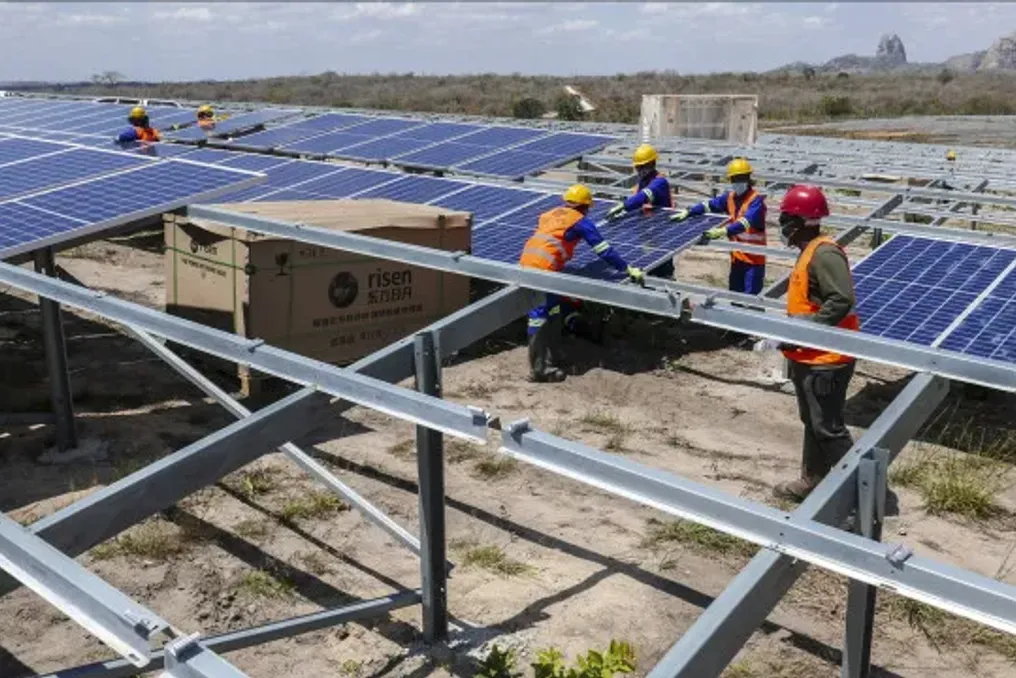
The National Energy Fund of Mozambique has transferred the management of the Mozambican Solar Panel Factory (FPSM) to the Árabe Jampur group. The goal of this transfer is to resume production, modernize technologies, and increase the enterprise's competitiveness in the domestic market.
The President of the National Energy Fund (Funae), Mati Gondola, stated during a ceremony held at the Beluluanne industrial park, Maputo province, that he expects the company, based on its experience, to enter the market, compete, and contribute to service provision.
The official responsible noted that the new operating company, Jampur Group, based in Dubai, United Arab Emirates, must implement more advanced technologies and strengthen the enterprise's competitiveness. He emphasized that the factory faced technological limitations that hindered its ability to compete with more modern equipment available on the market.
Gondola explained that the previous limitations were related to production scale: 'The size did not allow us to scale up. The maximum capacity of what was produced was about 270, and this did not allow us to compete with smaller packages producing around 670.'
He added that the transition to private management will allow Funae to focus on its core function—promoting energy access—leaving industrial activities to organizations with greater technical and commercial potential. In his view, 'we are increasingly realizing that Funae must function according to its essence.'
The Funae President also addressed the new manager with a call to diversify the product range. The products should be intended not only for institutional and corporate clients but also for families and small producers. Gondola stressed: 'Do not focus only on large-volume sales to state structures or enterprises. Also think about divisions that should serve the population individually, machambas [farmlands], and other production units.'
According to Gondola, the introduction of new technological packages can create conditions for more adapted solutions that meet the needs of communities, agriculture, and small production projects, thereby promoting the expansion of access to solar energy solutions in the country.