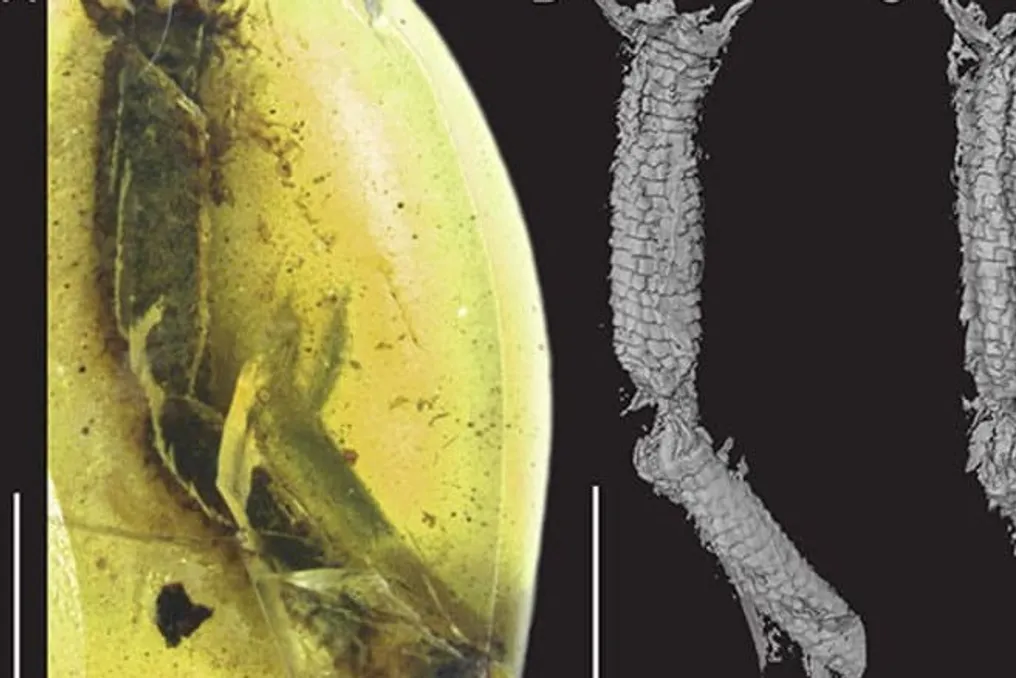
Paleontologists were able to discover a lizard tail in a sample of Burmese amber, estimated to be approximately 99 million years old. It is assumed that the reptile shed its tail either while attempting to escape a predator or while trying to free itself from the resin it fell into.
According to information published in the journal Palaeontologia Electronica, previous phylogenetic studies showed that scaly reptiles, including snakes and lizards, acquired the ability to shed and possibly regenerate their tails at early stages of their development. Nevertheless, this discovery is the first direct confirmation of this feature in fossil records.