With the conclusion of Sharadiya Navratri 2026, which ends after the performance of Kujana (worship of girls) on Ashtami and Navami days, the time for Parana (ritual completion) arrives. Many wonder how to dispose of items used during Navratri, such as vessels, utensils, coconuts, or other objects of worship, and how Parana was conducted in the times of grandparents.
Vessel (Kalash)
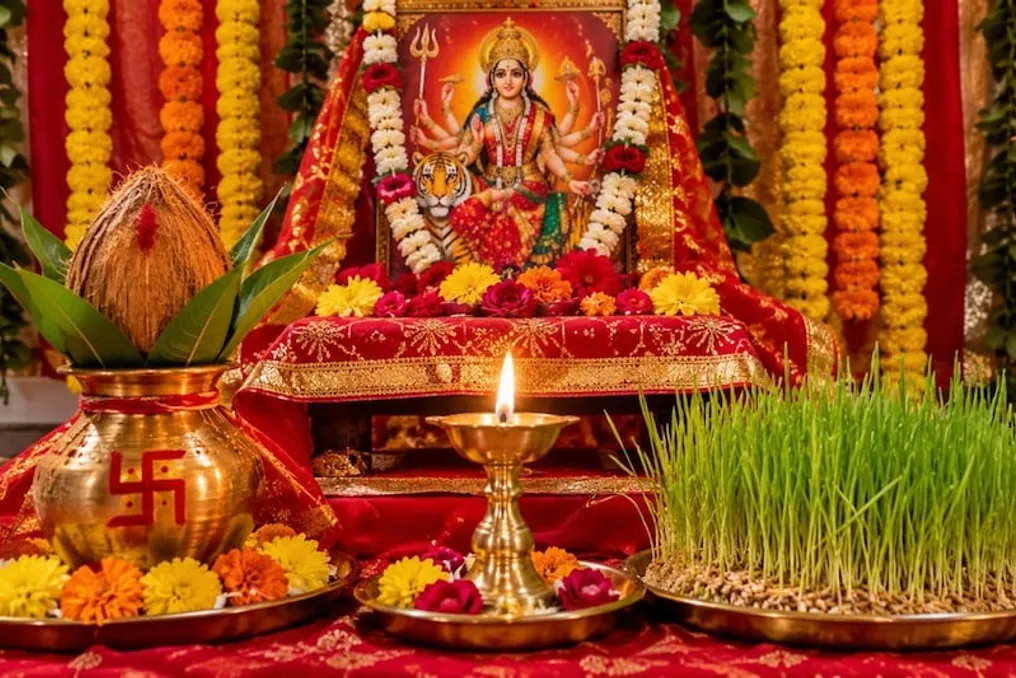
There is a tradition that after Kujana on Ashtami and Navami days, the vessel set up for Ghatasthapana should be released into a river or pond. If an earthen vessel was used for Ghatasthapana, it can be taken to a sacred river or pond. However, if a vessel made of copper, brass, or other metal was used, it should be cleaned and continued to be used for regular religious rituals.
Coin in the Vessel
During Ghatasthapana, many people place a coin in the vessel before filling it with water. After the worship is complete, the water from the vessel is drained, and the coin is removed. According to beliefs, this coin can be placed in the home's wealth storage area or in a safe. Entrepreneurs also place it in their store's cash register, viewing it as a symbol of prosperity and well-being.
Water from the Vessel
After the religious ritual concludes on Navami and Ashtami days, the water from the vessel can be sprinkled in different parts of the house. It is believed that this promotes positive energy in the home. This water can also be poured onto Tulsi leaves or other plants; if there are no plants in the house, it can be poured at the roots of any nearby tree.
Coconut
The coconut placed on the vessel during Ghatasthapana is distributed among the girls representing the goddess during the Kujana on Ashtami and Navami days. The coconut can be cracked and distributed as prasad to family members and other devotees.
Barley
The barley sown during Ghatasthapana sprouts throughout Navratri. It is considered that this barley is a symbol of happiness and prosperity in the home. After the Kujana on Ashtami and Navami days, there is a tradition to honor the barley and release it. Instead of throwing it in the trash or a dirty place, it should be placed in a clean spot, such as releasing it into any sacred river or pond.
Continuous Fire, Garlands, and Worship Materials
Many Navratri followers maintain a continuous fire throughout all nine days, believing that this fire should never go out. At the end of Navratri, during Parana, the lamp with the continuous fire can be released into a river or pond, but only if the lamp is made of clay. If the lamp is metallic, it can be cleaned and used for daily religious rituals. Flowers or other worship materials brought during the ritual are also released during Parana.