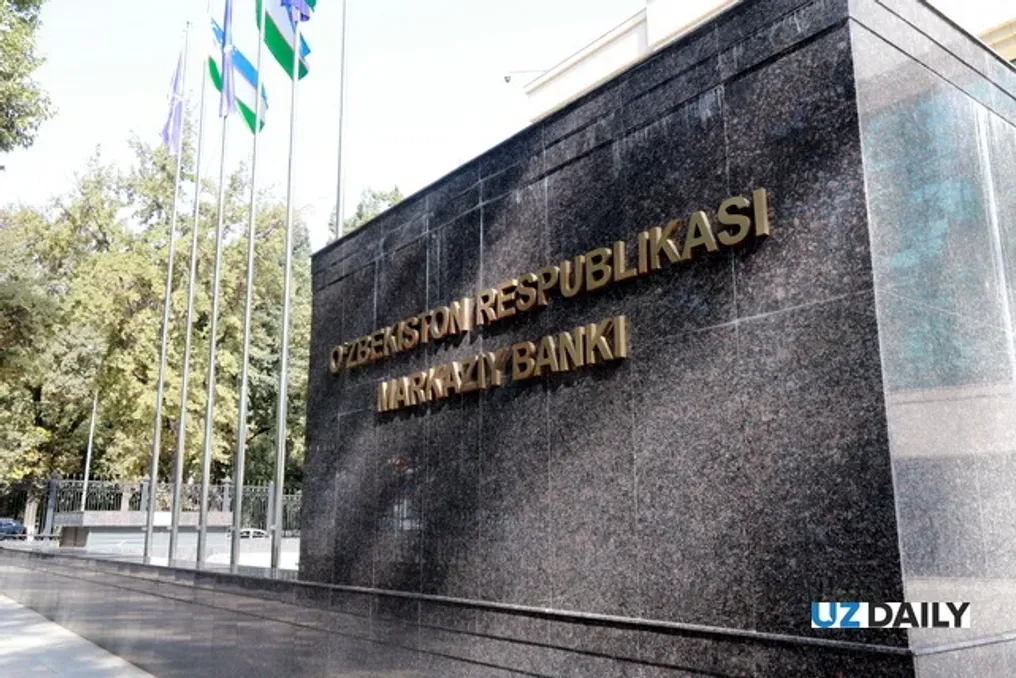
The Central Bank of Uzbekistan has developed a Concept for the period 2026–2030 to support small and medium-sized businesses (SMEs), which includes 25 measures aimed at expanding entrepreneurs' access to financing. One of the key goals of this concept is to ensure that banks can issue online microloans in an average of one hour by 2030, with such loans accounting for 60% of the total volume of microloans, as stated by the Central Bank of the Republic of Uzbekistan.
The concept sets the goal of doubling the current SME loan portfolio, which currently stands at 218 trillion soums, by 2030. It is expected that the share of SME loans in the gross domestic product will increase from 12% to 20%, and the share of non-bank credit institutions in overall lending should increase from 1.7% to 5%.
It is planned to reduce the share of state financial institutions in SME lending from 73% to 65%, or to 55% if a major state bank is privatized. Additionally, it is expected that the share of SMEs with access to reliable and transparent data provided by credit institutions will increase from 68% to 80%.
This document is adopted as a pilot and will be reviewed annually based on monitoring target indicators, implementation of initiatives, and consultations with experts and market participants. According to World Bank data cited in the document, only 10% of small enterprises and 16% of medium enterprises used loans in 2025. Furthermore, only 24% of SMEs have active credit accounts, while 68% are registered with a credit bureau. The World Bank also estimates that about 30% of SME sales are conducted electronically.
The document emphasizes that SMEs provide more than half of Uzbekistan's GDP and approximately three-quarters of employment. According to the National Statistical Committee, as of January 1, 2026, small enterprises and microfirms accounted for 403,800, or 85%, of the total 474,900 operating enterprises and organizations in the country. By July 1, 2026, the total number of small enterprises, including individual entrepreneurs, dehqan farms, and artisans, reached 1.2361 million.
In the first half of 2026, small businesses generated 50.5% of the GDP, equivalent to 518.7 trillion soums in added value. During this six-month period, another 44,000 small enterprises and microfirms were created. SME exports in the first half of 2026 amounted to $7.48 billion, covering 47.2% of Uzbekistan's total exports. Imports reached $13 billion, or 51.8% of the national volume. In 2025, the sector provided employment for about 74% of the workforce, or approximately 10.5 million people.
As of July 1, 2026, the total bank loan portfolio reached 642.8 trillion soums, including 407 trillion soums in corporate loans. SMEs accounted for 36% of the total bank loan portfolio and 34% of issued loans. In 2026, 140 trillion soums in credit resources were allocated to support SMEs in accordance with the presidential decree.
Institutional and Product Initiatives
The concept includes 17 institutional initiatives, which is the largest group of measures out of three groups. The transformation of the Business Development Bank is planned, which will unify long-term SME financing, mobilization of resources from international financial institutions, and distribution of targeted funds through financial intermediaries into a single system. It is also proposed to establish a financial ombudsman to resolve disputes between entrepreneurs and financial institutions before resorting to court; their competence will extend not only to individuals but also to micro and small businesses. Banks are also expected to be allowed to provide services in accounting, taxation, legal, and consulting fields.
According to the Central Bank, a significant part of loan rejections concerning micro and small businesses is related not to the economic insolvency of the projects, but to the insufficient preparation of the projects themselves. The concept also provides for the development of a methodological framework for Islamic finance. Islamic financial products will first be introduced through pilot banks, including special windows for Islamic finance in existing banks, before the list of licensed providers is expanded.
The issue of tax neutrality will be considered separately to prevent double taxation during successive transfers of ownership rights. The plan includes introducing a system of reciprocal guarantees. According to the document, after the President's open dialogue with entrepreneurs on August 18, 2026, enterprises requesting loans up to 10 billion soums must provide collateral equal to only 25% of the loan amount.
Exporters operating through foreign trading houses, contract warehouses, and distribution networks may be granted permission to repatriate export earnings within the timeframe specified in their contracts, replacing the current period of 180 calendar days. Other proposed measures include the creation of a National Hedging Company to manage currency risks and the launch of the '2,000 Exporting Enterprises' program for medium-sized businesses.
Additional institutional measures include expanding the financing base of microfinance organizations through the Apex Fund and guarantee products, the operation of the Central Bank's innovation hub, the publication of quarterly analytical reports on SMEs, and the possibility of using mutually agreed collateral valuations as starting prices in auctions.
Infrastructure and Product Improvements
Five infrastructure initiatives aim to reduce information asymmetry in SME lending. These include a centralized digital platform for selling collateral and distressed assets, a unified online register of movable property, and automatic removal of encumbrances after loan repayment. The concept also provides for the introduction of post-credit monitoring and early warning systems, as well as principles of Open Banking and alternative data-based scoring models, including tax, payment, trade, and utility records. Borrowers will be able to receive explanations regarding the reasons for loan refusal. A digital marketplace will also be developed, allowing entrepreneurs to compare offers for loans and other financial products from banks and non-bank institutions.
Three product-related initiatives focus on developing pre-export financing, expanding the range of financial products, and supporting international factoring. Specifically, under the management of JSC 'Business Development Company', a guarantee organization is being established to provide guarantees for international factoring services up to 10 billion soums, covering no more than 50% of the factoring cost. Until January 1, 2029, the company will reimburse 50% of the discount or accrued interest, provided the annual rate does not exceed four percentage points.
When preparing the concept, the Central Bank studied the experience of organizations such as KfW from Germany, British Business Bank from the UK, SIDBI from India, and the Korea Credit Guarantee Fund (KODIT).