A center designed for propagating seedlings to improve local mahallas was opened in the Guzar district of Kashkadarya region. Initially, the production is planned for 1.6 million trees and plants, but in the future, the output volume is set to increase to five million seedlings annually.
President Shavkat Mirziyoyev inspected the work of this center as part of the nationwide 'Yashil Maqon' initiative during his visit to the region. The complex covers an area of 65 hectares, and the total project cost is estimated at 9.5 billion soms. The creation of the center has resulted in about 100 new jobs.
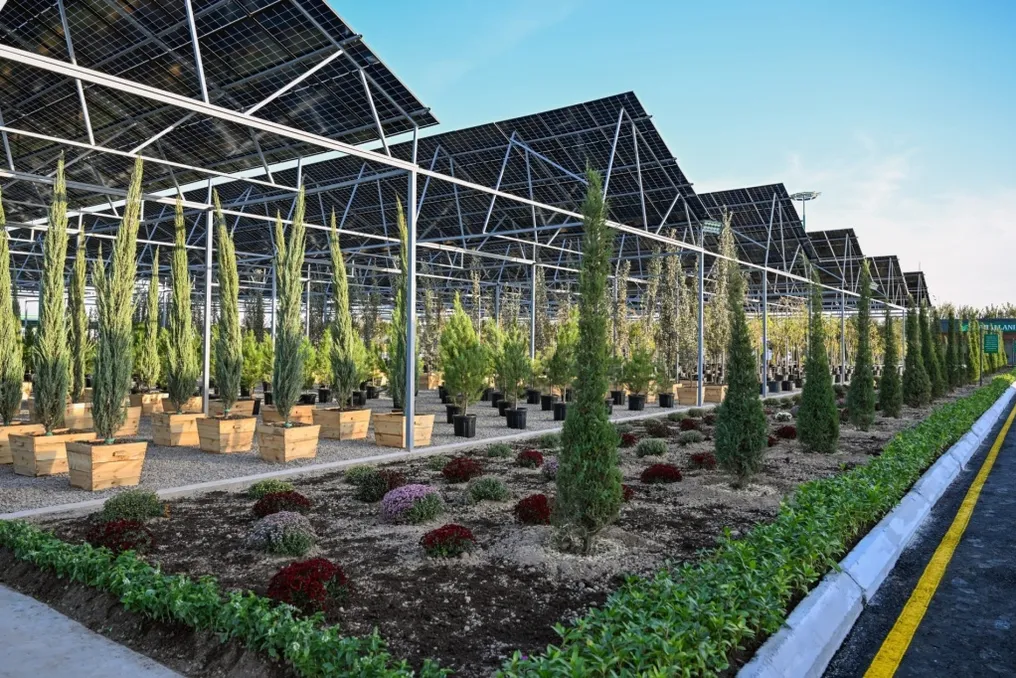
The center's territory is divided into zones: 50 hectares are allocated for growing ornamental trees, five hectares for fruit crops, and another three hectares are used for cultivating shrubs and flowers. The center features 41 varieties of ornamental and coniferous trees.
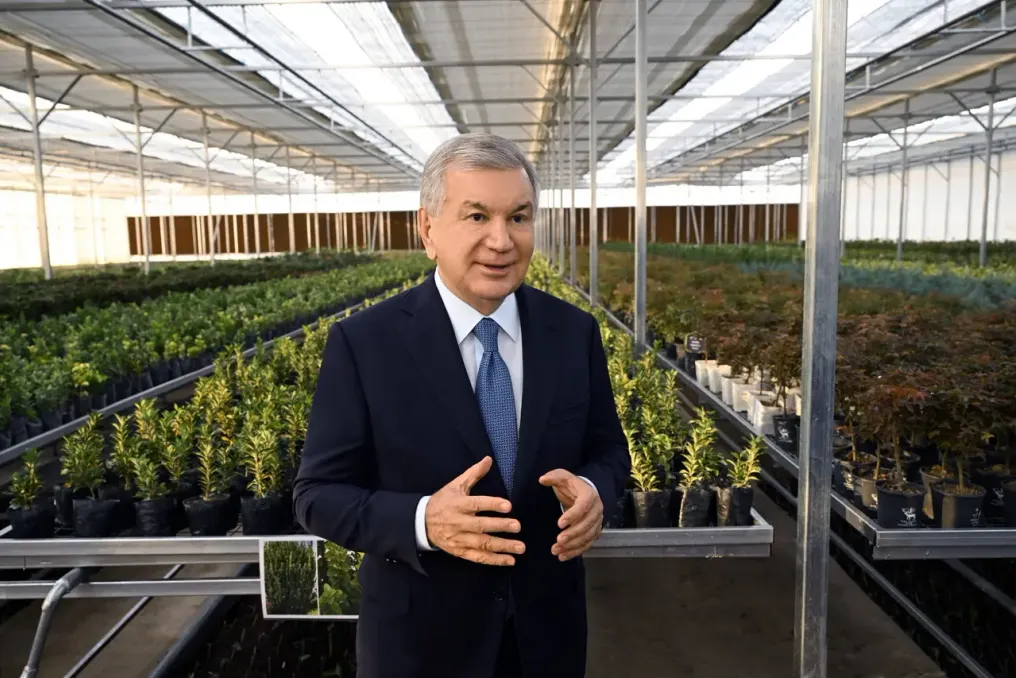
The center's infrastructure is equipped with a greenhouse, special cultivation plots, seed germination facilities, and protective structures. Three reservoirs with a total capacity of 4.2 thousand cubic meters have been installed for irrigation, and a drip irrigation system has been implemented on 20 hectares. Additionally, composting and mulching units are used, and some energy needs are covered by solar panels.
Thanks to the application of modern technologies, seedling cultivation is possible throughout the year, including periods outside the main planting season. Preliminary estimates suggest this allows for an 8–10 times increase in production volume compared to traditional methods and reduces water consumption threefold. It is projected that the cost of seedlings will decrease by 30–40%.
The center will also support mahallas in greening efforts: it will supply necessary trees and shrubs, manage the treatment of damaged plantings, soil mulching, and installation of drip irrigation systems. A mentor-forester will be assigned to each mahalla, and training is conducted for members of the 'mahalla seven' before the start of each planting season.
Residents can also participate in the project: they will be issued young plants based on cooperative agreements. After caring for these seedlings on their private plots for one or two seasons, the ready plants are guaranteed to be purchased, allowing families to earn additional income.
During his visit, the head of state noted that planting trees and creating gardens is a valuable tradition of the Uzbek people. He was also presented with information on the complex's potential to expand green areas in mahallas and increase the income level of the local population.