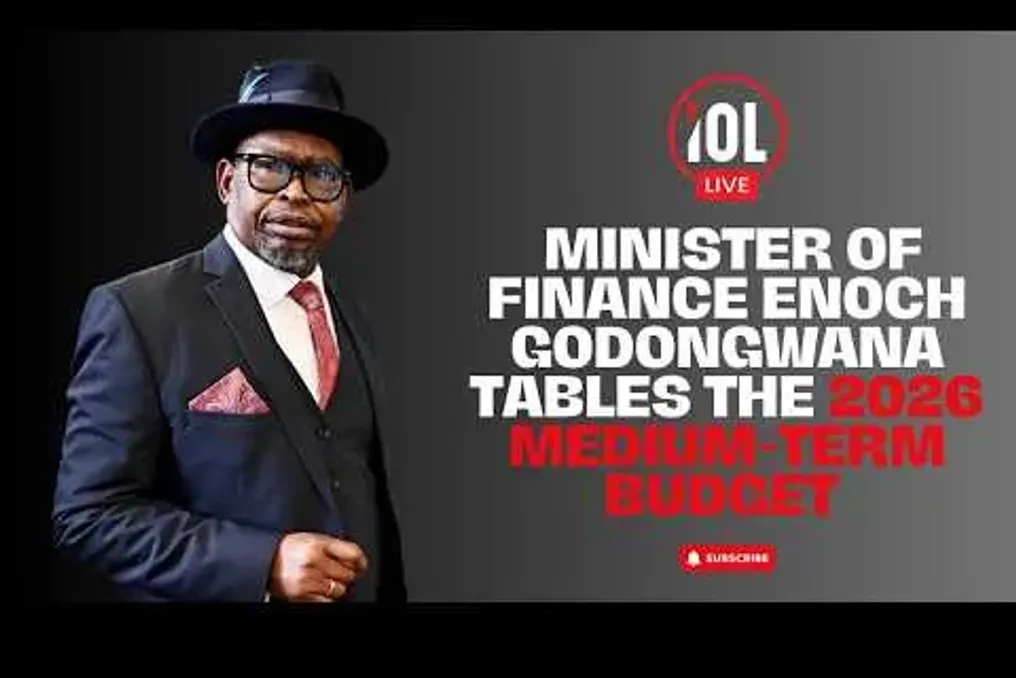
South African Finance Minister Announces Financial Stabilization but Warns of Growth Challenges
Read more
IOL
iol.co.za

South African Finance Minister Announces Financial Stabilization but Warns of Growth Challenges

Despite South Africa achieving improvements in public finances, Finance Minister Enoch Godongwana warned on Wednesday that transitioning from fiscal stability to faster economic growth is a more complex task. This is because the deteriorating global situation threatens to undermine the achievements made.

Speaking at the mid-term budget policy statement in Parliament, Godongwana reported that the debt-to-GDP ratio is declining for the first time in nearly two decades. He stated that the debt-to-GDP ratio stabilized at 78.4% in 2025/26, which is the first occurrence in twenty years. Furthermore, the budget deficit is narrowing to 3.9% of GDP, which is better than the February forecast of 4%, and the primary surplus is increasing from 1.7% of GDP this year to almost 3% by 2030.

Godongwana noted that at the beginning of this year, all three major credit rating agencies announced positive actions on South Africa's rating. However, the global situation worsened since February. Acknowledging that 'growth remains too low,' he mentioned that the attack by Israel and the US on Iran led to the closure of the Strait of Hormuz, causing a rise in global prices for oil, food, and energy.

As a result, global growth is now estimated at 3.1% in 2026, compared to the January forecast of 3.3%. The Ministry of Finance has adjusted its domestic growth forecast to 1.2% for 2026, lowering it from 1.6% in February.

Reduction in Fuel Levies

The most immediate measure to respond to cost-of-living pressures was a temporary reduction in fuel levies. Godongwana announced that from the election day, November 4, the levy will be reduced by 3 cents per liter of diesel and by 1.50 cents per liter of petrol until December 1, with a smaller reduction following until January 5, 2027.

Financial costs amounting to 10 billion cents will be covered by returning funds previously transferred to the Central Energy Fund into the National Revenue Fund. The Minister also reported that gross tax revenue was revised upwards by 17.1 billion cents compared to the February estimate, driven by corporate tax, dividend tax, and VAT.

Godongwana cautioned that a significant part of the improvements reflects rising commodity prices and will not be permanent. In the medium term, an additional expenditure reduction of 38.1 billion cents has been identified, including 13 billion cents from reduced fraud in social grants. The fiscal anchor bill, presented for public consultation in October, requires each administration to set its own fiscal targets and report on them with every budget. This document is expected to be introduced in Parliament in 2027.

Preparation for Growth

Additional revenues allow for an increase in expenditure of 45.5 billion cents compared to February. The Infrastructure Financing and Implementation Agency supports projects with a potential investment value exceeding 217 billion cents, while the Transport Guarantee Mechanism has secured conditional commitments of $553 million from development partners and is planned to launch by 2027.

Regarding gender-based violence, 3.8 billion cents have been allocated to hire over 3,500 social workers, and courts for sexual offenses are expanding from 55 to 101. Consolidated government spending is growing by 3.6% annually, reaching 3 trillion cents by 2029/30, with capital investment being the fastest-growing item at an annual increase of 5.3%. Godongwana stated: 'If we maintain the course, growth could exceed 3% per year.'

Similar stories

South Africa's economic problems call into question Godongwana's mini-budget
Read more
iol.co.za

South Africa's economic problems call into question Godongwana's mini-budget

The unfavorable economic situation in South Africa, characterized by weak growth, increasing national debt, and rising pressure on the cost of living, will be under close scrutiny during Finance Minister Enoch Godongwana's presentation of the Medium-Term Budget Policy Statement (MTBPS) today. This comes against a backdrop of public demands for increased investment, improved public spending, and assistance for struggling households.

According to the Presidential office, President Cyril Ramaphosa is also expected to attend Parliament to present the MTBPS. Godongwana will present the National Treasury's economic outlook, government priorities, and plans for revenue and expenditure over the next three years, thereby setting the direction for the next national budget.

Presenting the economic assessment ahead of the statement, Siseko Maposa, director of the consulting firm Surgetower Associates Management Consultancy, warned that the government can no longer hide the country's deep economic problems behind optimistic promises. In his view, the 2026 MTBPS is unlikely to conceal the serious structural crises facing the country, despite eloquent rhetoric, as was the case in previous cycles.

Maposa pointed to persistently low growth, high national debt, and a population growing faster than the economy as key issues. He estimated the national debt at between 77.5% and 78.5% of GDP and noted that transport and logistics disruptions, along with global energy shocks driving up fuel prices, have intensified pressure on households.

Maposa also cautioned that simply cutting spending will not solve the country's economic problems, as debt servicing consumes a significant portion of government revenue. He stated that 'defensive austerity alone will not save the fiscal structure.' Instead, Maposa advocated for targeted investments in infrastructure and logistics, arguing that these sectors can stimulate economic activity, boost productivity, and help pull the economy out of stagnation.

The question of whether the government's efforts to control debt are making tangible progress is also a point of criticism from the EFF, which disputes the focus on achieving a primary budget surplus. The 2026 budget projected a primary surplus of 0.9% of GDP in 2025/26, expected to rise to 1.6% in 2026/27 and 2.3% by 2028/29. The government also forecasts debt stabilization at 78.9% of GDP. A primary surplus occurs when government revenues exceed expenditures, excluding interest payments on debt, which the Treasury believes helps reduce borrowing needs and interest costs.

However, the EFF argued that improving these figures is insignificant if unemployment remains high and people continue to struggle to access basic services. The party stated: 'Celebrating a surplus while unemployment rises is celebrating the wrong balance sheet.'

Beyond debates over debt and spending, the government is also facing calls for immediate assistance to households grappling with rising transport and food prices. Dr. Mmusisi Maimane, leader of Build One South Africa (BOSA), called for a temporary reduction in the general fuel levy, arguing that high fuel prices place additional pressure on consumers. Maimane insisted that a special allocation of 10 billion rand intended for fuel assistance be used to reduce the levy by 3 cents per liter in November. BOSA also demanded an investigation into the road insurance fund component within the fuel levy, expressing concern over the efficiency and management of this fund.

Fiscal policy is also being criticized for its role in addressing social problems related to harmful alcohol consumption. Kashefa Anser, project lead for the Rethink Your Drink campaign aimed at reducing alcohol harm from the DG Murray Trust, wants the MTBPS to clarify whether the government intends to implement a Minimum Unit Price (MUP). This policy would set a minimum price for a standard drink, making cheap hard liquor less accessible, especially to heavy consumers. Anser noted: 'These events show that the government understands that pricing and packaging sizes influence consumption patterns, and if we want to tackle alcohol harm, we must prevent excessive consumption.'

The campaign advocates for introducing MUP alongside changes to alcohol excise duties, not instead of them. Anser emphasized: 'MUP gives the government another lever to reduce harmful consumption without relying solely on tax increases. But it is not a replacement. If excise duties are reformed, MUP must accompany them. The strongest approach is to use both tools together.'

Cosatu party committee coordinator Matthew Parks stated that workers are besieged because 'unemployment is rising to dangerously high levels at 43.8%, the economy continues to develop sluggishly with an anemic growth of 1.2%, and working communities suffer from poverty, inequality, crime, and corruption.' He added: '2026 was particularly difficult due to the war in the Middle East, which led to a sharp rise in oil prices, hitting South Africa with gasoline prices increasing by more than 25% and diesel by 50%. This triggered inflation, caused two repo rate hikes, and pushed workers into even greater destitution.'

Financial Anxiety Transforms into Mental Health Crisis in South Africa
Read more
iol.co.za

Financial Anxiety Transforms into Mental Health Crisis in South Africa

Financial stress is having an increasingly severe impact on the mental health of South Africans, as over eight out of ten respondents lack emergency funds. Currently, South Africans are facing familiar pressures related to needing to borrow money for groceries, worrying about the next electricity bill, and having no savings for emergencies.

According to the Wonga 2026 Credit Utilisation Survey, which involved 4872 South African residents, it was found that 81% of respondents had no savings or financial reserve for emergencies, and nearly 41% used credit to cover essential monthly living expenses such as food.

These results emerged during Mental Health Awareness Month and highlight how financial difficulties can extend beyond the family budget, causing anxiety, sleep disturbances, and decision-making impairment.

Tina Manyanya, a representative of Wonga, notes: 'Financial stress has become a silent crisis. We are observing the mental and emotional consequences of a population caught in a constant survival cycle, spending money in debt to cover necessities like food, transport, and electricity.'

A separate study by DebtBusters confirms the scale of the problem. Their 2026 'Money-Stress Tracker,' which surveyed almost 18,000 subscribers who were not receiving debt counseling, showed that 72% experienced financial stress. Of those affected, 75% reported it affects their health, 76% their work life, and 92% their home life.

DebtBusters also found that 53% of respondents spent more than 40% of their net income on debt repayment, compared to 48% the previous year.

Stuck in Stress

Psychologist Dr. Andrea Kellerman, who analyzed the psychological implications of the DebtBusters findings, asserts that prolonged financial pressure can undermine people's ability to make decisions and find solutions to difficulties.

She states: 'It is cumulative stress that we have observed over the last five years... it has depleted the ability to make better decisions and think outside the box.'

The proportion of respondents who felt stuck increased from 29% to 34%. Kellerman explains that prolonged stress can lead to a feeling of helplessness, prompting people to avoid problems instead of confronting them. Such actions include ignoring bills, postponing difficult conversations, and withdrawing from opportunities that could improve their situation.

The Body Keeps Score

The psychological consequences do not only affect those who have already missed payments. Cholani Manzini, a teleclinician at Life Health Solutions, names insomnia, irritability, headaches, social isolation, and guilt over spending as signs of financial anxiety.

Manzini also warns that people may postpone necessary medical care due to inability to afford it, potentially worsening the effects of financial stress. The Wonga study shows that financial pressure also pushes more consumers toward informal lenders.

The Wonga survey revealed that 32% of respondents borrowed from informal lenders, known as mashonisas, in the past year, more than double the 15% recorded in their previous study. Manyanya believes that limited access to affordable formal credit forces financially vulnerable households to turn to lenders whose interest rates may be significantly higher.

Know Your Numbers

Meanwhile, Kim Potgiter, CEO of Chartered Wealth Solutions, says that financial worries can turn into a cycle of repetitive thoughts, exacerbating financial problems. She notes: 'We repeat the same questions, play out the worst-case scenarios, and worry about things that may never happen.'

Potgiter explains that people often carry childhood money beliefs, including fears of scarcity and financial insecurity, which can influence their decisions well into adulthood. Potgiter advises replacing assumptions with an accurate picture of household finances, even if the figures are unpleasant. She concludes: 'In any case, knowing is better than guessing.'

For those struggling with debt, early intervention can help prevent the escalation of financial difficulties. This may include communicating with creditors, seeking help from a registered debt counselor, or obtaining professional mental health support when anxiety becomes unmanageable. Manyanya concludes: 'Money stress doesn't just live in your balance sheet; it lives in your mind and body. We need to start viewing financial health as a form of psychiatric care.'

Popular