Bolt EV expands services in Johannesburg, including Sandton and O.R. Tambo Airport
Read more
TechCentral
techcentral.co.za

Bolt EV expands services in Johannesburg, including Sandton and O.R. Tambo Airport

Bolt has expanded its electric vehicle category by launching a service in Johannesburg. This occurred five months after the launch in Cape Town. The vehicles will be owned by an association representing metered taxi operators and on-demand ride services.

On Wednesday, the company announced the launch of the service in collaboration with the South African Metered Taxi and On-Demand Ride Services Association (Samtea), which it described as affiliated with the South African National Taxi Council (Santaco), as well as BYD and other unstated industry stakeholders. The company aims to reach 500 electric vehicles in South Africa by December 2026.

According to Bolt representative Roman Sutton, Samtea will own and manage the fleet of electric vehicles operating on the Bolt platform. Furthermore, the association plans to invest in increasing the fleet over time, thereby supporting wider adoption of electric mobility and creating new opportunities for its members and drivers. In Cape Town, the functions of vehicle supply and management are handled by the partner YugoRide.

The vehicles in Johannesburg are BYD Dolphin Surf models, which were locally introduced in September 2025 with a price starting from 339,900 Rand. This category is already operational in Sandton, serving routes to O.R. Tambo International Airport and parts of East Johannesburg; the fare cost here is slightly higher than in the standard Bolt category, Sutton noted.

Bolt does not disclose the exact number of electric vehicles on the road. Sutton stated that the company does not publish fleet data by city, but the expansion is happening in partnership with local fleet operators. Bolt, which began operations in South Africa as Taxify in 2016, reported in May that it has invested 3 billion Rand in the country over the last decade. Sutton also mentioned that drivers have earned over 42.3 billion Rand on the platform since 2016.

From Enemies to Partners

Samtea Chairman Sibongiseni Shange acknowledged the complex history between the two sectors. He noted that when the market experienced turmoil and different parts of the sector reacted differently, metered taxis and on-demand ride services were viewed as competitors. However, through continuous interaction, they began to find common ground and realize that many industry problems affect everyone, including drivers.

Samtea is not new to Bolt. EWN reported in October 2025 that the association represents Bolt, Teksi Ride, and Shuma Ride. In July 2025, when Samtea and Gauteng E-hailing Services united to promote formalization, Shange then stated about the two sectors: 'We were previously known as enemies.'

The broader history was worse than just 'competitors.' In 2016, a group of metered taxi drivers attacked the then Gauteng Minister of Transport, Ismaila Wadi, after he announced the licensing of Uber drivers. In 2017, metered taxi drivers blocked highways around O.R. Tambo International Airport in protest against Uber.

Hostility has not completely disappeared. In August 2025, two on-demand ride service drivers were shot, and their cars were burned, with suspicion falling on the taxi industry. Santaco denied involvement, but in October 2025, committed to working 'harmoniously' with on-demand ride drivers after the Amendment Act to the National Land Transport Act recognized ride-hailing services as a form of public transport.

On Wednesday, Shange emphasized that being part of a formalized industry is necessary to ensure sector sustainability and provide more reliable protection to operators.

Uber launched its electric service in Johannesburg in November 2025, using 70 vehicles from Valternative Energy, and promised to increase the fleet to 350 by the end of January. By the end of March, they had over 120 cars. Uber declined to state the current figure at TechCentral this month but reported that the service is 'currently available in Sandton and surrounding areas.'
Similar stories

Eskom Launches Public EV Charging Stations in Durban Shopping Centers
Read more
iol.co.za

Eskom Launches Public EV Charging Stations in Durban Shopping Centers

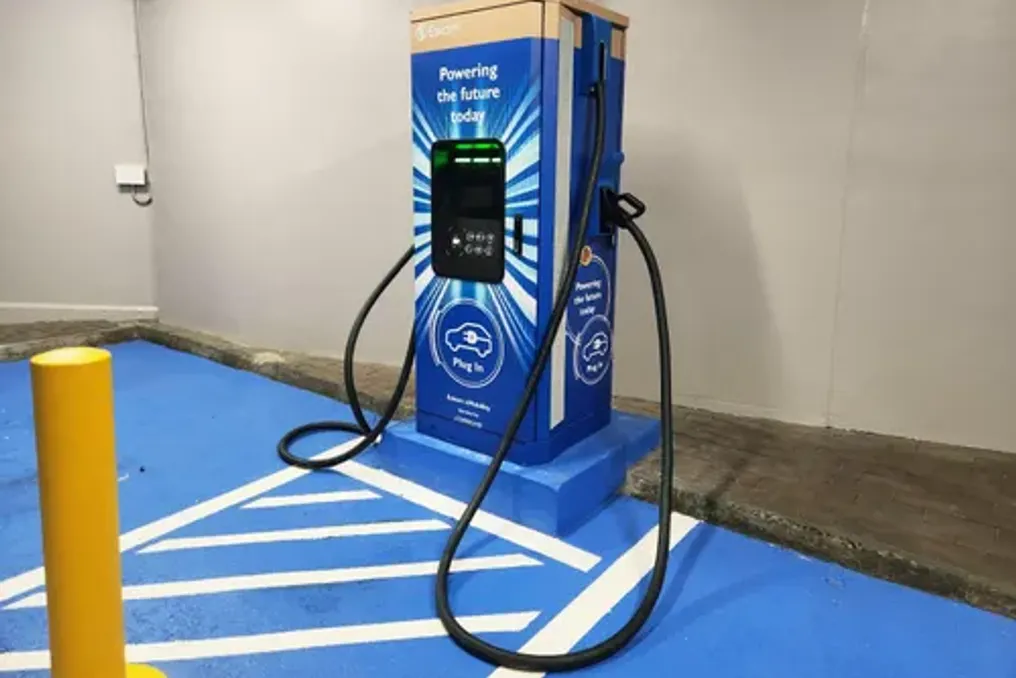
Electric vehicle owners will now find it easier to charge their vehicles while visiting stores, as Eskom has officially opened public charging stations at the Gateway and Pavilion shopping centers in Durban, KwaZulu-Natal.

This move is part of the company's efforts to expand charging infrastructure and support South Africa's transition to electric mobility. The launch took place in October, during National Transport Month, highlighting the growing interest in ensuring the availability of EV charging in places where people work, live, travel, and shop.

Access to convenient charging points remains a critical factor for drivers considering switching to electric vehicles. By installing stations in major retail venues, Eskom aims to alleviate range anxiety and support the country's developing EV market.

EV Charging Comes with Introductory Discount

To stimulate wider adoption of electric vehicles, Eskom is offering customers a 20% discount on the first six months of using the charging stations.

This promotion is part of Eskom Distribution's broader e-Mobility program. This program includes electrifying its own fleet, deploying charging infrastructure, and gradually expanding the public network of charging points across South Africa.

During the official opening, Zukhdi Hamza, Deputy CEO for Operational Support at Eskom Distribution, noted that these facilities reflect the utility's changing role in providing energy solutions that meet customer needs. Hamza stated: 'By investing in charging infrastructure and electrifying our own fleet, Eskom is not just talking about the energy transition; we are actively participating in it by enabling a broader shift to electric mobility.'

How Eskom is Expanding Its EV Charging Network

Eskom Distribution has already deployed 92 electric vehicles and 104 charging stations across 68 Eskom and partner sites. Of this total, 19 charging stations are available to the public and are located at 14 sites. In the KwaZulu-Natal region, 15 sites and 15 charging stations have been launched.

Furthermore, the company has identified another 84 potential locations for public charging stations within its five clusters, and discussions are currently underway with property owners at various stages. The planned expansion aims to provide charging infrastructure to strategically important locations, underserved areas, and priority transport corridors.

What This Means for South African Drivers

The expansion of the public charging network is an integral part of the infrastructure needed to support the wider adoption of electric vehicles. For drivers, having charging points in familiar locations like shopping centers simplifies integrating charging into daily life, including commuting and running errands.

Eskom asserts that its approach is designed to complement the existing charging market by increasing accessibility and lowering costs, while also helping to address issues related to charger scarcity. Partnerships with shopping centers, property owners, and other industry stakeholders are central to this program, as the utility works towards creating a more integrated public charging network.

Hamza emphasized that the initiative goes beyond simply placing charging stations; it is aimed at connecting people with new opportunities and supporting the country's future energy and mobility needs. As the South African electric mobility market develops, the expansion of public charging infrastructure will remain a key element in making the transition more accessible for drivers.

Rising fuel prices in South Africa stimulate consumer interest in electric vehicles
Read more
getaway.co.za

Rising fuel prices in South Africa stimulate consumer interest in electric vehicles

After fuel prices in South Africa officially exceeded the threshold of 30 rand per liter, local drivers and commercial fleets are forced to reconsider their decisions regarding the purchase of electric vehicles (EVs).

The unprecedented rise in the cost of gasoline and diesel has drawn attention to owning electric vehicles. As fuel prices continue to rise—reaching a record high in October 2026—South African consumers are seeking long-term financial relief, given that one liter of gasoline or diesel now costs more than 30 rand.

According to official automotive industry data from Naamsa, there is a significant increase in sales of new energy vehicles (NEVs). This category includes battery electric vehicles (BEVs), plug-in hybrids (PHEVs), and traditional hybrids (HEVs). From January to April 2026, NEV sales increased by 53% compared to the previous year, reaching 7,065 units. BEV sales showed an even sharper jump during the same period, registering a growth of 135%.

Grant Locke, Managing Director of Volvo Car South Africa, notes that rising fuel prices are transforming purchasing models. According to him, South African drivers are now looking beyond the initial purchase price and paying more attention to the total cost of ownership when choosing an EV. They are beginning to factor in lower energy costs, reduced routine maintenance expenses, and overall running costs.

Locke sees a clear shift in consumer attitudes. While environmental sustainability remains an important factor, the primary drivers for considering EVs have become daily operational efficiency and cost savings. Despite record fuel prices pushing drivers toward alternative powertrains, Locke acknowledges that many are not yet ready to switch immediately to fully electric models.

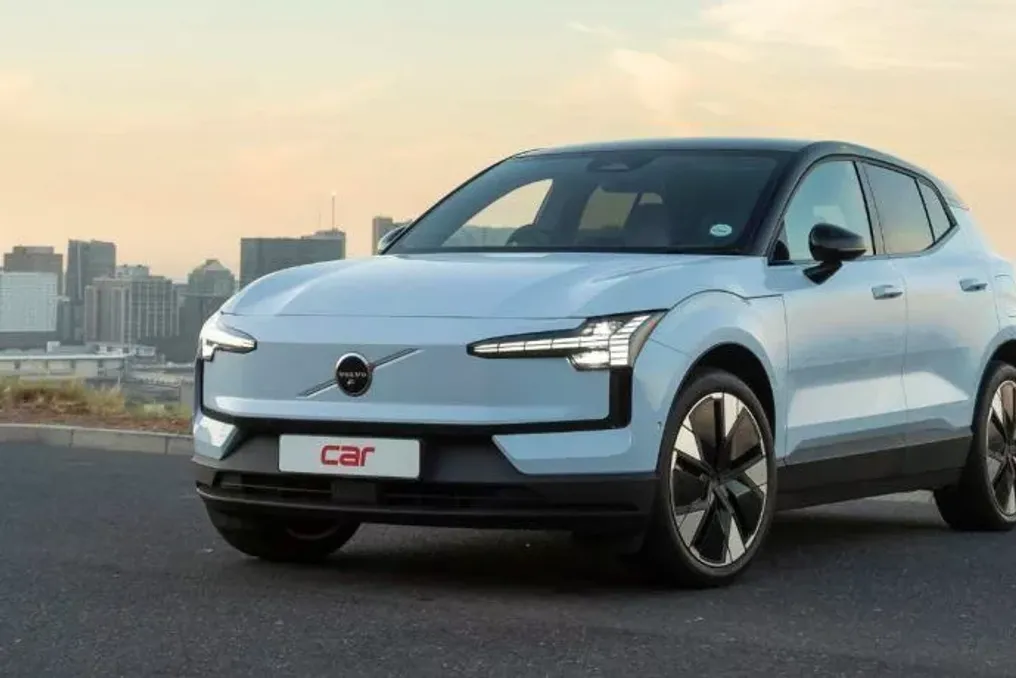
Volvo South Africa offers six fully electric models aimed at the premium segment. The base EX30 starts from 735,500 rand. Additional options include the XC40 Recharge and EC40 coupé crossover—the first starting from 1,108,000 rand, and the second from 1,396,800 rand. The upcoming EX60 will be the brand's mid-range offering from Gothenburg. The ES90 and EX90 occupy the top positions in the company's sedan and SUV lineups, with starting prices of 1,590,000 rand and 1,855,000 rand, respectively.

Although Volvo's electric lineup targets the high end, Naamsa's September 2026 report shows that Chinese manufacturers are capturing demand in the mass market in South Africa. In September, Volvo registered 30 local EV sales (excluding XC40 vehicles, as powertrain sales are consolidated in reporting). In contrast, affordable Chinese offerings are gaining rapid popularity among local buyers. Last month, the Chery Q (from 349,900 rand) sold 214 units, and 150 units of the BYD Dolphin Surf (from 341,900 rand) found new owners. The Geely E2, which ranks first among the most affordable EVs in SA, entered the market at a competitive price of 339,900 rand, although its sales figures are not yet reported to Naamsa.

Popular