India has long served as a global hub for technology services; however, the country's growing engineering capabilities are opening new avenues for product creation, intellectual property (IP) formation, and taking responsibility for innovation. As multinational corporations expand their research and development (R&D) centers in India, Indian teams are moving beyond merely executing assigned tasks to solving complex problems and creating solutions for the global market.
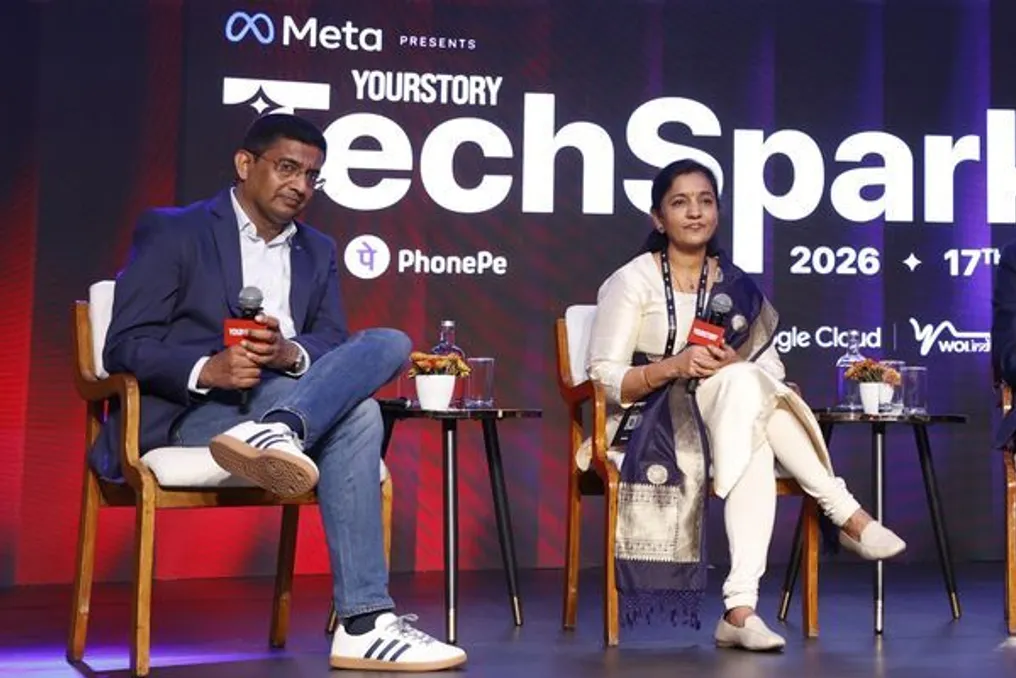
At the TechSparks 2026 event by YourStory, company leaders shared their vision of how India's Global Competence Centers (GCCs) can move up the value chain. The discussion covered the importance of product localization, building industry expertise, and developing problem-solving skills.
Kalavati G.V. noted that medical solutions cannot simply be transferred from one market to another, emphasizing: 'What works in the US does not work in India.' She explained that while medical technologies are global, healthcare must be local because solutions must account for differences in lifestyle, disease prevalence, accessibility, and level of medical care.
Previously, companies often adapted products designed for developed markets by removing features to align them with Indian needs. However, this approach failed to meet the diverse medical needs of the country, which span private hospitals, government institutions, and district clinics. Consequently, the company began collaborating with Indian clinics, hospitals, and clients to develop solutions that meet local requirements. 'We started co-creating some ideas with Indian clients,' she said.
An example of this approach is the C-arm visualization system, which was developed, designed, and manufactured in India to meet local needs. This product is now used in 40 other markets and has an installed base of 1400 units. Furthermore, Kalavati reported that the share of Siemens Healthineers software specialists based in India has reached about 50%.
For Lufthansa Systems, India's advanced engineering ecosystem and automation achievements offer opportunities to leverage existing capabilities within the Lufthansa Group. Although Lufthansa Systems recently commenced operations in India, the broader group already employs over a thousand people in the country. The CEO of the company in India, Luigi Chelmi, stated that they do not consider themselves lagging but see an opportunity to benefit from advancements in automation and established industry partnerships.
The expanding aviation and aerospace ecosystem in Bengaluru is also attracting attention. In a sector where reliability is critical, engineers must possess deep industry expertise and focus on change validation. Chelmi noted that engineers spend more time validating changes than creating them.
At Mercedes-Benz Research and Development India, the evolution lies in shifting from task execution to taking ownership of broader engineering challenges. While the vehicle remains a global product, Manu Sale indicated that the head unit—the digital interface inside the vehicle—offers opportunities for customization. Previously, India solved problems based on given instructions, but the focus has now shifted to asking questions: 'What is the problem? What is the big problem? Give me a clear statement, and I will try to solve it.'
Sale emphasized that this shift allows Indian teams to take responsibility for entire systems and subsystems instead of depending on daily directives from global headquarters. As engineers accumulate product knowledge and systemic expertise, they can engage with headquarters at a higher level and take charge of more complex tasks. He also stressed the need for India to move beyond traditional IT services and start creating products for both domestic and export markets, aiming not just to connect layers of technology but to develop expertise to own the entire stack.
These ambitions are reflected in the broader GCC ecosystem. Kalavati cited Nasscom data showing that 39% of GCCs in India are involved in product development, including product management, while about 9% act as transformation hubs. She concluded that 'we have reached a stage where, given the growth of the ecosystem, we can own complete products.'
Creating original IP also requires companies to start with a problem they want to solve, rather than a technology they want to implement. Kalavati advised organizations to rely on product experience, physicians, client relationships, and partnerships with hospitals and startups to develop solutions that address unmet needs. Sale agreed with this view, stressing that innovation begins when teams transition from service-oriented thinking to identifying problems and developing solutions.