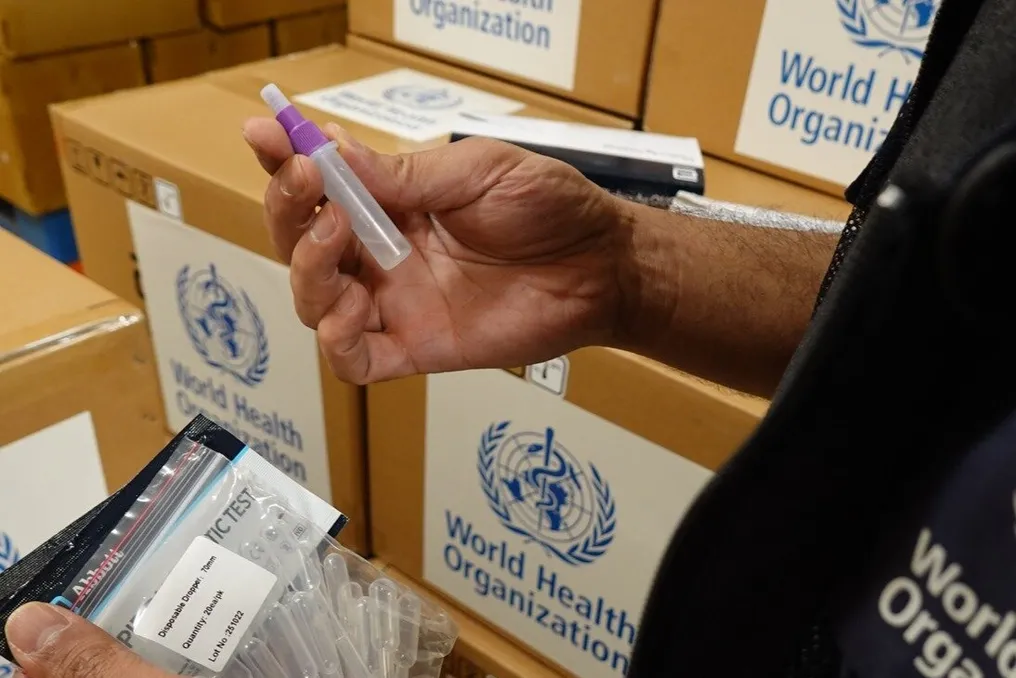
The World Health Organization (WHO), with the support of the Central Emergency Response Fund (CERF), has supplied ten thousand rapid cholera tests to the Iranian Ministry of Health and Medical Education. The goal of this supply is to strengthen early disease detection and prevent potential outbreaks.
These tests will be distributed across high-risk provinces, including Hormozgan, Kermanshah, Sistan and Baluchestan, and Khuzestan. This will allow for the prompt identification of cases and ensure a timely response from the public health system.
Dr. Jean Jabour, WHO's representative in Iran, emphasized that early detection is the most crucial tool in combating infectious disease outbreaks. He noted that equipping local health systems with these tests enables frontline workers to respond quickly and protect vulnerable communities.
As part of a broader project, over 112,000 people are planned to be covered. Despite difficulties with air and sea transport, WHO is also working on delivering vital supplies to combat malaria and dengue fever.
In response to escalating crises in Iran's public health infrastructure, the World Health Organization launched a two-million-dollar project with the Ministry of Health in May. This project aims to support urgent healthcare measures in the country.
This project, funded by the United Nations Central Emergency Response Fund (CERF) and named 'Preventing Disease Spread and Maintaining Essential Health Services During Emergencies,' is aimed at minimizing disease outbreaks, stabilizing the provision of medical services, and protecting the health system from declining effectiveness nationwide, according to the Ministry of Health report.
Since the war initiated by the US and Israel against Iran on February 28, airstrikes have led to a reduction in the country's ability to provide essential medical services. Aggressors have destroyed 229 medical centers, 49 hospitals, 78 pharmaceutical facilities, laboratories, and warehouses. Additionally, 56 emergency bases were attacked, nine hospitals were evacuated, and 47 ambulances and 10 emergency vehicles sustained serious damage.
Attacks on pharmaceutical and diagnostic production facilities and adjacent areas have disrupted the internal supply chain of medical equipment and complicated the provision of critical care to those in need.
The situation has been exacerbated by climatic upheavals in the country's southern provinces. Unusual, above-average rainfall following prolonged droughts in 2025–2026 has caused localized flooding and stagnant water accumulation.
High-risk provinces such as Sistan and Baluchestan, Hormozgan, Kermanshah, and Khuzestan are at greater risk of contact with contaminated water sources. This situation, combined with issues in water supply and sanitation, as well as epidemiological surveillance, increases the risk of infectious diseases and waterborne illnesses, especially cholera and acute diarrheal disease.
According to John Jabour, WHO representative, ongoing conflicts and severe climatic shocks have placed an unprecedented burden on Iran's health system, endangering vulnerable communities. The allocated emergency response funds will play a decisive role in managing health system challenges, allowing for immediate action to protect critical supply chains and ensure access to life-saving aid for those most affected by the crises.
Without urgent action, local transmission of diseases could rapidly lead to widespread outbreaks, increasing the number of deaths and preventable diseases.
To accelerate immediate measures, WHO is implementing a series of highly effective interventions. The strategy prioritizes strengthening surveillance and early warning systems, as well as deploying necessary equipment for disease outbreak response, including rapid tests for malaria, dengue fever, and cholera, noted the official representative. Interventions also include the distribution of mosquito nets, repellents, and larvicides, as well as providing rapid technical assistance to strengthen integrated vector management in high-risk provinces.
Over the next six months, the WHO project will directly serve approximately 112,500 people by scaling up epidemiological management and restoring access to medical services. Indirectly, about 272,550 people will be protected through strengthened rapid response capabilities and reduced risks of disease outbreaks. The ultimate goal of these comprehensive efforts is to manage outbreaks of preventable diseases and maintain essential medical services during times when they are needed most.