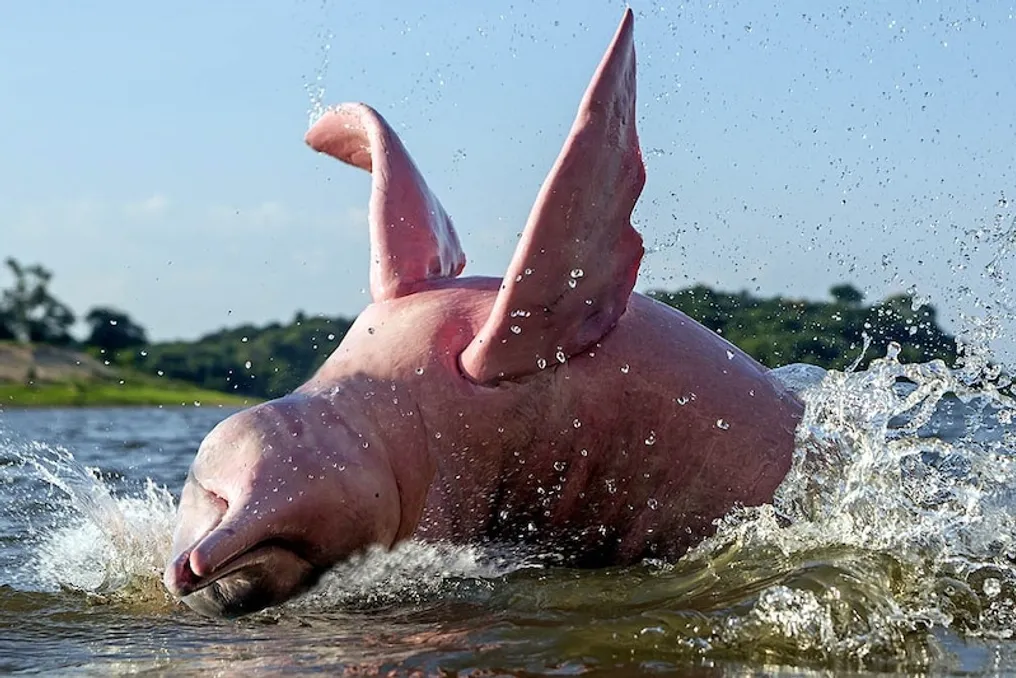
A pink-tinged dolphin was discovered in the waters of Oman, near the capital Muscat, off Cantab beach. A video that appeared online shows this dolphin swimming alongside another dolphin, distinguishing itself by its color from the others. This has sparked public interest regarding its species and the reason for its pink hue. As of now, the exact species identification has not been made.
The video, filmed at Cantab beach, shows the dolphin surfacing and then swimming in the water. Some reports suggest it might be a bottlenose dolphin, while others hypothesize the possible presence of an Indo-Pacific humpback dolphin. However, the species cannot be determined based on color alone; studying the body structure and other characteristics is necessary.
The dolphin's color can vary depending on its species and age. The bottlenose dolphin is an example of this phenomenon. According to data from the U.S. National Oceanic and Atmospheric Administration (NOAA), bottlenose dolphin calves have dark coloring, but their bodies begin to lighten as they mature. Various markings also appear on their bodies, which can make them look white or light gray. If the dolphin spotted in Oman belongs to the bottlenose species, its light color could be related to age, but this is not yet confirmed. It is impossible to determine the cause of the pink color from the video alone.
Many dolphin species inhabit the seas of Oman. According to the International Whaling Commission (IWC), species such as spinner dolphins, common dolphins, and bottlenose dolphins are found there. The Indian Ocean humpback dolphin is also found in some coastal areas of Oman. There is a threat of population decline for humpback dolphins in the Indian Ocean. The International Union for Conservation of Nature (IUCN) has listed this species as vulnerable. The main threats are entanglement in fishing nets and human activity at sea. Nevertheless, it is not yet clear whether the pink dolphin spotted at Cantab beach belongs to this species.
There are also other dolphin species worldwide that exhibit pink coloration, such as dolphins inhabiting the Amazon. They are found in the rivers of South America, and their color can change with age. However, Amazonian dolphins and the dolphin spotted in the sea of Oman cannot be considered the same species. To accurately identify the dolphin, its physique, color, and other features must be examined. Currently, the species and the cause of the pink coloration of the dolphin in Oman have not been established and require expert verification.