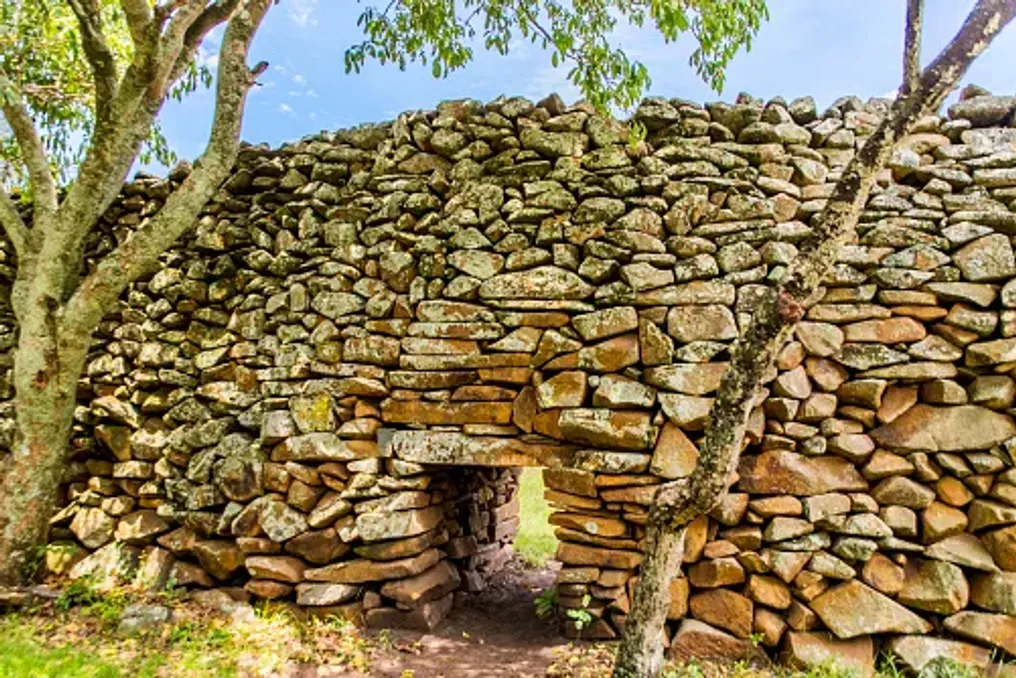
In western Kenya, amidst green landscapes, lies the archaeological site of Timlich Ohinga. These majestic stone walls bear witness to the life, labor, and livestock protection of communities that existed centuries ago. This ancient settlement was constructed without the use of cement or mortar, demonstrating an impressive understanding of construction techniques and communal living.
Located near Lake Victoria, Timlich Ohinga offers a unique glimpse into Kenya's past and is one of the most striking examples of traditional dry-stone architecture in Africa. The settlement is presumed to have been founded in the 16th century, but subsequent generations of communities continued to use and maintain its enclosures for many centuries. In 2018, this site was included in the UNESCO World Heritage List in recognition of its cultural and archaeological significance.
The name is derived from the Dholuo language and is generally translated as 'fearsome dense forest.' The word 'ohinga' refers to a settlement or enclosure, reflecting the unique character of this place. The stone walls served to protect the communities and their livestock, and the settlement's layout reflected the relationships between families and broader social groups.
One of the most striking aspects of Timlich Ohinga is its construction. Builders selected stones of various shapes and sizes, connecting them into a system of interconnected elements without using cement or mortar. The walls featured a three-part structure: outer and inner layers rested on a central section made of smaller stones. This method allowed for the creation of stable structures capable of withstanding the elements.
Some walls reach heights of about 4.5 meters and have a thickness of approximately one meter, which is an outstanding achievement given the available building materials and methods. The settlement includes several large enclosures, such as Kochieng, Kakuku, Koketch, and Koluoch. Inside these enclosures, archaeologists have discovered smaller sections, traces of former dwellings, livestock areas, and evidence of craft activities.
These elements indicate that Timlich Ohinga was not only a defensive fortification but also an organized community where people lived, raised animals, and engaged in daily activities. The settlement provides important insights into migrations, cultural exchange, and changing settlement patterns in the Lake Victoria basin.
Over time, various communities with different linguistic characteristics resided at the site, adapting and utilizing it. Archaeological finds, including pottery and ironworking traces, help researchers understand how people utilized local resources and interacted with neighboring groups. Furthermore, the settlement demonstrates how communities could organize themselves without relying on a single central authority; social ties, lineage, and shared responsibilities shaped the way of life and environmental maintenance.
For travelers interested in Kenya's history outside its well-known wildlife reserves, Timlich Ohinga offers a valuable cultural experience. The site is located approximately 46 kilometers northwest of the town of Migori, in western Kenya, near the Lake Victoria region. Visitors can walk among the preserved stone enclosures, observe the unusual construction methods, and imagine the daily life that once unfolded behind these walls. The surrounding vegetation enhances the feeling of immersion in a place shaped by centuries of human activity.
The site is managed by the National Museums of Kenya, which works to preserve its archaeological remains and cultural value. Tourists are advised to respect the structures, follow on-site instructions, and avoid damaging the stones or other archaeological objects. Timlich Ohinga serves as a reminder that exceptional architecture does not always require complex tools or modern materials. Through careful stone placement, collective knowledge, and long-term maintenance, its builders created a settlement that has survived for centuries. Today, preserving this place means protecting not only its walls but also the history, traditional knowledge, and community connections it represents. For all who study Kenya's cultural heritage, Timlich Ohinga opens up a fascinating journey into the past, visible in every carefully placed stone.