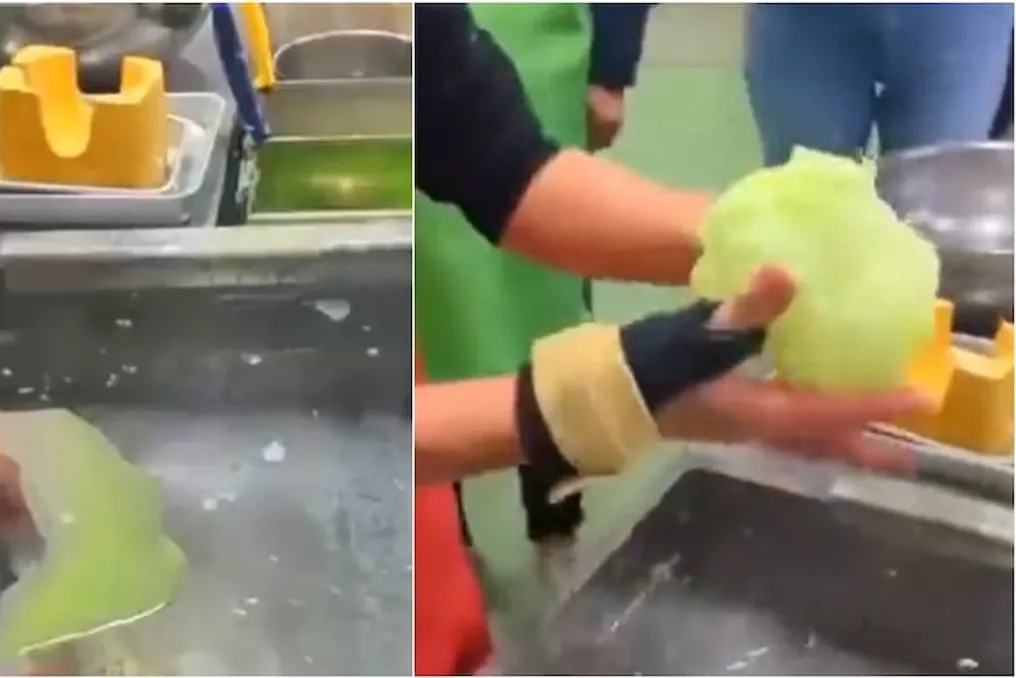
Social media has long broadcast videos demonstrating the creation of cabbage from plastic. These clips showed a person adding chemical substances to water to create cabbage. Following the viral spread of these videos, the claim became common that such cabbage is sold in stores. However, it turned out that the story behind these often viral videos is quite different.
In reality, this video belongs to an artist who creates imitation items. These models are not intended for making fake food, but for creating accurate copies of edible products. Such models are used in Japanese restaurants to display menus.
The international news agency AFP and several fact-checking organizations investigated this video. In 2014, a video was published showing Japanese artisans demonstrating the creation of samples of products like cabbage and tempura. There are craftsmen in Japan who specialize in creating food replicas.
A similar material was uploaded in 2019 under the title 'A Lesson in Making Lettuce.' The filming took place in the Gudzo Hatiman area of Gifu Prefecture in Japan. There, the masters practiced creating lettuce samples for children. Later, these videos began circulating on social media, presenting them as a way to make plastic cabbage.
There is a special tradition in Japan of creating such models of food products. In Japanese, this is called 'shokuhin sample.' Simply put, these are copies of food products that look absolutely realistic but cannot be eaten. In Japanese restaurants, they serve to explain the contents of the menu to customers.
For example, instead of a photograph of ramen, tempura, vegetables, or any other dish, a restaurant may have its realistic model displayed, allowing the guest to easily understand what will be served. Plastic, wax, and other suitable materials are used to create these models. They are then given the appearance of real food through coloring and detailing. In the case of cabbage, various layers of leaves are assembled so that the overall shape resembles real cabbage.
The work of the artisans is not limited to forming the external appearance; they must also consider texture, color, shine, and minute differences. This is why it is sometimes difficult to distinguish such camera-shown replicas from real food.