Construction planned for the fourth UAE federal highway spanning 68 km with 12-16 lanes
Read more
Khaleej Times
www.khaleejtimes.com

Construction planned for the fourth UAE federal highway spanning 68 km with 12-16 lanes

The UAE Ministry of Energy and Infrastructure has announced a tender for engineering consulting and design services for a new project—the country's fourth federal highway. This project, designated E-911, is planned to be 68 kilometers long.

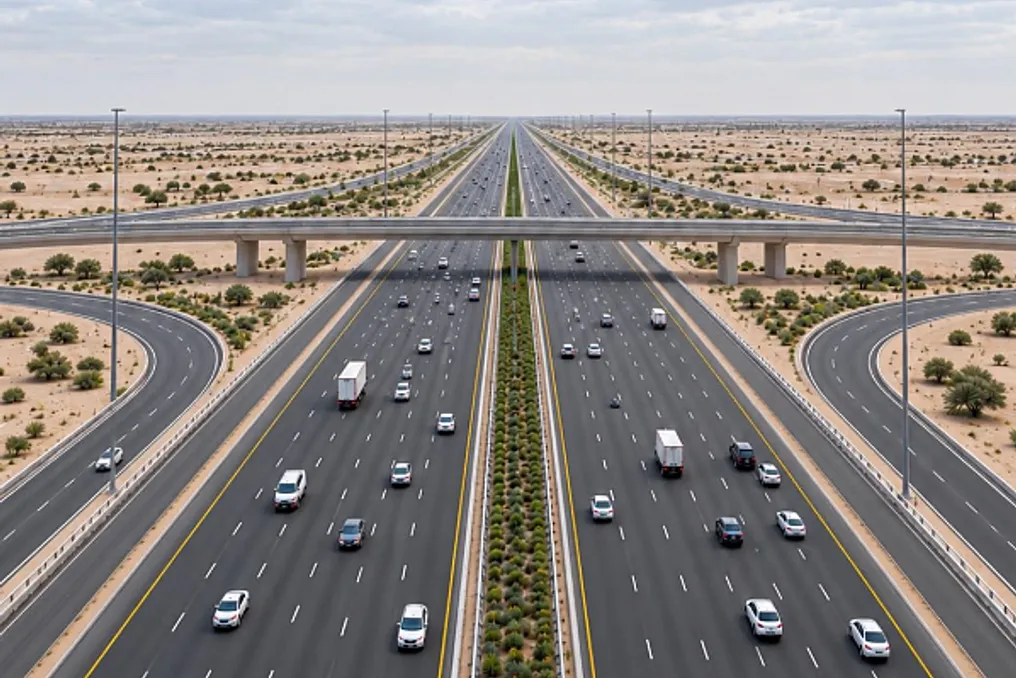
According to the tender documentation, the E-911 route will connect the border between Dubai and Sharjah with the Al Sughada Road (E-87) in Ras Al Khaimah. The project envisions having between 12 and 16 lanes in both directions. Furthermore, it will include an 8-kilometer connecting road linking the new corridor to Emirates Road (E-611) in Umm Al Quwain.

The documents indicate that the route has been approved by the relevant local authorities of the emirates, and the conceptual design is already complete. Under Tender No. 2026-022, the selected consultant will be responsible for reviewing and confirming the finished conceptual design, conducting necessary technical studies, and preparing the preliminary, detailed design and tender documentation. The Ministry invited Category A consultants to submit their applications by October 23, 2026.

The E-911 corridor will become the country's fourth major federal highway, alongside Al Ittihad Road (E-11), Sheikh Mohammed bin Zayed Road (E-311), and Emirates Road (E-611). The official UAE government portal states that E-11 is the longest road in the country, stretching from Abu Dhabi to Ras Al Khaimah, while E-311 connects the emirates, and E-611 offers an alternative route between Abu Dhabi and the Northern Emirates.

Project valued at 6 billion dirhams

The fourth federal corridor was one of the major infrastructure projects reviewed by the UAE Council for Infrastructure and Housing at its first meeting in 2026. According to Khaleej Times, this corridor is expected to feature 10 main intersections and four flyovers, with an estimated cost of 6 billion dirhams. The Council noted that the project's goal is to improve connectivity between the emirates, increase road capacity, and reduce congestion.

At the same meeting, the council also reviewed plans to enhance transport links between Dubai, Sharjah, and Ajman. These plans include a proposed network of 10 routes supported by Bus Rapid Transit systems and dedicated lanes, connecting to metro stations and major city centers. Officials added that work is underway to improve Ajman's connections to the Third and Fourth Federal Corridors to provide drivers with alternative routes.

Traffic issues raised in FNC

The proposed highway emerges against a backdrop of persistent concerns regarding traffic jams between Dubai and the Northern Emirates, especially during peak hours. This issue has been raised in the Federal National Council (FNC), where members have called for solutions to the growing number of vehicles on the roads.

During the FNC session in March 2025, council member Dr. Adnan Al Hammadi questioned the Ministry of Energy and Infrastructure about the deteriorating road situation between Dubai and Sharjah. Al Hammadi stated that an employee commuting daily between the two emirates could spend approximately 460 hours a year on the road, equivalent to nearly 60 working days.

Responding to these concerns, Minister of Energy and Infrastructure Suhail Mohammed Al Mazrouei reported that development work on key federal road corridors began in 2024 and is ongoing. Al Mazrouei also pointed to the need to update policies governing vehicle ownership and registration, noting that car growth in Dubai has exceeded 8 percent compared to the global average of about 2 percent.

The issue was brought up again in the FNC in April 2026, when Al Hammadi once more raised the topic of population growth, vehicle registration, and congestion. He called for studies on future population growth, the introduction of restrictions on heavy transport during peak hours, and stricter control over driver's licenses and vehicle registration. In response, Al Mazrouei stated that a major project is being implemented to solve the congestion problem between Sharjah and Dubai. He presented the plans for the Fourth Federal Corridor, indicating that the proposed highway could handle approximately 360,000 trips per day.

This project is part of the UAE's efforts to expand its road network and address overload issues, as the number of vehicles and population continues to grow. In November 2025, Al Mazrouei announced a national investment program for roads and transport worth 170 billion dirhams until 2030, which includes plans to expand three existing major federal highways and study the construction of a fourth. The Minister emphasized that the program aims to increase the efficiency of the federal road network by 73 percent within five years.

Similar stories

Dubai introduces new speed restrictions on five main roads starting November 1st
Read more
www.khaleejtimes.com

Dubai introduces new speed restrictions on five main roads starting November 1st

The Roads and Transport Authority (RTA) announced on Wednesday that speed limits will change on five key Dubai highways starting November 1, 2026. These changes will affect traffic in both directions: the speed will increase on three roads and decrease on two.

The new speed limits are set as follows. On three streets, the speed will be increased: on Al Asail Street, it will rise from 60 to 80 km/h on the section between Oud Mita Street and Al Meydan Street. On Al Mustaqbal Street, the speed will increase from 60 to 70 km/h between Sheikh Rashid Street and Al Meydan Street. The third street, Latifa Bint Hamdan, will see an increase in the limit from 60 to 70 km/h on the segment between Sheikh Zayed Street and Al Hail Street.

Additionally, lower restrictions will be introduced on two roads. On Al Rebate Street, the speed will decrease from 100 to 90 km/h on the section between Marrakech Street and Sheikh Mohammed bin Zayed Street. Also, on Sheikh Sabah Al Ahmad Al Jaber Al Sabah Street, the speed will reduce from 80 to 70 km/h between December 2nd Street and Khalid Bin Al Walid Street.

Passengers Choose Longer Routes Between Dubai and Riyadh Due to Airport Disruptions
Read more
www.khaleejtimes.com

Passengers Choose Longer Routes Between Dubai and Riyadh Due to Airport Disruptions

Residents traveling between the United Arab Emirates (UAE) and Riyadh are forced to spend more time planning trips, undertake longer journeys, and use additional ground transfers as some passengers seek alternatives to their usual air routes.

Due to the temporary suspension of direct flights, residents are exploring various ways to reach the capital of Saudi Arabia, including landing in other cities and then continuing the journey by land transport. For some, this means traveling through Dammam in KSA, while others use Bahrain as a transit point before further travel to Riyadh.

These changes in travel occurred against the backdrop of recent attacks on Saudi airports and energy infrastructure, which disrupted flight operations, including at Riyadh Airport. As a result, passengers are weighing options for flights, ground transportation, and subsequent connections when moving between the UAE and the Kingdom of Saudi Arabia.

For those with work commitments in Riyadh, finding an alternative route has become a practical necessity. Others in Dubai remain flexible with their plans, hoping to return by air once regular flights resume.

A 59-year-old British specialist residing in Riyadh, who wished to remain unnamed, is one of those using a longer route to return to Saudi Arabia after visiting family in the UK. After the trip to Dubai, she plans to fly to Manama in Bahrain and then continue to Riyadh by land transport, which will take another five to six hours.

She noted: 'I went to the UK to meet my family, but due to airport closures, I had to find another way to get back to Riyadh, where I live. Now I have reached Dubai and will fly from here to Manama in Bahrain. From there, I will drive to Riyadh, which is expected to take about five to six hours. It's a longer route than usual, but it's the route I must take to get back to work in Riyadh.'

A 46-year-old marketer, Vidjan R., was also forced to travel to Riyadh due to professional obligations. He flew from Dubai to Dammam on Sunday to attend the World Oil and Gas Congress 2026, and then continued by land transport.

He reported: 'It was a big event on the Riyadh calendar, so I still had to go to Riyadh. I flew from Dubai to Dammam in Saudi Arabia, and then drove to Riyadh, which takes about four hours.' After completing the event, Vidjan intends to partially make his way back before returning to the UAE. His return journey will include a drive from Riyadh to Dammam, followed by another drive to Bahrain.

He added: 'But now I am finished and plan to drive back to Dammam, and then by car to Bahrain, which takes about an hour. After that, I will fly from Bahrain back to the UAE.'

Not everyone is prepared for additional ground transfers. For some residents, staying in Dubai and waiting for more convenient flight options remains the preferred option.

Rishi Joshi (name changed), who holds dual citizenship, arrived in Dubai on Friday to meet his family. He is currently trying to figure out the best way to return to Riyadh but is keeping his plans open. He stated: 'I am trying to find a way to get back to Riyadh after the closures of the airports in the Kingdom. This is a temporary closure, and I hope everything will reopen soon, and I can return by plane to at least one of the Saudi Arabian airports from the UAE. I am here for now. It's just a matter of 'waiting and watching'. '

RTA announces launch of four bus routes to Global Village in Dubai
Read more
www.khaleejtimes.com

RTA announces launch of four bus routes to Global Village in Dubai

The Roads and Transport Authority (RTA) of Dubai has announced the resumption of four special bus routes connecting Global Village with major transport hubs across the emirate. Additionally, electric abra services will return for the new season.

These new routes will operate at intervals of 40–60 minutes during the 31st season of the attraction. The service launch is scheduled for Wednesday, October 14, 2026, and will run until May 2027.

Four Bus Routes to Global Village

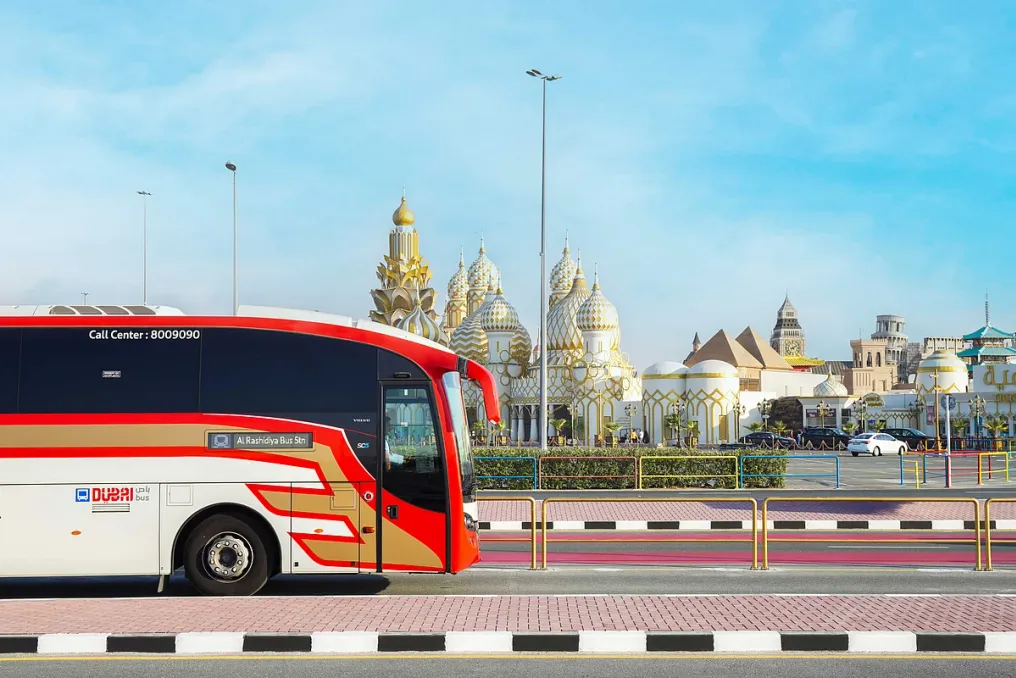
According to RTA information, the four routes will operate from the Al Rashidiya, Union, Al Ghubaitah, and Mall of the Emirates bus stations, providing direct access for visitors arriving at and departing from the attraction.

The specific routes include:

  • Route 102: Al Rashidiya Bus Station to Global Village, departing every 60 minutes.
  • Route 103: Union Bus Station to Global Village, departing every 40 minutes.
  • Route 104: Al Ghubaitah Bus Station to Global Village, departing every 60 minutes.
  • Route 106: Mall of the Emirates Bus Station to Global Village, departing every 60 minutes.

RTA emphasized that these lines are designed to enhance the accessibility of Global Village for tourists and families using public transport, regardless of where they travel to Dubai from. The buses are equipped with modern amenities and safety features for comfortable journeys throughout the season.

The Authority also noted that these transport solutions are part of efforts to improve connectivity between Dubai's main tourist and entertainment destinations while encouraging greater use of public transportation.

Return of Electric Abra Services

Alongside the buses, RTA will restore its tourist water transport within Global Village by launching two eco-friendly electric abras. These vessels will allow guests to take rides along the attraction's waterways, offering views of its sites and entertainment zones.

According to RTA, this service combines passenger transport with sightseeing, supporting the Authority's commitment to promoting sustainable mobility and cleaner transport. The resumption of bus and abra services takes place ahead of the 2026–2027 season, as Global Village prepares to host millions of visitors from the UAE and other countries.

RTA stated that all these transport measures aim to ensure convenient access to the attraction, support Dubai's tourism sector, and reduce reliance on private cars.

Popular