
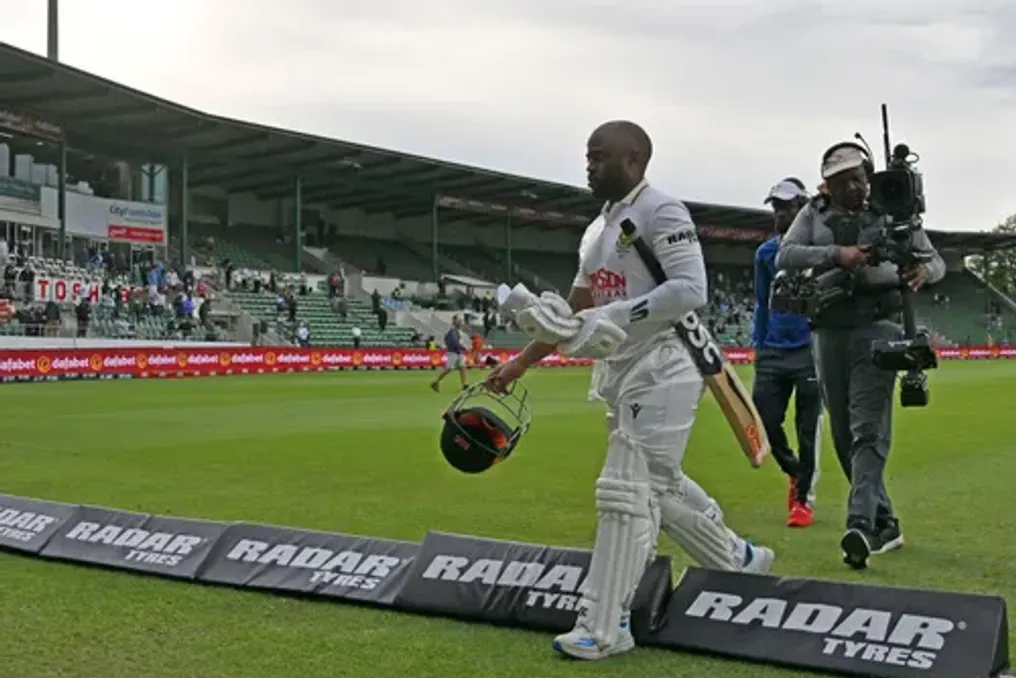
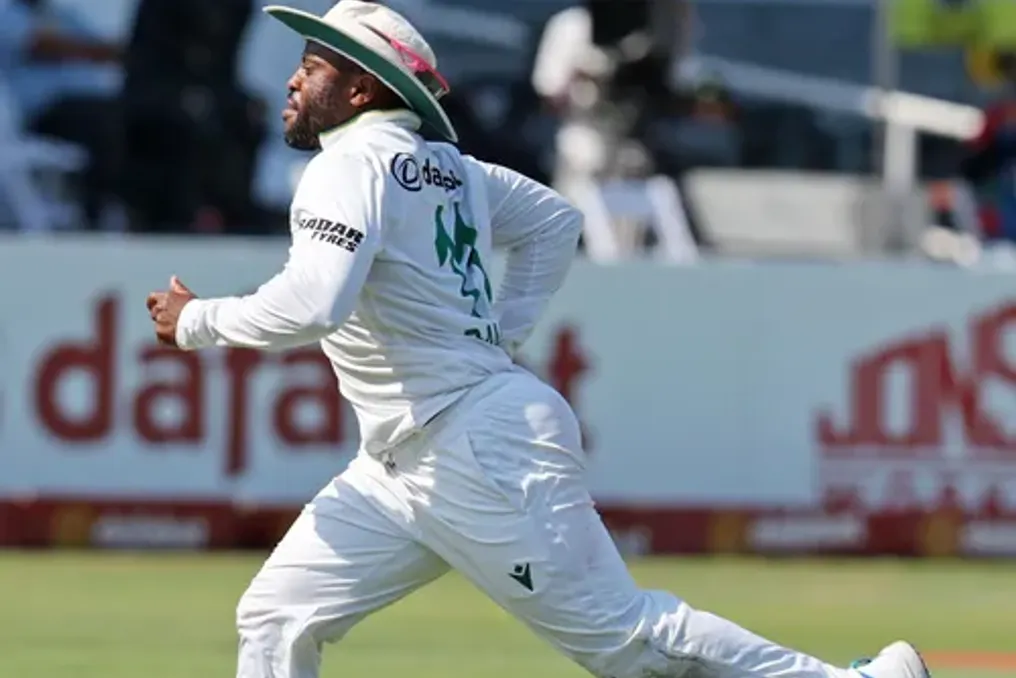
Temba Bavuma supported the late declaration of the game's end while Proteas, led by Kagiso Rabada, prepare for the fourth day of the match
Read more
IOL
iol.co.za

Temba Bavuma supported the late declaration of the game's end while Proteas, led by Kagiso Rabada, prepare for the fourth day of the match

Sport is an unpredictable industry. When the Proteas were scoring 20/2, 40/4, and 110/6, everyone was discussing how the hosts could reach the 200-run mark; any score above that would be considered a significant bonus.

However, several hours later, the conversation sharply shifted to the reasons for the delay in announcing the game's conclusion, which ultimately occurred at 425/9 as shadows gathered over St George's Park.

The timing of the announcement allowed the Proteas only four overs to face the Australian batsmen. More importantly, 'Rolls-Royce,' Kagiso Rabada, who returned to the Test match squad after nearly a year away, only had the opportunity to bowl one over.

The fact that this over resulted in the wicket of opponent Nick Maddinson further fueled fan interest.

Temba Bavuma, the Proteas captain, who was in the middle of the field scoring his impressive 179 runs when the decision was made, stated that it was part of a larger plan. He explained that he initially felt some hesitation about the announcement, and the reason was the lighting.

"Yes. I was a little uneasy (about the announcement), frankly. It was because of the light," the captain explained. "And I mean, as soon as, I suppose, the sun hid behind the thick clouds, we couldn't use the side-arm delivery." He added that he was glad to postpone the game until the next day to give the players, especially the bowlers, a rest. Nevertheless, he noted that the decision brought its rewards.

Given the impressive total scored by the Proteas and only two days remaining in the second Test match, affected by the weather, only the home team can realistically hope to achieve the result.

Bavuma fully understands the situation and has prepared his team mentally for having to spend most of the remaining two days defending if they want to level the series before traveling to Cape Town next week.

He emphasized: "If we want to be in a winning position on the scoreboard, we will have to spend most of these two days defending." Bavuma also mentioned the need for mental preparation for this period, pointing out that there is still potential on the field, especially with a new ball. He added that if the ball hits the right area for a long time, anything can happen, and he hopes spinning will feature on the fifth day, as Simon could become much more dangerous. "Obviously, we are aiming for victory and will do everything possible to make it happen."
Similar stories

Temba Bavuma discusses his epic 179-run innings against Australia
Read more
iol.co.za

Temba Bavuma discusses his epic 179-run innings against Australia

Tuesday at St George's Park became an unforgettable event in South African cricket thanks to Temba Bavuma's performance, which could define not only this series but also his legacy.

The situation was similar to events eight years ago at the same venue when Australia won the first match in Durban, leaving South Africa in a difficult spot in the series. Back then, AB de Villiers helped the Proteas escape the crisis with his brilliant century.

This time, Australia returned to Gqeberha with an advantage, and South Africa's batting was under immense pressure, requiring the most experienced player to confront the difficulties. However, this time the moment came for Bavuma.

When he walked out to bat at 12/2, with Scott Boland bowling a hat-trick, South Africa was already struggling. By the time the score reached 40/4, the situation was extremely dangerous. At 110/6, it seemed Australia had complete control of the game and was moving towards erasing the humiliation of their previous visit to South Africa.

Instead, Bavuma demonstrated incredible resilience and the significance of his performance. He spent over nine hours at the crease, facing 334 deliveries and scoring the best of his career—179 runs. Following this, South Africa declared at 425/9, aided by crucial partnerships: 132 runs with Marco Jansen (82 runs) and 183 runs with Simon Harmer (83 runs).

However, Bavuma's contribution was not just in the statistics; his play embodied mastery. He combined technical discipline with enormous psychological fortitude, showing little flair and no recklessness. He knew how to handle pressure when survival was the main objective and how to counterattack when opportunities arose.

Most importantly, he refused to give up. After the match, Bavuma told reporters: 'I obviously walked into a difficult situation. I think everything was in favour of the bowler. The conditions, the overheads, the ground itself.'

He added that he often finds himself in such situations, and this seems to bring out the best in him. In terms of approach, he noted that nothing changed compared to how he always plays: 'Getting involved in the game.' He is proud to help the team secure a competitive position. He suggested that the difference this time was personal—being able to score a big score, which he felt was very good from a personal standpoint.

A decade ago, Bavuma's debut century in Newlands remains a landmark moment in South African cricket for reasons beyond the field. His decisive contributions in the final of the Test World Cup at Lord's and in the first match against India at Eden Gardens last year were also memorable.

Nevertheless, this epic performance likely should be considered Bavuma's greatest personal achievement, given the circumstances and the scale of the work done. Proteas captain is not quick to put him on a pedestal. Bavuma said: 'I am glad I could score runs against Australia. But look, I haven't realized it yet.'

He believes the Newlands match will always hold the highest place for many reasons, but achieving a big century is something that has long been a stumbling block in his career, and he was pleased to overcome it mentally.

For years, Bavuma carried a burden known to few South African cricketers. His critics were not always fair. Now they should recall the glorious, sunny day at St George's Park when the smallest man on the field proved to be the most resilient.

Temba Bavuma supports Proteas in the fight against Australia in Gqeberha
Read more
iol.co.za

Temba Bavuma supports Proteas in the fight against Australia in Gqeberha

In Gqeberha, at the St George's Park stadium, the Proteas team is preparing for a match where they trail Australia by 0-1 after a tough loss in the first Test in Durban. The team returns to the historic arena, hoping that the energy of the fans and tactical discipline will help them change the course of the series in their favor.

The local flavor in Gqeberha is palpable: the famous St George's Park brass band plays in the stands, and the local fan base, which has experience winning in SA20 with Sunrisers Eastern Cape, creates a strong culture of victory and support for the home team.

However, the weather may affect the start of the match. Forecasts include unpredictable coastal winds and possible rain delays, which, according to Temba Bavuma and Pat Cummins, will play a central role in determining the pace of sessions and squad selection strategy.

Despite ongoing questions regarding the exact composition of the batting line-up, the Proteas relies on its proven temperament in crucial matches. This team previously defeated India on home soil and also beat Australia in the WTC final at Lord's last year, demonstrating an ability to fight even when at a disadvantage.

A critical factor is the return of Rabada to lead the fast bowling attack, immediately bringing authority and power into the dressing room. Beyond individual skill, Bavuma's players understand that the key to initiating a counter-attack lies in restoring their psychological state and extending the duration of their batting innings.

Reflecting on the team's mentality, Bavuma explained how they plan to approach this task. He stated: 'We would like to put in much more effort, just be more ruthless in execution, and more importantly, when the opportunity arises, do something big for the team.' He added that the team uses positive moments in batting, drawing confidence from Aiden [Markram]'s game, but the main task is precisely to extend their playing intervals.

Squad selection may depend on morning weather conditions. Kagiso Rabada is fit and ready to return to lead the fast bowling attack. One option is to retain both spinners, Keshav Maharaj and Simon Harmer, or include an extra fast bowler or batsman. Matthew Britzke is ready to come out of the dugout, and Marcus Ackermann is also being considered as a candidate for his Test debut.

Bavuma emphasized that mental resilience will determine the team's reaction. He noted: 'Defending against these mental lapses is key. When you are playing against a team that is ahead, you have to match that fight... I think we have the luxury of choosing any path, and we trust that whatever path we take, we can assemble a very, very competitive eleven.'

Popular