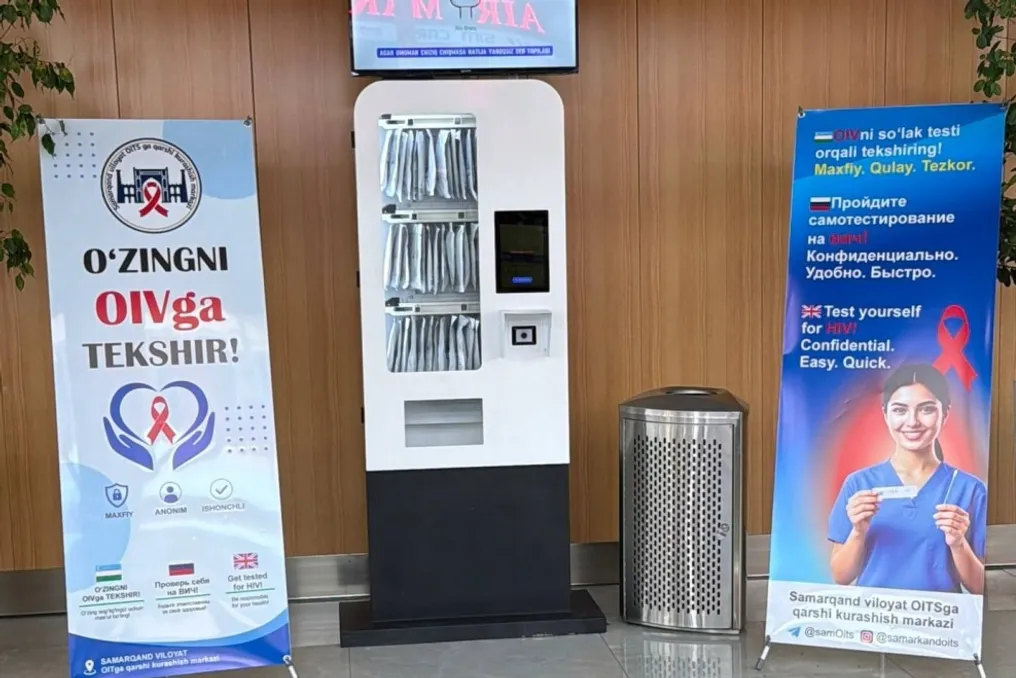
More than three hundred citizens in Uzbekistan have used kiosks for self-screening for HIV. This test is available free of charge and does not require the presence of medical personnel. The results of the analysis, based on a saliva sample, become known within 20–40 minutes.
The introduction of such devices was approved by a presidential decree. The goal of this project is to simplify the process of early HIV detection, especially among workers engaged in labor migration.
Locations and Use of Devices
Kiosks are placed in high-traffic areas, including airports, railway stations, and public places. Currently, these devices operate at Islam Karimov International Airport in Tashkent, the Republican Center for AIDS Control building, as well as in the airports of Andijan, Namangan, Surkhandarya, Bukhara, Kashkadarya, Navoi, Khorezm, Samarkand, Fergana, and Karakalpakstan, and at the 'Zaamin' sanatorium in Jizzakh region.
To use the apparatus, one must scan an identity document, receive a test kit, and conduct the test independently. The collected data is automatically transmitted to an electronic system, which ensures the possibility of feedback, consultation on the results, and referral to specialized doctors.
Testing is conducted using saliva, eliminating the need for blood draws or other invasive procedures, and does not require special laboratory equipment.
In case of a positive result, this is not a final HIV diagnosis; laboratory examination at the regional AIDS control center is required for confirmation. If the diagnosis is confirmed, patients are guaranteed free medical observation and treatment.
It is planned that by the end of 2026, similar devices will be installed in all regions of Uzbekistan.
Previously, senators of Uzbekistan gave their consent to a bill that provides for mandatory HIV testing for citizens aged 18 to 60 who have been abroad for more than three months. Additionally, the issue of restricting employment for individuals with HIV/AIDS and tuberculosis was discussed.
