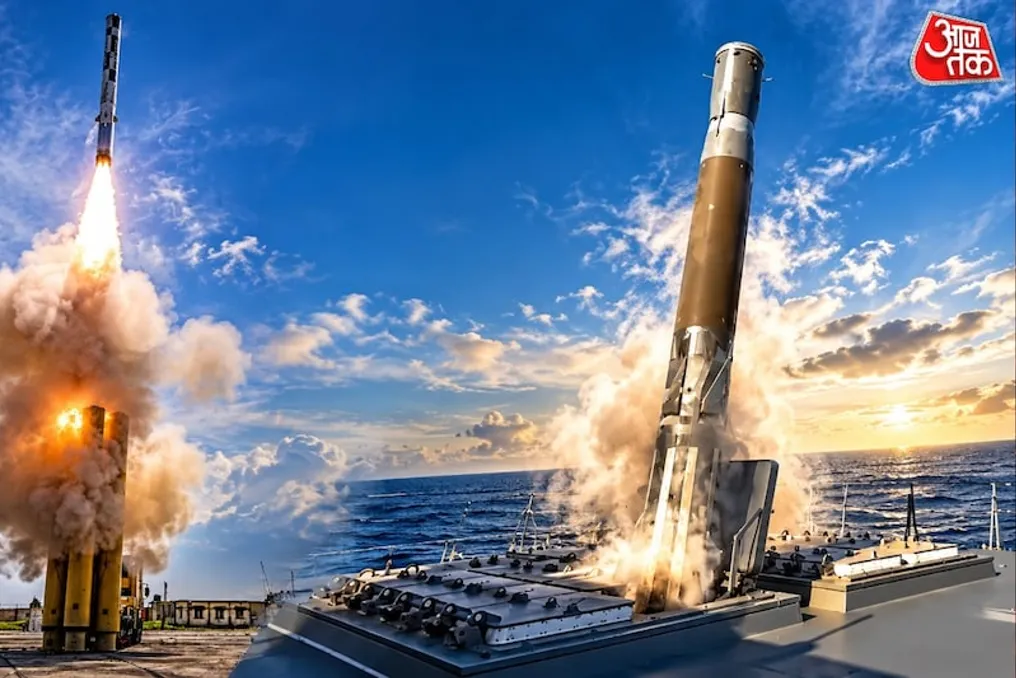
The BrahMos missile, developed through cooperation between India and Russia, is considered one of the fastest supersonic cruise missiles in the world. Its next generation, BrahMos-2, is currently being actively discussed. There is a suggestion that this new model may be developed under the influence of Russia's hypersonic Zircon 3M22 system.
If this assumption proves true, the speed of BrahMos-2 could exceed the current 7408 km/h, which is double the speed of the existing BrahMos. Plans for the development of BrahMos-2 have existed for a long time and are being implemented through BrahMos Aerospace in partnership with DRDO and the Russian Machine-Building Scientific and Production Association (NPO Mashinostroyeniya).
According to reports, BrahMos-2 may integrate technologies from the Russian scramjet engine used in the Zircon missile. The Zircon missile is already in service with the Russian Navy and possesses hypersonic speed. The Indian side plans to add its own electronics, guidance system, and seeker technology to it.
The integration of these components will make the missile more attractive for export and allow it to be used on various platforms such as ships, submarines, and ground installations. Hypersonic speed significantly reduces the enemy's reaction time. Some reports indicate a range of up to 1500 kilometers, but this data is not yet official.
Despite the project having existed for about 20 years, a test flight has not yet taken place. Major obstacles include high cost, difficulties in technology transfer, and military service priorities. The estimated cost of one BrahMos-2 could be approximately three times that of the current BrahMos, around 12.5 million dollars.
Russia shows hesitation in providing the full scramjet technology, which increases both costs and dependence. Currently, BrahMos Aerospace is prioritizing the lightweight BrahMos-NG, designed for aircraft like the Tejas and MiG-29. Therefore, test flights for BrahMos-2 are expected no earlier than 2027–2028.
The BrahMos missile has already been exported to countries such as the Philippines, Vietnam, and Indonesia. BrahMos-2 could be the next step in this successful series, and the addition of Indian technologies aligns with the 'Make in India' concept. Nevertheless, no official confirmations, specifications, or timelines have been announced at this time; all of this is based on analytical reports and forecasts.
Overall, BrahMos-2 could open a new chapter in military-technical cooperation between India and Russia. If it is ready with hypersonic capabilities, it will strengthen the regional security balance. However, this requires overcoming issues related to cost, technology transfer, and conducting tests.