People often use various plants to decorate and green residential premises because they can improve the appearance of the home and create a pleasant atmosphere thanks to their aroma and greenery. However, within the framework of Vastu Shastra, there is a recommendation to pay attention to plant selection, as some species are considered unfavorable for well-being and the atmosphere in the home.
In particular, special attention is paid to thorny plants, bonsai, and dry specimens.
Firstly, the category of unacceptable plants includes thorny plants such as cactus and नागफनी (Nagphani). According to Vastu Shastra beliefs, the presence of sharp thorns symbolizes tension and disagreements among family members. It is noted, however, that there are differing opinions regarding rose bushes.
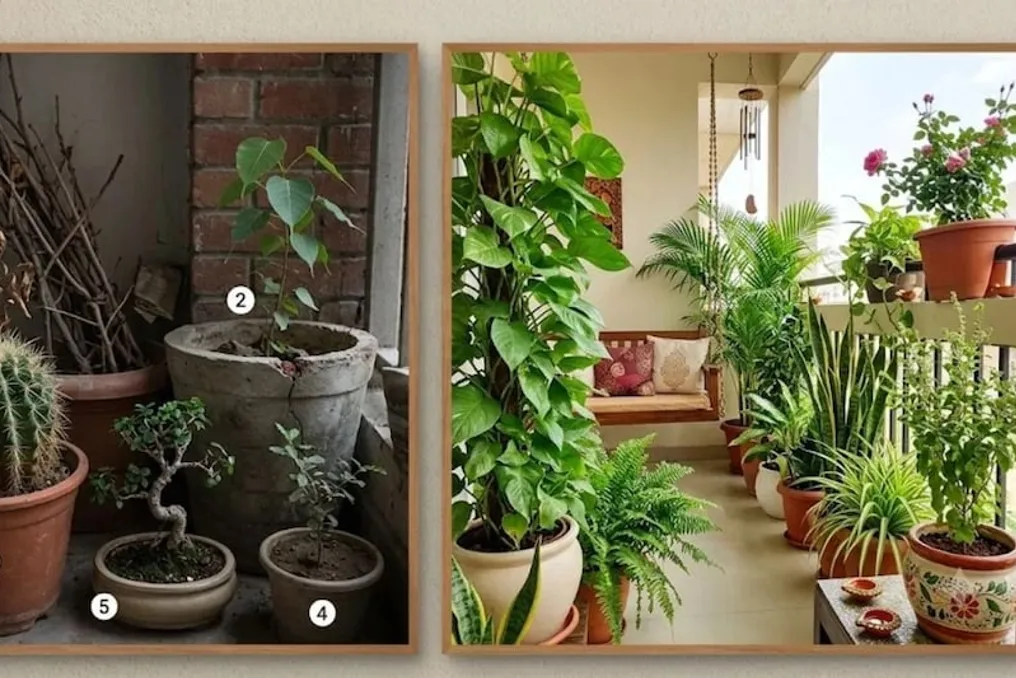
Secondly, although the peepal tree is revered and considered sacred in Hinduism, it is not recommended to grow it indoors in the context of Vastu. Since the peepal is a large tree with an extensive root system, its growth near the foundation or walls of a house can pose a practical threat.
Thirdly, Vastu practitioners do not approve of keeping withered or dry plants in the house. It is believed that lush greenery symbolizes freshness and positivity, whereas dry plants indicate stagnation. Therefore, it is necessary to care for plants regularly, and completely dried specimens should be removed to maintain cleanliness in the house and on the balcony.
The fourth plant that is undesirable to place in a dwelling or yard is basil (mehndi). Although basil is known for its traditional and medicinal properties, some Vastu principles suggest that it may negatively affect the positive energy of the home. It is important to remember that this is based on religious beliefs.
The fifth plant causing concern is bonsai. This decorative variety, which is grown in a miniature format and is externally attractive, according to some Vastu Shastra views, may hinder progress. This viewpoint is based on the fact that the natural growth of the tree is artificially restricted in bonsai.
When choosing plants for the home, it is crucial to consider their needs, lighting, available space, and maintenance requirements. Fallen leaves should be removed promptly, and overwatering should be avoided. Large trees should be placed at a sufficient distance from pipelines and the building's foundation. People who adhere to Vastu principles can make their choices based on their own beliefs.