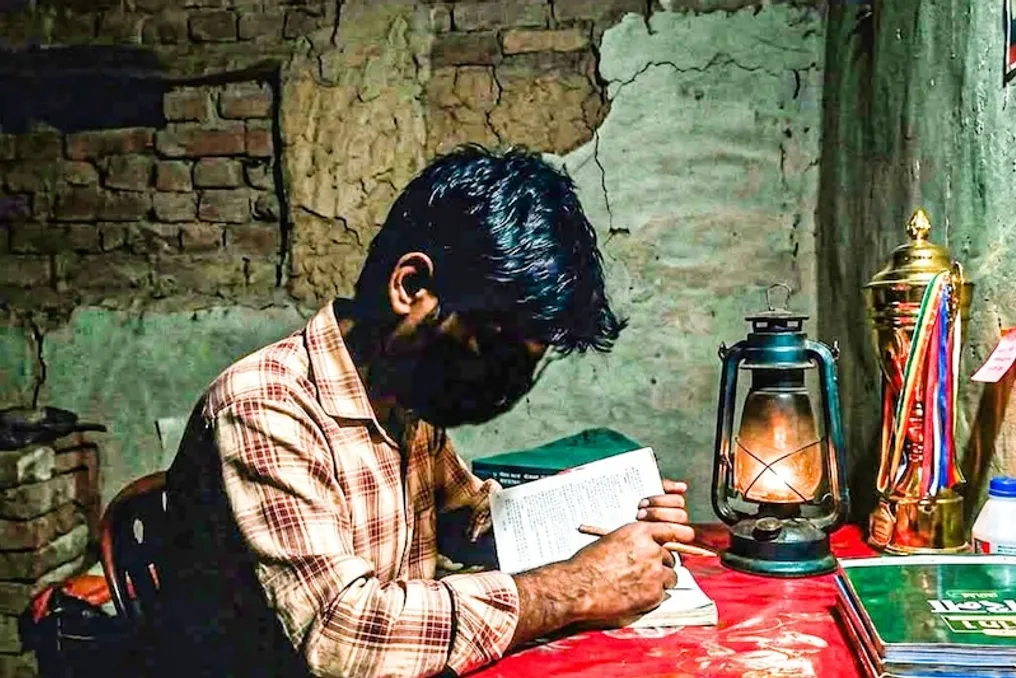
IIT and IIM Graduates Voice Opinion on the Need for Career Choice Freedom for the Next Generation
Read more
Aaj Tak
www.aajtak.in

IIT and IIM Graduates Voice Opinion on the Need for Career Choice Freedom for the Next Generation

In India, there is often a predetermined path for youth career growth: achieve high scores, get into IIT, then pursue an MBA at IIM, and secure a successful job. This model has become the benchmark of success for many Indian families. However, some graduates from these prestigious institutions hold a different view regarding their children's future.

These individuals believe that their children should not be confined to the race for diplomas and professional achievements. They emphasize that the freedom to make decisions and live according to one's desires is equally important.

The discussion began with a post by entrepreneur Abid Hasan on the social network X. He shared that the conversation took place with a friend who graduated from IIM Ahmedabad. The friend expressed a desire that his children would not feel pressured when applying to IIT or IIM. He noted that they would be happier if they chose to enjoy life instead of following these institutional paths.

Abid Hasan commented on this viewpoint, suggesting that the true purpose of education at IIT-IIM is for a person, after a certain period of life, not to be defined solely by diplomas and professional successes. Thus, success can mean a person's ability to make independent life decisions.

IIT and IIM are respected educational institutions in the country, for which students prepare for many years to gain admission. After graduating from these institutions, many obtain good career opportunities and jobs. Nevertheless, the discussion, which started on social media, raised the question: is it necessary to follow this path to achieve success?

Another individual who graduated from IIM Ahmedabad shared his opinion on this topic. He argued that a diploma from a prestigious institute should not be a prerequisite for success. He cited examples from his cohort of people who started their own businesses after obtaining an MBA. In this regard, he questioned: does a person need to get an MBA if they want to run their own business?

In his view, practical skills and real-world experience are of great importance. Instead of focusing only on obtaining a degree, people should be given the opportunity to learn and develop according to their interests.

Another IIM graduate shared his experience. He initially chose engineering, believing that career options were limited for those interested in mathematics. Later, due to his interest, he obtained an MBA from IIM Ahmedabad. He also mentioned that in his work related to future medical cosmetology technologies, he mastered many things outside the scope of formal education.

During this social media discussion, users also discussed issues such as children's happiness, their mental and physical health, and the right to choose their own lives. Some agreed that children should not be judged solely by high scores or admission to a prestigious college; they also need the chance to discover their passions and engage in sports.
Similar stories

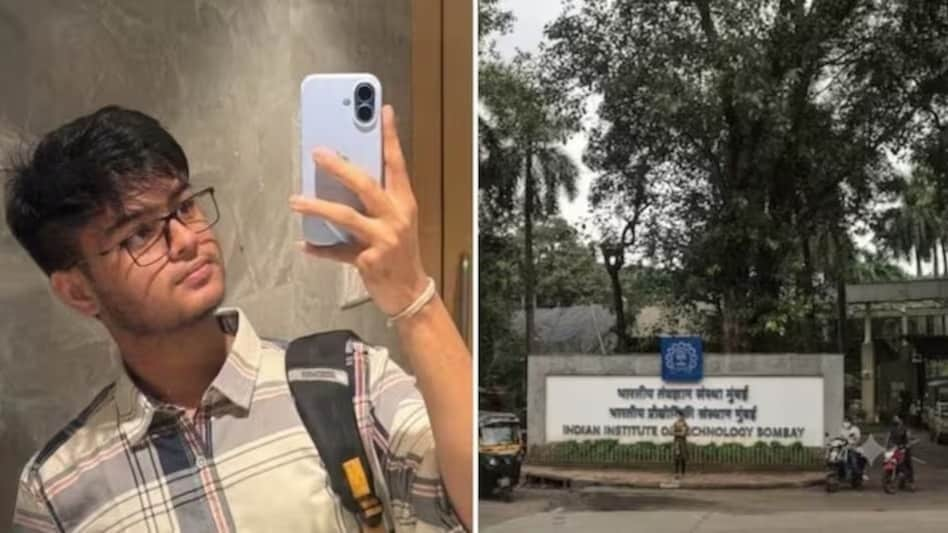
After Sahil Wakode's case, IIT Bombay changed rules: asking students about rank or caste is prohibited
Read more
www.aajtak.in

After Sahil Wakode's case, IIT Bombay changed rules: asking students about rank or caste is prohibited

The Indian Institute of Technology (IIT) Bombay has issued a 'Anti-Discrimination Handbook' for students, faculty, and campus staff. According to these directives, it is forbidden to ask any student for information regarding their caste, admission category, or entrance exam rank, as this may lead to direct or indirect discrimination.

This institutional move followed approximately one month after the alleged suicide of student Sahil Wakode (22 years old). Following Sahil's death, his parents filed accusations against a professor regarding racial discrimination.

The new rules stipulate that questioning a peer about their caste or admission category is inappropriate, as it can unintentionally foster prejudice. The email also clearly stated that requesting information about JEE (Advanced) ranks or GATE scores from students that reveals their caste or related details is unacceptable. The letter from the Dean of Student Affairs emphasized that even if the question is asked out of pure curiosity, such inquiries can have a negative impact and be considered discriminatory.

Under these guidelines, sending or forwarding any derogatory, hate speech, racist, gender-discriminatory, or religiously and sexually biased jokes or messages via WhatsApp, Facebook, email, or in person is strictly prohibited. The warning states that such actions will be treated as harassment or bullying, and violators will face strict measures.

The institute advised students to build connections with each other based on common interests such as departments, sports, music, cinema, household chores, and hobbies.

Sahil Wakode's body was found in his hostel on September 18th. It was presumed that he took this step after being caught cheating during an intermediate examination. Protests have since begun on campus. The institute claims that this new directive is part of efforts to strengthen student welfare and enhance the transparency of administrative processes. Meanwhile, student protests continue at the main gates of IIT Bombay, where they demand a direct dialogue with the administration regarding student well-being.

On the other hand, the deceased student's parents are conducting an indefinite sit-in protest at Azad Maidan, demanding accountability and decisive action from the institute's administration. The relatives accused Professor Suryanarayan Dulla of harassment and racial discrimination. Earlier this month, the police also questioned Professor Dulla for about 10 hours in connection with the alleged suicide.

IIT Bombay hires 30 temporary counselors to bolster mental health after Sahil Wakode's suicide
Read more
www.aajtak.in

IIT Bombay hires 30 temporary counselors to bolster mental health after Sahil Wakode's suicide

The administration of IIT Bombay has implemented significant measures to strengthen its mental health system following the tragic death of a student and subsequent student protests. These actions were taken in response to growing campus dissatisfaction.

The institute's Student Wellness Center (SWC) announced an urgent recruitment drive for 30 temporary counselors. This move followed an incident on September 18 when second-year undergraduate student Sahil Wakode passed away under circumstances deemed to be suicide, shortly after being accused of using his phone during an midterm examination.

Protesting students presented a long list of demands to the Director of IIT Bombay, Professor Shirish Kedare. They argued that the SWC was in extremely poor condition, and the number of available counselors was too limited compared to the large student body—around 14,000—making it impossible to provide necessary psychological support.

In response to active student demonstrations and similar sad incidents over the past year, the administration accelerated the hiring process. A total of 30 vacancies will be filled: 26 student counselor positions and 4 senior counselor positions on a temporary basis. The selected candidates may start as early as October 15. Senior counselors require at least 10 years of experience, while student counselors require at least 2 years. A mandatory requirement is a Master's or Bachelor of Science degree in clinical psychology, counseling, or social psychology with a grade of no less than 55%.

The institute also emphasized that when selecting candidates, priority will be given to those who speak other Indian languages besides Hindi and English, to ensure convenience for students from diverse social and linguistic backgrounds.

In addition to hiring counselors, the IIT Bombay administration announced several other corrective administrative changes to improve student welfare. An additional Dean of Student Affairs will be appointed, whose primary task will be to directly oversee student well-being.

Furthermore, to ensure immediate assistance for students in crisis situations, Student Wellness Secretaries will be assigned in every hostel. The question remains whether merely increasing the number of counselors can solve the problem of rising psychological stress and intense academic pressure in student residences until fundamental changes are made to approaches to exam stress, grading systems, and counseling in the country's leading engineering institutions.

Jharkhand student appeals to government to allow a third attempt at JEE Advanced exam
Read more
www.aajtak.in

Jharkhand student appeals to government to allow a third attempt at JEE Advanced exam

Currently, thousands of people across the country are running social media campaigns demanding the opportunity to take a third JEE Advanced exam. One of the students participating in this campaign attempted to convey the true reason for this demand through his personal story. His account is presented below, with his identity kept confidential for privacy reasons.

He shared that he hails from Jharkhand and comes from a modest family for whom IIT represented not just a college name, but hope for a better life for both himself and his family. He learned about JEE quite late, not from friends in school or coaching centers, but through a distant relative living in Delhi who works in a large multinational corporation. It was from him that he first heard about institutions like IIT and that admission there could be the first step toward changing the student's and his family's lives.

By the time he learned about JEE, he had already taken his 12th-grade board exams. When he started understanding the essence of JEE, there were only about four months left until the first round of JEE Main. With such a tight schedule, he lacked proper guidance and sufficient resources for preparation, and he could not achieve a good result.

However, the dream of IIT did not fade. He decided to take a break (drop year) because he had always dreamed of studying at one of the leading IIT institutions. For a family in his situation, attending a good public institution is not just about education; it is a way to change their status. In the initial stage of preparation, the main problem was resources, as expensive courses were inaccessible to his family. During this period, before the April round, his father was transferred to a small village in Karnataka, and they had to move there. Despite constantly changing circumstances, he tried to continue his preparation.

Then came the day of JEE Advanced, a day he might never forget. Two days before the exam, one of his close relatives passed away. At the same time, he developed a high fever, around 103°F, and had to be hospitalized for a day. Doctors advised him not to take the exam. Nevertheless, he went to take the test anyway.

The result was a deterioration of his condition in the examination hall, and he nearly lost consciousness. People present there gave him Oral Rehydration Solution (ORS) and drinks, which affected his exam, which lasted about an hour. He could not demonstrate his true abilities in the exam he had prepared for for months. After this, he experienced deep disappointment and guilt. Many of his friends got into universities, but the fees for private colleges were unaffordable for his family, so he decided to take a second break.

Today, he demands a third chance at JEE Advanced not because he wants privileges, but because he desires equal opportunities. If JEE Main allows for three attempts, and exams like NEET, CUET, and AILET offer many possibilities, why are students limited to two attempts for JEE Advanced?

According to current rules, a candidate can take JEE Advanced a maximum of twice within two years: the first attempt in the year of 12th-grade board exams, and the second in the following year (gap year). A third attempt is not permitted after that. His demand is to allow three attempts at JEE Advanced over three consecutive years. If this is not possible, he suggests considering two attempts over three consecutive years. For him, IIT is not just an educational institution; it is hope for improving his own future and that of his family. He simply wants one more chance to prove his abilities.

Popular