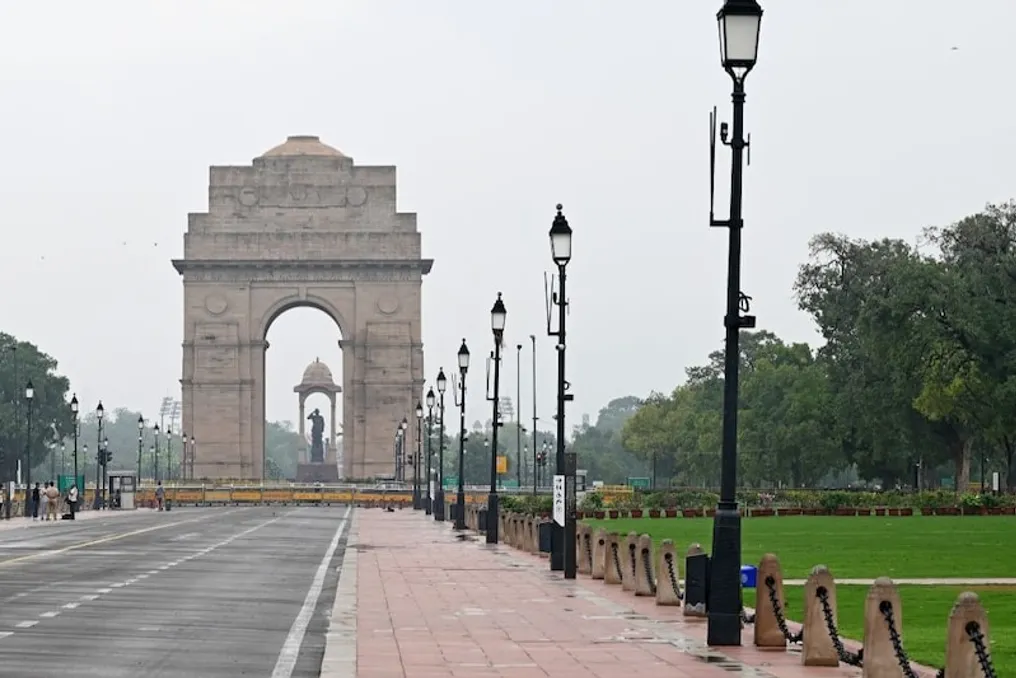
Due to the worsening air quality in Delhi during the winter period caused by road dust, vehicle smoke, and general atmospheric pollution, the Delhi government is preparing to implement new technologies. It is planned that methods for reducing pollution will be tested in 40 different locations across the city with the participation of private companies and startups. The total budget allocated for the implementation of this project is 104 crore rupees.
The main goal of the initiative is to achieve a 20% reduction in PM10 and PM2.5 levels in the selected zones.
The project is being implemented by the Delhi Pollution Control Committee (DPCC). Under this program, air purification technologies will be applied near markets, commercial areas, bus terminals, tourist attractions, and some hospitals. Constant monitoring will be carried out to assess how much the air quality improves due to the methods used.
Public and commercial zones in Delhi were selected for the pilot project where measures to reduce pollution can be tested in open or partially enclosed spaces. Among such locations are Khan Market, Connaught Place, and Defence Colony. Each of the 40 selected points will cover an area of approximately one to one and a half acres. These places are divided into five categories: markets, commercial centers, transport hubs, tourist attractions, hospitals, and educational institutions. Notably, the largest number—29 sites—belongs to commercial areas, accounting for 72.5% of the total.
Nineteen such locations were chosen in the central and southern parts of Delhi. Key sites include Connaught Place Central Park, the Children's Park area near India Gate, and the Lotus Temple alley. Intercity bus terminals in Kashmiri Gate, Anand Vihar, and Sarai Kale Khan are also included in the project. Four institutions participate from the hospitals, including GB Pant Hospital and Din Dayal Upadhyaya Hospital. Additionally, one point related to educational institutions was selected near the Faculty of Arts of Delhi University.
The pilot project involves testing pollution control methods on sections of three important streets in Delhi. These include the main shopping street Chandni Chowk, Lotus Temple Road, and Baba Khadak Singh Marg. According to DPCC estimates, the main causes of pollution on these streets are road dust and vehicle exhaust fumes. Therefore, it is planned to check what level of air quality improvement can be achieved at the local level using the applied technologies.
A feature of this project is the lack of a requirement to use any single specific technology. Private companies and startups can aim to achieve the pollution reduction goal using their own developments. Air purifiers, electrostatic precipitators to reduce airborne pollutants, and scrubbers to remove road dust can be used in open spaces. An electrostatic precipitator is a technology that separates dust particles and other pollutants from the air using an electric charge. This technology will be applied in industrial zones and factories in Delhi. However, certain conditions have been set for companies and factories: the electrostatic precipitator devices they use must be certified by a state laboratory and ensure pollution reduction according to established standards. Furthermore, these installations must not create additional problems, such as ozone emissions or excessive noise.
According to the report, the project is designed for an initial period of one year. After the relevant sites are handed over to the companies, they are given four weeks to install and launch their equipment. The plan's implementation began last month, and technical evaluation is currently underway. Sensors will be installed at all selected sites to assess the effectiveness of pollution control measures, recording air quality indicators daily. Monitoring will be conducted by the DPCC, while an independent commission will evaluate how effective the applied technologies are in combating pollution. The main objective of the project is to achieve a 20% reduction in PM10 and PM2.5 levels. PM10 denotes relatively large particles in the air, whereas PM2.5 represents extremely fine particles capable of penetrating the lungs through the respiratory tract. The real effect of this pilot project will become clear after analyzing the data collected over the year.