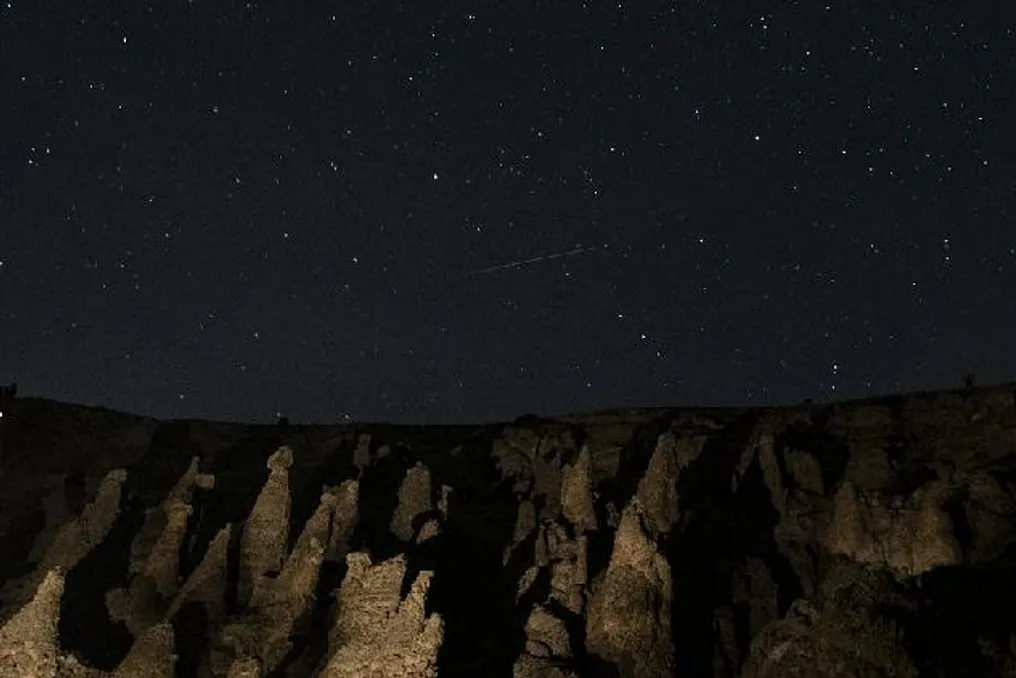
The annual Orionid meteor shower will reach its peak on the night of October 21 to 22, offering astronomy enthusiasts the chance to observe one of the year's main meteor showers. Under favorable conditions, around 20 meteors per hour can be seen.
The Orionid shower is active annually from October 2 to November 7. According to NASA data, with a frequency of approximately 10 to 20 meteors per hour, it is considered one of the most beautiful in the year.
The Orionid meteor shower is formed by dust and debris left behind by Comet 1P/Halley. As Earth moves in its orbit around the Sun, it passes through particles ejected by the comet during its travels through the inner solar system. These tiny particles collide with the Earth's atmosphere at very high speeds, creating bright streaks of light known as meteors.
Since Earth crosses different sections of this debris stream twice a year, two annual meteor showers are formed—the Orionids in October and the Eta Aquariids in May.
NASA notes that 'Orionid meteors are known for their brightness and speed.' They enter the Earth's atmosphere at a speed of about 66 kilometers per second. Some leave glowing trails lasting from a few seconds to minutes, while the brightest can turn into fireballs, creating a spectacle for observers.
The peak of the Orionid meteor shower this year is expected around 2:00 AM Beijing time on October 22. Observation is possible in both the Northern and Southern hemispheres. No telescope or special equipment is required for observation.
For the best viewing experience, one should find a location away from city lights with a wide, unobstructed view of the sky. Good places include open rural areas, hillsides, and riverbanks. Streetlights, neon signs, and other artificial light sources should be avoided, and eyes should be allowed 10 to 20 minutes to adjust to the darkness.
However, the growing moon can make the night sky brighter, which may hinder the observation of fainter meteors. Xu Lipeng, a member of the Chinese Astronomical Society, advised observing in the latter half of the night after the moon sets.