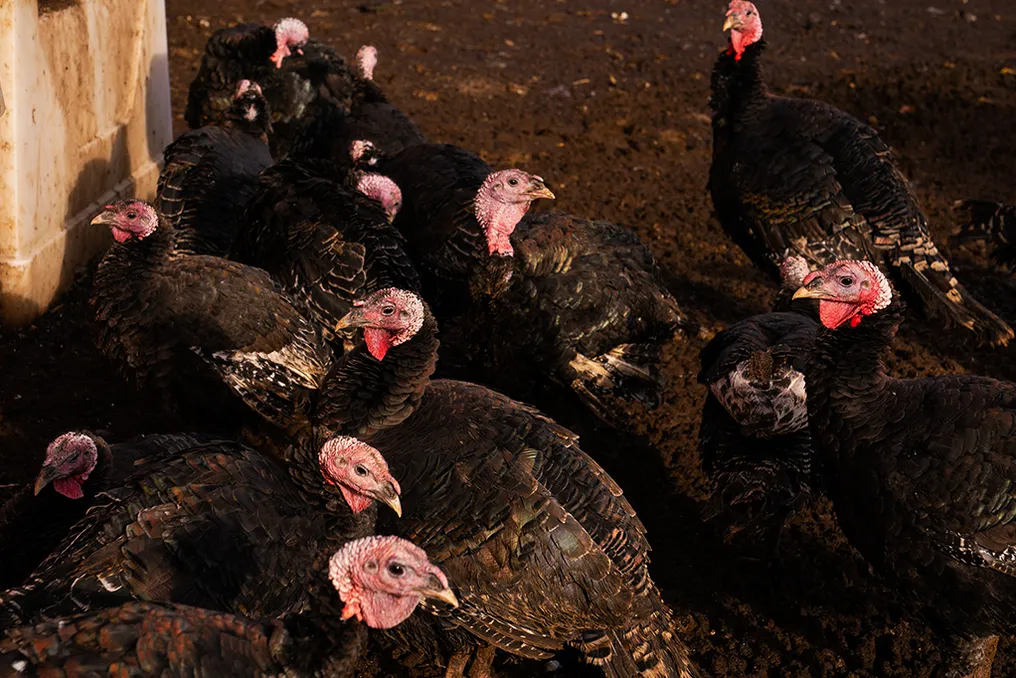
The Ministry of Agriculture and Livestock confirmed the identification of an outbreak of Newcastle Disease (NDV) on a turkey farm located in the municipality of Nova Itaberaba, western Santa Catarina. Although the virus was detected in laboratory analyses, the affected animals showed no visible clinical signs.
This outbreak has led to partial or total suspensions in the purchase of Brazilian chicken by countries such as China and Mexico. However, authorities assure that the disease does not constitute a danger to human health.
Although human contamination is theoretically possible, it is described as extremely rare and mild. Consuming sick chickens that have been properly cooked does not transmit the illness. Cases in humans tend to occur in individuals who have direct contact with the birds, and they can be prevented through the correct use of Personal Protective Equipment (PPE).
When a human infection occurs, Newcastle Disease manifests symptoms similar to a common flu or mild conjunctivitis, conditions that usually resolve spontaneously.
NDV is caused by a strain of the Orthoavulavirus javaense and primarily affects birds. Its main characteristic is being highly contagious, spreading mainly through direct contact between healthy birds and secretions from contaminated birds.
All secretions from carrier animals carry a high amount of the NDV-causing virus, which has the ability to survive for days or weeks on surfaces. This combination facilitates the spread of the disease through mechanical routes, such as through clothing and footwear soiled with these secretions.
In commercial breeding environments, the confinement system significantly accelerates transmission. According to an informational material from the World Organisation for Animal Health, when the virus enters a vulnerable flock, almost all birds can be infected within a period of two to six days.
Contamination can be asymptomatic, as observed in the farms in SC. If symptoms appear, the virus affects the respiratory, nervous, and digestive systems of the birds. Clinical signs include difficulty breathing, nervous manifestations (such as depression, loss of appetite, muscle tremors, wing drops, head and neck twisting, circular movements, and total paralysis), swelling in the tissues around the eyes and neck, watery and greenish diarrhea, as well as eggs with thin or rough and deformed shells, resulting in lower egg production.
The mortality rate can reach 100%. Due to this, there is a specific protocol for managing outbreaks or epidemics of Newcastle Disease. Necessary actions include implementing quarantines, humane slaughter of all infected or exposed animals, followed by proper disposal of carcasses and general disinfection of the facilities.
Celes Regina de Matos, president of Cidasc, told Agência Brasil that the team is already on site, working on containing and eradicating the virus. She emphasized that the location will be treated as an outbreak focus, and eradication and disinfection will be carried out until the focus is eliminated. Cidasc will only leave the site after this elimination, aiming to do so as quickly as possible. Once the focus is controlled, everyone will be notified, fulfilling the commitment to the external market, which depends on the health of the flock to guarantee imports.