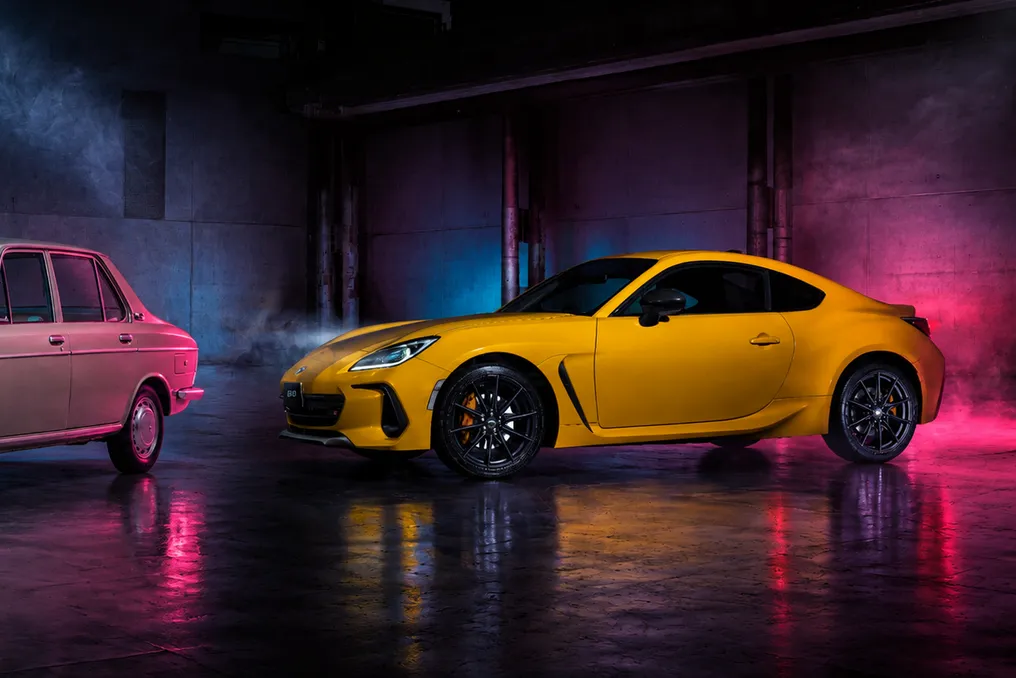
There is a personal admiration for the Subaru boxer engine, although this preference is not strictly technical or based on practical experience, since the author has never driven a Subaru with this engine. However, subjectively, the configuration of a horizontal engine with opposed cylinders under the hood of a vehicle such as a sedan, coupe, or hatchback seems functional. The characteristic sound of the boxer has more personality than that of an inline four-cylinder engine, although aesthetics are subjective. It is a recognized fact that the physical arrangement of the boxer helps to lower the car's center of gravity, resulting in greater stability and better grip during turns.
However, there was sad news that the boxer engine would be coming to an end in Europe. Although Subaru has not officially confirmed it, international press points with high probability that the four-cylinder boxer engine will be discontinued starting in 2027, and this decision, for now, is restricted to the European continent. This undeniably represents the beginning of the end for the flat-four engine.
Currently, European Subaru models use two options for naturally aspirated boxer engines: the FB25, with 2.5 liters and 169 hp, found in the Outback; and the FB20, two liters, found in the Impreza, Crosstrek, and Forester. The latter, which has a mild hybrid system, delivers between 136 hp and 150 hp, depending on the version. None of these vehicles are considered sporty examples, and their performance falls short of the glory of the Impreza WRX and STI. This observation is particularly striking because, despite being a Japanese manufacturer, it was in Europe, specifically the United Kingdom, that Subaru developed its greatest rally legends.
A point of comfort is that, at least in Japan and the United States, the Subaru boxer engine remains safe and is still used in sports cars, such as the WRX (which, according to the author, is currently a shadow of what it once was) and the BRZ (which he does not criticize). The duration of this security depends exclusively on Subaru.
The saddest aspect of the situation is receiving this information when the Subaru boxer engine is about to complete 60 years. With this in mind, the author recalled the car that started this journey in 1966: the Subaru 1000. From the name, one can perceive that it had a familiar displacement to Brazilians: its four-cylinder boxer engine had 1.0 liter.
However, stating that the Subaru 1000 invented the boxer engine underestimates its relevance. This little-known vehicle accumulated several innovations: it was the first car produced in series by the brand with a front engine, the first Subaru classified as a compact according to local standards, and one of the first Japanese automobiles with front-wheel drive. This is its history.
Before the boxer: the early Subarus
It is curious to think that Subaru's first vehicle, when the company did not yet use the name Subaru and was known as Fuji Heavy Industries, used inline four-cylinder engines, given the strong link of the brand to the boxer engine. The Subaru 1500, launched in 1954, was a small sedan with the design of the time, featuring a ponton body style (where a continuous line ran along the entire vehicle, from the hood to the rear, without prominent fenders like in the early 1950s), with three well-defined volumes, rounded shapes, and various chrome details. It resembled a reduced American sedan but lacked a distinctive style.
Its engine had 1.5 liters and followed an interesting path: initially, it would be based on a Peugeot engine, in a project acquired in partnership with Prince (which would later integrate with Nissan). However, Prince opted not to share its engine with a competitor, leading Fuji Heavy Industries to develop its own internal engine. The result was a 1,484 cm³ four-cylinder with overhead camshaft, designated L4-1, capable of producing 55 hp. More innovative than the engine was the chassis, which incorporated triangular arm suspension at the front.
Only 20 units of the Subaru 1500 were produced, nine equipped with the L4-1 engine and 11 with the Peugeot project, the FG4A, which was similar and delivered 48 hp. These cars were given to taxis and private drivers for experimental testing, as Fuji Heavy Industries was still focused on motorcycles and mopeds, and automobile manufacturing represented a significant leap.
The approval of the Subaru 1500 attested to the quality of the project and encouraged the company to launch its first mass-produced car: the modest and charming Subaru 360. This model is better known than the Subaru 1500, remembered by many due to the game Gran Turismo 4. Launched in 1958, it was inspired (though not stated) by the VW Beetle in terms of style and concept of being a 'national car' for Japan. Following the recent classification by the Japanese government for kei-jidōsha ('light car'), it measured 2.99 meters long, 1.30 m wide, 1.38 m high, and weighed 410 kg. Its engine, the EK31, was an air-cooled, inline two-cylinder with 356 cm³, sufficient to generate 16 hp at the time. The notable innovation lay in its construction, which used a monocoque structure with a fiberglass roof, dispensing with the typical body-on-frame construction of that period, aiming to reduce weight and increase agility.
Despite its minimalism, the Subaru 360 perfectly met the needs of the Japanese public: it was affordable, economical, and robust. Thus, over 12 years, it sold more than 390,000 units. It was the one that introduced the sporty vein of Subaru with the Young SS version, whose engine, EK32, used two Mikuni Solex carburetors and an increased compression ratio to reach 36 hp. While seemingly little, this equates to 100 hp per liter!
Commercial success led to diversification of the line in subsequent years, keeping the Subaru 360 as the base. It was during this period that the iconic Subaru Sambar (analogous to the Kombi for the Beetle) and the discreet R-2 emerged, which was essentially a Subaru 360 with a different body. By the mid-1960s, Subaru could consider itself a car manufacturer, and the confidence gained propelled the next model to abandon the formula and mechanics of the Subaru 360: the Subaru 1000.
Full-sized car
Subaru did not progress in isolation; its main competitors were also advancing technologically. Toyota was preparing the launch of the Corolla, which would become an undeniable phenomenon, while Nissan was working on its equivalent, the Sunny, which went through numerous generations and was sold in Brazil as the Nissan Versa. It became clear that Subaru needed a larger, more powerful, and more sophisticated vehicle than a variation of the 360 to establish itself in the emerging segment of compact family sedans. Like the Toyota Corolla and the Nissan Sunny, the Subaru 1000 was also launched in 1966, but only Subaru had a boxer engine.
It is important to note that Subaru's first boxer did not appear by magic; its journey was marked by numerous attempts, errors, exhaustive tests, and strategic adjustments. The idea of creating a model superior to the small kei cars arose in 1962 with the conceptual project A-5. At that time, engineers had an ambitious plan, considering Subaru's history: to move the front wheels with an engine positioned in front to eliminate the need for a central driveshaft running through the floor, freeing up cabin space to comfortably accommodate four adults.
The A-5 prototype was equipped with the experimental EA51X engine, a 980 cm³ Otto cycle boxer, air-cooled, and with overhead camshafts (SOHC). The choice was based on mechanical simplicity, as air entered from the front, eliminating the need for extra intakes required by rear-cooled cars. However, due to Fuji Heavy Industries' financial constraints at the time and technical difficulties in refining acoustic insulation and heat dissipation, the A-5 project was shelved before entering production.
Undeterred, in 1963, the company started a new project under the code A-4 (which would become the production prototype A-63). In this new effort, the initial displacement was reduced to 923 cm³, and the entire boxer engine concept was redesigned, abandoning air cooling. This change aimed to reduce noise (since air-cooled boxers are notorious for being loud), limit vibrations felt by occupants, and ensure more stable temperature control.
The final result of this meticulous work was officially presented in October 1965 at the Tokyo Hilton Hotel and exhibited at the 12th Tokyo Motor Show: the Subaru 1000, which arrived at Japanese dealerships in May 1966.
A collection of pioneering efforts
The EA-52 engine, the first member of the brand's famous boxer engine family, was installed in the hood of the Subaru 1000. This opposed four-cylinder engine had 977 cm³, was built entirely from aluminum alloy (both block and cylinder heads), keeping the assembly weight very low. It used an overhead camshaft, actuated by pushrods and tappets, and delivered 55 hp at 6,000 rpm and 7.8 kgfm of torque at 3,200 rpm, fueled by a dual-body carburetor and operating with a compression ratio of 9:1. It was an extremely compact engine, measuring about 400 mm in length.
Integrating front-wheel drive and a boxer engine into the same package was not a simple task in the 1960s, as the configuration was unprecedented. The major obstacle faced by engineers was the intense vibration generated in the front wheels during steering due to the horizontal movement of the pistons. To solve this, Subaru sought out the bearing manufacturer Toyo Bearing (now NTN), and the two companies jointly developed an innovative double offset joint, which allowed torque to be transmitted to the front wheels much more smoothly.
The ingenuity of the Subaru 1000 was not limited to the engine. To reduce unsprung mass at the front and facilitate the mounting of the independent suspension, the front drum brakes were installed internally (inboard), located near the differential output, and not next to the wheels. Another unusual detail was the cabin heating system, which dispensed with a separate heater core; instead, it captured heated air directly from the engine's main radiator. The rear suspension combined torsion bars with helical springs.
In 1967, Subaru added a special touch to its line with the launch of the 1000 Sports Sedan. This version came equipped with the EA-53 engine, which maintained the 977 cm³, but adopted two SU carburetors and increased the compression ratio to 10:1, resulting in a yield...
3