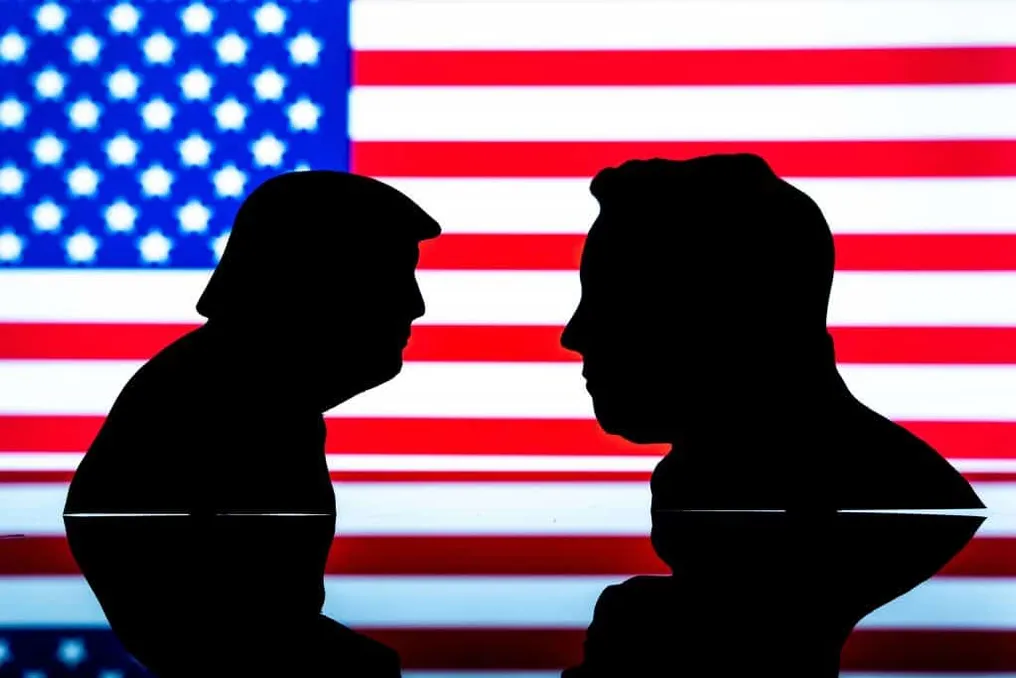
Elon Musk maintained that artificial intelligence (AI) and robots represent the only viable path to solve the problem of the United States' public debt, which reached $40 trillion (approximately R$ 216 trillion) in August. According to the billionaire, focusing solely on government budget cuts is not an effective strategy.
This statement was made during a recent episode of the podcast The Builders, hosted by writer Walter Isaacson. Musk explained that he came to this conclusion after spending 130 days working as a special government employee during Donald Trump's second term.
Between January and May 2025, the entrepreneur practically led the White House Office of Government Efficiency, known as DOGE, whose mission was to reduce federal spending. Musk told Isaacson: 'I concluded that the only way to solve the national debt is with AI and robots. We will not be able to solve it by trying to save our way there,' classifying the austerity alternative as 'impossible.'
Instead of controlling state expenditures, Musk bets on the economic boost generated by technology. He predicts that so-called digital superintelligence could increase global production of goods and services by 20% to 30%. This advance, according to him, would add about $30 trillion (approximately R$ 162 trillion) annually to the world economy.
Musk also linked robotic development to space exploration. For him, combining these technologies with the ability to establish a cargo launch system from the Moon could drastically expand the economic dimension. He projected: 'If you have robots and reach space, being able to build an electromagnetic launcher on the Moon, then you could potentially reach an economy a million times larger than Earth's.'
This projection is part of a futuristic vision where automation and access to extraterrestrial resources and activities would profoundly modify economic production. Furthermore, the entrepreneur anticipated that technological progress could render money 'irrelevant.' Although currencies would continue to exist, they would cease to operate as they do today because 'conventional currencies will not matter,' predicted Musk. He suggested that a future monetary system could be based on primary physical quantities, such as energy, mass, and power.
The remarks indicate an economic shift where productive capacity, driven by automation, would gain more relevance than the traditional monetary system. During the interview, Musk also reflected on his time in the Office of Government Efficiency, admitting to getting too involved and that he should have remained more discreet. He commented to Isaacson: 'I think I should have stayed more behind the scenes and probably made it last only one or two months, because at that point, you have seen practically everything there was to see.'
Additionally, Musk regretted not having left the project earlier to focus on AI, stating: 'I should have left and focused on AI a little sooner than I did.' This assessment contrasts with the period when he led efforts to reduce federal spending, as he now argues that tackling the US debt fundamentally depends on a productivity leap driven by technology.